
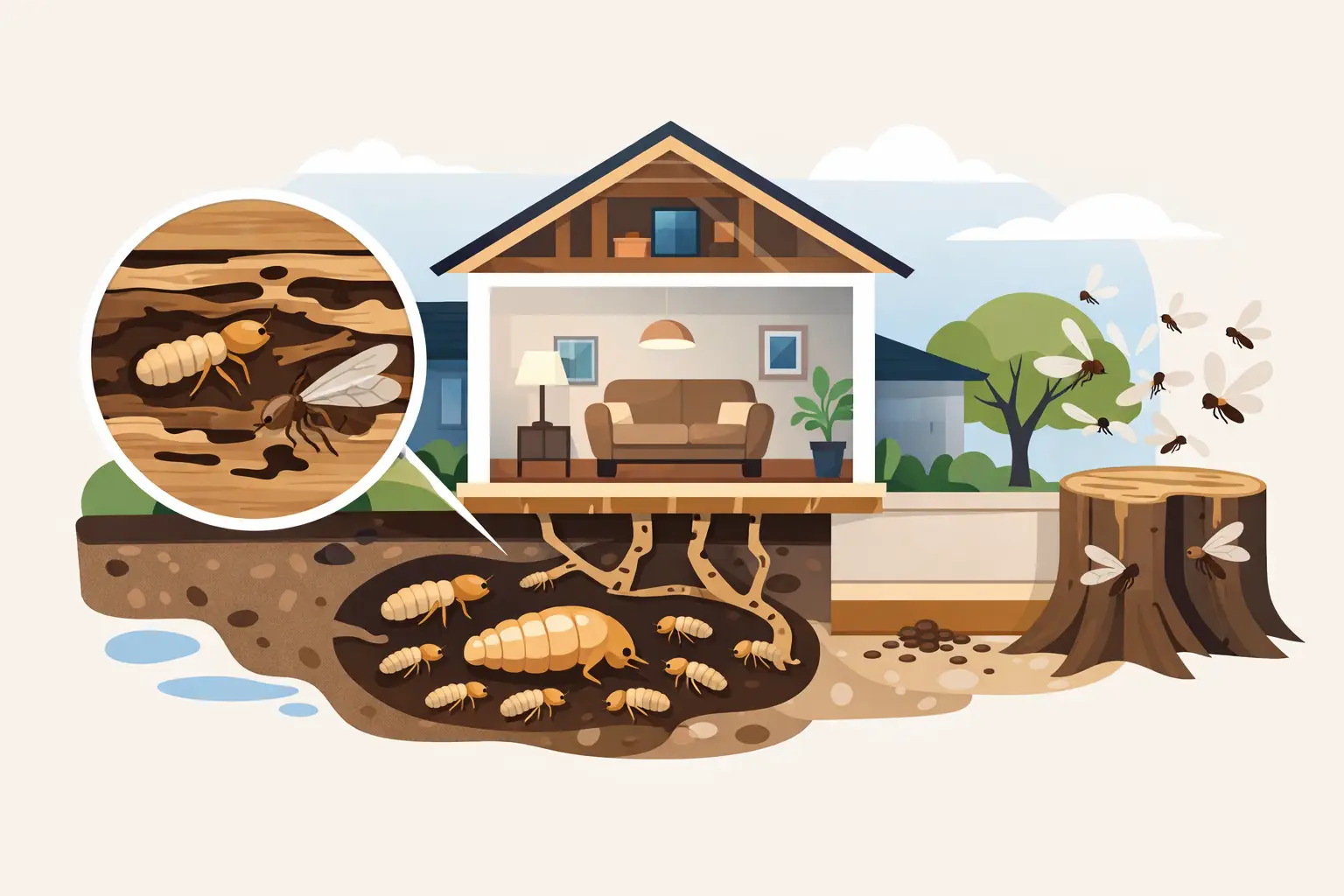
You usually do not see termites marching across the floor. What you notice first is the damage they leave behind – a door that suddenly sticks, paint that starts bubbling, or timber that sounds hollow when you tap it. These are often the top signs of termite activity, and missing them can turn a manageable issue into major structural repair.
For homeowners, buyers and builders, the risk is not just cosmetic. Termites work quietly inside timber, wall voids and concealed entry points. By the time obvious damage appears, they may have been active for months. That is why early detection matters. If something in the home feels off, it is worth treating it as a warning sign, not a minor maintenance issue.
The top signs of termite activity homeowners miss
One of the biggest problems with termite infestations is that the early signs are easy to dismiss. A small crack in paint can look like normal settling. A soft skirting board can seem like water damage. Sometimes it is water damage, but sometimes it is termites, and the two can look similar at first glance.
A common sign is hollow-sounding timber. If a door frame, skirting board or window reveal sounds papery or empty when tapped, termites may have eaten the inside and left only a thin surface layer behind. This is especially concerning in older homes or any property with a history of damp areas, garden beds against external walls or untreated timber in contact with soil.
Another frequent clue is tight-fitting doors and windows. When termites attack timber frames, the material can warp as moisture builds and internal structure weakens. Many people assume seasonal movement is to blame. Sometimes that is true. But when a door starts sticking without an obvious reason, it deserves a closer look.
You may also notice blistering or rippling paint. This can happen because termite activity introduces moisture into areas that should stay dry. The surface starts to look swollen, uneven or slightly bubbled. It is easy to write this off as poor paintwork, but in some cases the real issue is hidden behind the wall surface.
Mud tubes are a major red flag
If you see narrow mud lines on brickwork, piers, subfloors, retaining walls or slab edges, do not ignore them. These shelter tubes are one of the clearest top signs of termite activity. Subterranean termites build them to travel between the soil and a food source while staying protected from light and dry air.
These tubes can appear along external walls, inside garages, around service penetrations or beneath flooring. In Sydney homes, they are often found in less disturbed areas such as under the house, behind stored items or along fence lines near the structure. They may be thin and easy to miss, but their presence points to active or recent termite movement.
Do not break them open and move on. Even if they appear dry or empty, that does not confirm the problem is over. Colonies can shift location, and visible tubes are often just one part of a wider entry pattern.
Damaged timber does not always look dramatic
People often expect termite damage to be obvious, but the opposite is usually true. Termites tend to consume timber from the inside out. The outside can remain intact while internal galleries spread through framing, trims, architraves or structural members.
When damage does become visible, it may show up as sagging timber, crushed edges, pinholes, or thin layers that flake away under pressure. Floors may feel spongy underfoot. Built-in cabinetry can start pulling away from the wall. In roof voids, affected timber may look lightly etched or layered with concealed channels.
This is where professional inspection matters. A visual check can pick up obvious evidence, but concealed activity often requires experience, moisture assessment and a proper understanding of likely termite entry points.
Frass, wings and termite sounds
Depending on the species involved, you may find what looks like fine timber-coloured pellets or dust near skirtings, window frames or timber joins. In some cases this is frass, which is termite droppings. It can resemble sawdust, but termites do not leave the same messy pile pattern as ants or borers. The location and consistency matter.
You might also find discarded wings near windows, doors or light sources. Flying reproductive termites swarm at certain times of year, particularly in warm and humid conditions. After swarming, they shed their wings. A small pile of equal-sized wings indoors is a serious sign that termite activity may be close by.
Some owners report hearing faint clicking or rustling in the walls. That can happen, especially in quiet conditions, but it is not a reliable sign on its own. If you hear unusual movement and it comes with other symptoms such as hollow timber or bubbling paint, the risk level rises.
Where termite activity often starts
Termites do not need a dramatic opening to get in. A gap around plumbing, a bridge over a slab edge, garden mulch piled too high, leaking drainage or concealed expansion joints can all create opportunity. Homes with poor subfloor ventilation, timber landscaping touching the building, or aged barrier systems are more exposed.
For new builds and renovations, the risk can be reduced significantly with properly planned termite protection. Physical barriers, chemical soil treatments and replenishable reticulation systems each play a role, but they need to match the site conditions and be installed to suit the building design. For existing homes, regular inspections remain essential even if a barrier has been installed.
It depends on the property. A freestanding brick veneer home on a slab has different vulnerabilities from a home with a raised timber floor. Coastal humidity, drainage issues and garden design can also shift the risk profile.
What to do if you spot the top signs of termite activity
The first step is simple – do not disturb the area more than necessary. Spraying household insecticide, pulling apart damaged timber or knocking down mud tubes can interfere with treatment planning. It may scatter the colony or push activity deeper into the structure, making the problem harder to trace.
Arrange a specialist termite inspection as soon as possible. Speed matters because termites do not pause while you weigh up options. A proper inspection should assess active evidence, probable entry points, moisture conditions and whether an existing barrier system is in place or has failed.
If activity is confirmed, treatment should focus on the colony, the structure and the long-term defence of the property. A one-off spray is rarely enough. In many homes, the real solution involves a tailored treatment plan plus ongoing protection, especially where previous systems need replenishment or recharge.
Why early action saves more than repair costs
Termite damage can affect framing, flooring, joinery and structural timber before owners realise what is happening. Repair costs are only part of the problem. There is also disruption, reduced property value, delays to sale or settlement, and the stress of knowing the damage was avoidable.
For buyers, any suspected signs should trigger a specialist assessment before contracts move too far. For builders and project teams, prevention is far more efficient than remediation after handover. For homeowners with existing reticulation systems, staying on top of servicing is critical. If you have been wondering about termite reticulation recharge cost, how much to refill termite system setups, or the likely termite barrier recharge price Sydney properties can expect, the answer depends on the product, site layout and treatment history. What does not change is the risk of leaving a system unmaintained.
In termite-prone parts of Sydney, regular inspections and correctly serviced barrier systems are not optional extras. They are part of protecting the asset.
Not every sign means termites – but every sign deserves checking
There are cases where swelling timber is caused by moisture alone, where paint failure has nothing to do with pests, or where sawdust turns out to be from ants. That is exactly why assumptions are expensive. The issue is not whether every symptom confirms termites. The issue is whether you can afford to ignore the possibility.
When you know what to look for, the warning signs become clearer. Hollow timber, mud tubes, tight doors, bubbling paint, discarded wings and concealed damage are all signals that the structure may already be under attack. If you have noticed even one of them, treat it seriously and get the property assessed properly.
The safest homes are not the ones that look fine from the street. They are the ones with proven termite protection, regular inspections and owners who act early when something does not feel right.