A termite barrier is not just a line item on a quote. It is the system standing between your slab, frame and concealed entry points and a pest that can cause major structural damage long before you see a single sign.
That is why a proper termite barrier systems comparison matters. The right system depends on your build stage, slab design, site conditions, maintenance expectations and whether you want one-off treatment or a barrier that can be serviced and recharged over time. For homeowners, builders and buyers in termite-prone parts of Sydney, the cheapest option on day one can be the most expensive to live with later.
What a termite barrier systems comparison should actually look at
A useful comparison goes beyond product names. It should focus on how the barrier works, where it is installed, how long it remains effective, what maintenance it needs and how practical it is to inspect, replenish or certify in the future.
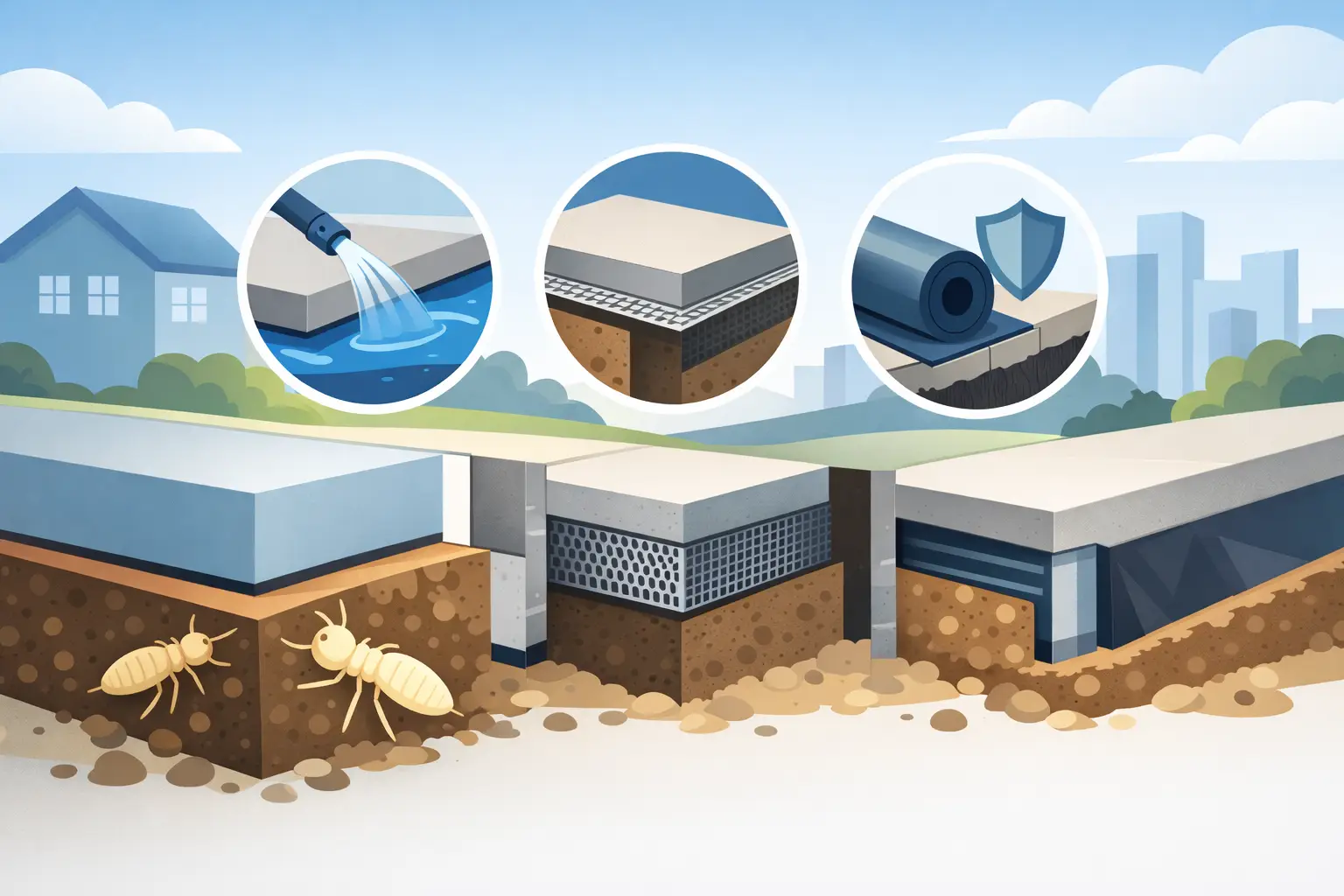
In broad terms, most systems fall into three groups. Physical barriers are installed as a durable exclusion layer. Chemical soil treatments create a treated zone in the soil. Reticulation systems are designed to deliver termiticide through a refillable network around the structure. Some projects use one approach. Others benefit from a combination, especially when design complexity or site risk is higher.
The key issue is not which category sounds best on paper. It is whether the system gives reliable, standards-compliant protection for the specific building.
Physical barriers compared
Physical barriers are designed to deny termites concealed entry. Depending on the product, that may involve graded stone, stainless steel mesh, impregnated sheeting or specialised collars and perimeter components installed at vulnerable points.
The main advantage is longevity. A well-installed physical system does not rely on the same chemical life cycle as a soil treatment. That makes it attractive for pre-construction work where the goal is permanent, low-intervention protection built into the structure itself.
The trade-off is precision. Physical systems are only as good as the installation detail. Penetrations, slab edges, joints and service entries all need careful treatment. If the barrier is interrupted or poorly integrated with the build, the protection can be compromised. On more complex sites, the install quality matters just as much as the product selected.
For builders, physical barriers can be a strong option because they can be incorporated into the construction program with clear documentation and compliance outcomes. For homeowners, they are appealing when long-term passive defence is the priority. What they do not offer, however, is a simple future refill. If protection needs to be supplemented later, that usually means adding another management method rather than topping up the original physical barrier.
Chemical soil barriers compared
Chemical soil treatments remain one of the most widely used termite protection methods in Australia because they are versatile and effective when correctly applied. The treatment creates a continuous treated zone around and beneath key parts of the building so termites cannot enter without contacting the termiticide.
In a termite barrier systems comparison, chemical barriers often come up well on upfront cost and flexibility. They suit many slab-on-ground homes, renovation scenarios and existing structures where a physical barrier is no longer practical to install. They can also be tailored to site layout and access conditions.
The main trade-off is service life. Chemical barriers do not last forever, and they should never be treated as a fit-and-forget solution. Soil movement, landscaping changes, drainage issues and the age of the treatment all affect performance. That is why ongoing inspections are essential, even where a barrier has been installed to standard.
For existing homes, chemical barriers can be an effective defensive option where there is no refillable system already in place. For new builds, they can work well where the design allows consistent application and where owners understand the need for future inspections and possible retreatment.
Reticulation systems compared
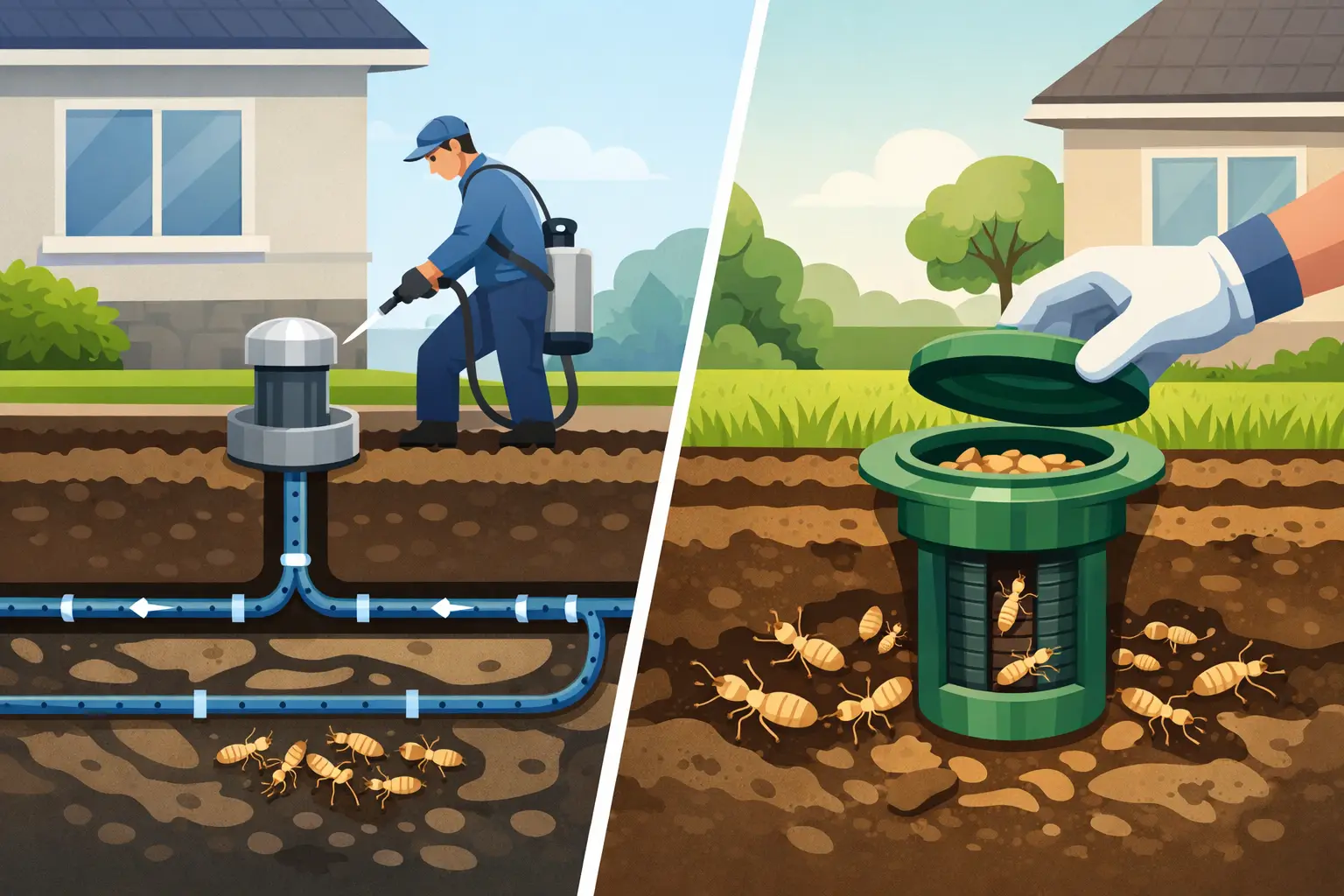
Reticulation systems are often the strongest long-term option for owners who want ongoing control built into the property. These systems use a network of installed piping to distribute termiticide to the treatment zone without the need for major re-drilling or invasive future work.
That refillable design is the main reason many builders and owners prefer them. Instead of treating the original installation as a one-time event, the barrier can be maintained through scheduled recharge services. This can reduce disruption and help preserve continuous defence over the life of the property.
For many Sydney homes, especially where access is restricted by paving, landscaping or finished surfaces, that practical servicing advantage matters. It is also why people often ask about termite reticulation recharge cost, how much to refill termite system, termite barrier recharge price Sydney, termite reticulation recharge near me and pest control Sydney reticulation refill. Those are valid questions because the value of a reticulation system is tied directly to how easily and properly it can be recharged.
The trade-off is that not all reticulation systems are equal, and not all properties are ideal candidates. Pipe layout, coverage design, installation quality and future service access all affect performance. A refillable system is only an advantage if it was correctly installed and can be professionally maintained.
Comparing major system types in real-world terms
If the priority is passive, built-in defence with minimal reliance on future chemical replenishment, physical barriers often lead the field. If the priority is adaptable protection across an existing home or a straightforward slab build, chemical soil treatments can be highly effective. If the priority is long-term serviceability and non-invasive replenishment, reticulation systems usually stand out.
That said, there is no universal winner. A pre-construction project with clean access and a builder focused on permanent prevention may suit a physical system or a combined design. An established home with signs of vulnerability around the perimeter may suit a chemical treatment. A property with an existing refill network may be best protected by inspection, recharge and ongoing servicing rather than replacement.
This is where broad system expertise matters. Products such as Termguard, Altis, TermStop, TermX, Camilleri, Cavtech, HomeGuard, Kordon, GreenZone and TermSeal all have different applications, installation methods and maintenance implications. The comparison should be based on performance in your build context, not brand familiarity alone.
Cost versus lifetime value
A narrow price comparison can be misleading. The cheapest barrier at handover is not automatically the most economical system over ten years.
Physical systems may cost more upfront but can deliver long-term value where they are correctly specified and integrated. Chemical barriers may have a lower initial outlay but require future monitoring and possible re-treatment. Reticulation systems may sit in the middle or above basic chemical installs at the start, yet become cost-effective over time because recharge work is simpler and less disruptive.
When people ask how much to refill termite system infrastructure, they are really asking a bigger question: what will this protection cost me to maintain properly over the life of the home? That is the smarter way to assess value.
What builders and homeowners should watch for
For builders, the main concern is coordination. The barrier has to suit the construction sequence, slab design, penetrations and certification requirements. A system that looks good in a brochure but creates delays or awkward detailing on site can become a problem quickly.
For homeowners and buyers, the key issues are serviceability and proof. You want to know what system is installed, where it is installed, whether it complies, how it is inspected and what future maintenance will involve. If there is an existing reticulation system, it should not be ignored simply because the house looks fine. Recharge schedules and inspection records matter.
In coastal and suburban termite zones across Sydney, that ongoing vigilance is critical. Moisture, concealed access points and landscaping changes can all increase pressure around a home that once appeared well protected.
So which barrier system is best?
The best system is the one that delivers continuous protection for the way the building is designed, used and maintained. In many cases, that means choosing a barrier that can be inspected and supported over time rather than chasing the lowest install price.
For new construction, physical and reticulation systems often make strong sense because they can be planned early and integrated properly. For established homes, chemical barriers and rechargeable systems often provide the most practical route to renewed defence. Where risk is elevated or design conditions are complex, a combined approach may be the safest call.
If you are comparing options, insist on more than a quick spray-and-go recommendation. Ask how the system works, how it will be maintained, what happens at recharge time and how the protection holds up over the long term. That is how you protect the structure, not just tick a compliance box.
If you want termite protection that is engineered for the property rather than guessed on price, get a specialist assessment before work starts. The right barrier is not the one that sounds strongest. It is the one that keeps defending the building years after the paperwork is filed.