
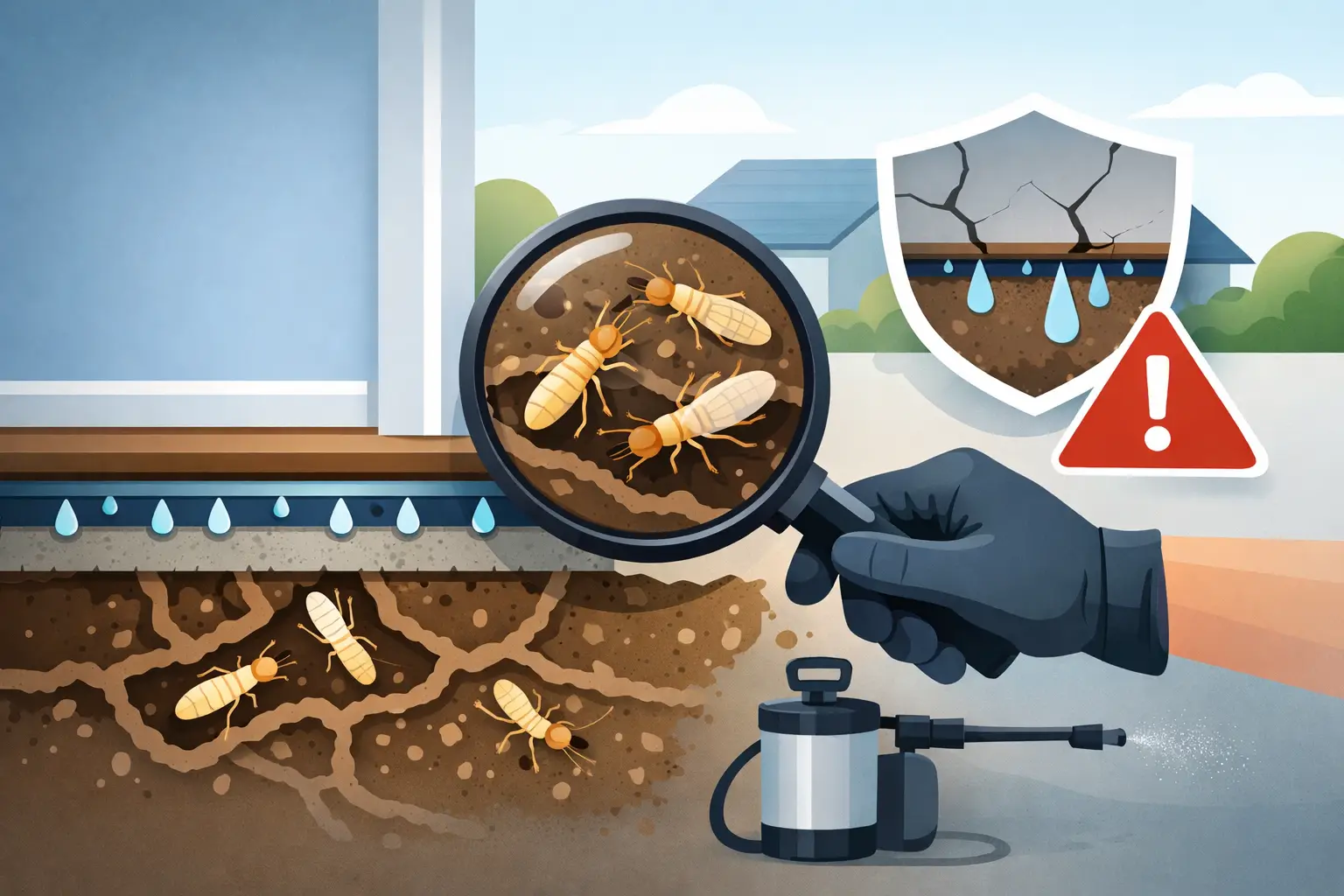
You usually do not get a polite warning before termites push past a weakened barrier. What starts as a compliant termite protection system can quietly lose effectiveness over time, especially if the property relies on a replenishable reticulation setup. If you are looking for signs termite barrier needs recharge, the real issue is not just product age – it is whether your home still has an active line of defence where termites are most likely to attack.
For many Sydney homes, particularly those with refillable perimeter systems installed during construction, recharge timing is not guesswork. It depends on the system type, the chemistry used, soil conditions, landscaping changes, and whether the original installation has been serviced properly. Some barriers hold up well on paper but lose practical protection sooner because ports are blocked, zones are disturbed, or follow-up inspections have been missed.
Signs termite barrier needs recharge now
The clearest sign is often time. If your termite reticulation or chemical barrier is at or beyond the service interval recommended for that specific system, you should assume it needs professional review. Many owners cannot recall the last recharge, do not have the original paperwork, or inherited the system when they bought the home. In that situation, delay creates risk.
Another strong warning sign is a failed or overdue annual termite inspection. A barrier is not a set-and-forget product. If inspection reports note reduced protection, inaccessible zones, high moisture areas, bridging risks, or uncertainty about the remaining termiticide life, a recharge may already be due. The same applies if an inspector cannot confirm that the reticulation network is taking product correctly.
Visible changes around the house also matter. New paving, garden beds, retaining work, plumbing repairs, slab penetrations, or soil levels built up against external walls can compromise the original treated zone. The chemical may still be present in parts of the system, but termites only need one vulnerable point. When the treated envelope is interrupted, recharging or corrective treatment becomes far more urgent.
Then there is termite activity itself. If you have found mud leads, damaged timbers, hollow-sounding architraves, swarming alates, or active termites nearby, the barrier should be treated as suspect until proven otherwise. A properly maintained system is designed to defend the structure. Once activity is detected, you need a specialist assessment rather than assumptions about past protection.
The seven warning signs to take seriously
1. Your recharge date has passed
This is the most common issue. Different systems and termiticides have different service lives, and exposure conditions are not identical from one property to the next. If the barrier has not been recharged within the advised timeframe, protection may be reduced even if nothing looks wrong from the outside.
2. You cannot verify the last service
No service records, no compliance sticker, no recharge report, and no clear handover documents usually means one thing – uncertainty. For termite defence, uncertainty is a risk factor, not a minor admin problem.
3. The reticulation ports or lines are not functioning properly
If refill points are damaged, buried, blocked, or difficult to access, the system may not be distributing product as intended. A recharge is only effective when the network is intact and each zone can be serviced correctly.
4. Landscaping or building works have altered the perimeter
Even small changes can matter. Added soil, new paths, drainage work, decking, extensions, planter boxes, and excavation near the slab can disturb or bridge the treated zone and create a route around the barrier.
5. Moisture issues have developed
Leaking showers, poor drainage, downpipe discharge problems, air-conditioning overflow, and damp subfloor areas all increase termite pressure. Moisture does not automatically mean the barrier has failed, but it does increase the need to inspect and often recharge the protection system.
6. Your inspection report flags high termite risk
A good inspection report does more than look for damage. It identifies conditions conducive to attack and notes when the existing barrier can no longer be relied on without servicing. If the report recommends recharge, treat that as a priority item.
7. You have seen termite activity or damage
Once activity is present, the question is no longer whether the barrier is ageing. The question is whether the system has been breached, bypassed, or left under-maintained. At that point, recharge may be part of the solution, but the property may also need active treatment and a revised protection plan.
Why termite barriers lose effectiveness earlier than owners expect
The assumption many owners make is that a termite system lasts exactly as long as the brochure says. Real-world performance is more complicated. Product longevity is influenced by installation quality, soil type, drainage, exposure, disturbance, and whether the system was ever serviced on schedule.
Reticulation systems are especially effective when they are maintained properly because they allow non-invasive replenishment around the structure. That is a major advantage for long-term protection. But the benefit only holds if the lines remain serviceable and the recharge is done with the right product, pressure, and coverage pattern.
This is why generic pest spraying is not the same as engineered termite defence. A recharge is not just topping something up. It is a controlled servicing process tied to the original system design and the current condition of the property.
When a recharge is enough – and when it is not
Sometimes a straightforward recharge restores the system and extends protection with minimal disruption. That is often the best-case scenario for homes with an intact reticulation network and no evidence of attack.
Other times, it depends. If termites are active, if the perimeter has been heavily altered, or if parts of the system are inaccessible or damaged, recharge alone may not be enough. The property may need a combination of active treatment, localised correction, monitoring, and a new servicing schedule.
For buyers and owners of older homes, this distinction matters. A property can have a termite barrier on paper but still need substantial remedial work before it has dependable protection again. That is why a specialist inspection should come before any decision based only on age or cost.
What about termite reticulation recharge cost?
The question most owners ask next is termite reticulation recharge cost, or how much to refill termite system protection around the home. There is no honest flat answer because price depends on the barrier brand, property size, number of zones, product volume, accessibility, and whether repairs or extra treatment are needed.
That is also why searching termite barrier recharge price Sydney or termite reticulation recharge near me can be misleading if you compare jobs that are not alike. A compact slab-on-ground house with a well-maintained system is very different from a larger home with buried ports, added paving, and uncertain service history. Pest control Sydney reticulation refill pricing should reflect the actual system and risk profile, not a one-size-fits-all number.
The better question is whether the service restores real protection and keeps the property aligned with the original defence strategy. A cheap refill that does not properly service the network can cost far more if termites get through later.
How to respond if you suspect your barrier is due
Start with the records you have. Look for past inspection reports, recharge invoices, barrier certificates, and any notes identifying the installed system. If the home was purchased from someone else, assume nothing until the details are verified.
Next, book a termite inspection with a contractor who understands replenishable systems rather than treating every barrier the same way. The right technician should be able to identify the system type, assess whether the reticulation is operational, check for disturbance to the treated zone, and advise whether recharge, repair, or treatment is required.
If you are managing a build or a recently completed home, keep the servicing schedule visible and handover documents organised. Builders and homeowners alike lose protection when the original compliance paperwork disappears into a drawer and nobody follows the recharge interval.
For homes across Sydney, especially in high-pressure termite areas with warm conditions and active landscaping, a delayed recharge is not a small maintenance issue. It is a gap in structural defence.
Protect the home before the barrier goes quiet
A termite barrier rarely announces that it is fading. It simply stops giving you the level of protection you thought you had. If the service date has passed, the records are unclear, the perimeter has changed, or termite risk has increased, act early and get the system checked by a specialist who can service it properly.
If you want certainty about your existing barrier, arrange a professional inspection and recharge assessment, or call 1800837643 to discuss the next step. Fast action now is far cheaper than structural repairs later, and a well-maintained barrier is one of the smartest ways to keep the home properly defended.