
A termite barrier is not something you want to guess your way through after the slab is poured or the skirting starts to sound hollow. If you are working out how to choose termite barrier system protection for a new build, renovation or existing home, the real question is simpler: what will keep the structure protected for the long term, suit the site, and still be serviceable years from now?
That answer depends on more than price. The right system has to match the construction method, the termite risk, the access available for future inspections, and the level of ongoing maintenance you are prepared to stay on top of. A barrier that looks cheap at install can become expensive if it is hard to replenish, easy to bridge, or poorly suited to the building design.
How to choose termite barrier system protection
Start with the building, not the brochure. A termite barrier is part of the way the structure is defended. That means slab design, piering, service penetrations, landscaping plans and subfloor access all matter. For a builder or designer, this is a specification issue. For a homeowner, it is an asset protection decision.
Physical barriers, chemical soil treatments and replenishable reticulation systems all have their place. None is automatically the best option on every site. The right choice comes from understanding how each system performs in real conditions, not just how it is marketed.
First decide whether you need pre-construction or post-construction protection
If the home has not been built yet, you have more options and usually better outcomes. Pre-construction systems can be integrated around penetrations, slab edges and concealed entry points before access disappears. This is where engineered protection makes the biggest difference.
If the building is already complete, the focus shifts. You may need a perimeter treatment, a retrofit system, a monitoring program, or a recharge of an existing reticulation setup. In established homes, access limitations often shape the solution just as much as termite pressure does.
Know the main system types
Physical barriers are designed to block or expose termite entry. These systems are often installed at critical entry points and work well when they are correctly detailed and not compromised during construction. Their strength is longevity, but they rely heavily on proper installation and ongoing inspection zones staying clear.
Chemical barriers create a treated zone in the soil around or beneath the structure. They can be very effective, especially when the soil profile suits the product and the treatment is applied to specification. The trade-off is that chemical performance is not set-and-forget forever. Re-treatment intervals, disturbance to soil, drainage changes and landscaping can all affect performance.
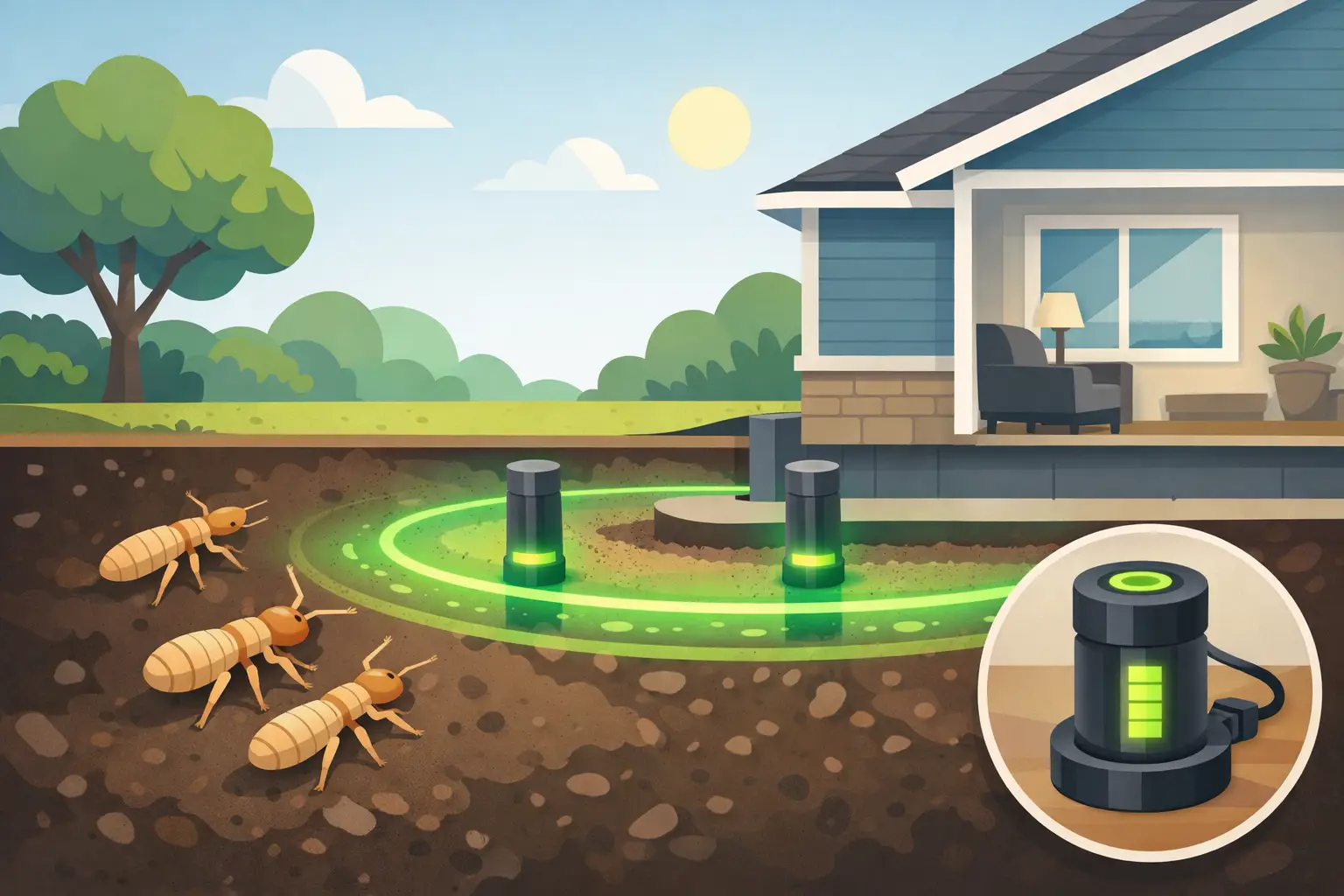
Reticulation systems are designed to allow replenishment of termiticide through installed lines around the property. For many homes, especially where future recharge access matters, this is a practical long-term option. A refillable system can reduce disruption later and makes ongoing defence easier to manage, provided it is serviced on schedule.
What matters most when choosing a system
The first factor is the construction type. A slab-on-ground home presents different risks from a suspended floor, split-level build or property with retaining walls and complex penetrations. A system that works neatly on a straightforward project may leave gaps on a more complicated footprint.
The second is site condition. Soil type, drainage, moisture load and slope all influence how a barrier performs. In termite-prone parts of Sydney, including coastal and leafy suburban areas, moisture management is often as important as the barrier itself. Wet zones, poor drainage and concealed garden build-up can undermine good protection.
The third is serviceability. Ask a basic but often overlooked question: can this system be inspected, tested, maintained or recharged without major demolition later? Long-term protection is stronger when the system can be realistically maintained.
Compliance is not optional
Any barrier system should be selected and installed with Australian Standards and site-specific requirements in mind. This matters for warranty, building compliance and resale confidence. A non-compliant or poorly documented installation can cause trouble later, especially at pre-purchase stage or during building sign-off.
For builders and specifiers, documentation matters nearly as much as product choice. For owners, it is your evidence that the barrier was installed properly and can be serviced correctly.
Price matters, but lifecycle cost matters more
A lot of people start with install cost. That is understandable, but it is not enough. The better question is what the system will cost over ten years once inspections, recharges, maintenance and risk of failure are factored in.
This is where homeowners often ask about termite reticulation recharge cost, how much to refill termite system protection, or the likely termite barrier recharge price Sydney properties can expect over time. Those are fair questions because the barrier is not just a one-off product. It is part of an ongoing defence program.
A cheaper barrier with difficult access and expensive future maintenance may not be cheaper at all. By contrast, a refillable system with clear service points can be a better long-term decision, particularly for owners who want predictable upkeep and less disruption.
Questions to ask before you commit
Before approving any system, ask what entry points it protects, what can compromise it, how it will be serviced, and what records you will receive. If the answer is vague, keep asking.
You should also ask whether the system is suited to the actual building design or whether it is simply the contractor’s default product. There is a big difference. Specialist providers work across multiple systems because different structures need different solutions.
If you are buying an existing home, ask whether there is already a reticulation line installed and whether it is still serviceable. Many owners do not realise their home has a system that needs periodic recharge. That is why searches for termite reticulation recharge near me and pest control Sydney reticulation refill are so common. The system may already be there, but without proper servicing, it is not doing the job it was designed to do.
Watch for the practical weak points
A good barrier can still fail if the surrounding conditions are ignored. Paved areas, garden beds, added paths, rendered finishes, foam cladding details and poor drainage can bridge termite access or hide termite activity. This is one reason no barrier should be treated as a substitute for inspections.
You also need to consider future renovations. If you are likely to add decking, pergolas, retaining walls or new services, choose a system that can be adapted or re-treated without turning a simple update into a termite risk.
When one system is better than another
Physical systems are often attractive for new construction where detailing can be tightly controlled and the design team wants durable integrated protection. They can be an excellent fit, but only where the install quality is precise and follow-on trades do not compromise them.
Chemical soil treatments suit many projects because they are versatile and can protect broad soil contact zones. They are particularly useful where a treated zone can be established effectively and maintained through inspections and re-treatment planning.
Reticulation systems are often the strongest practical option for owners who want replenishable protection built into the property. They are especially useful on homes where future access for re-treatment would otherwise be difficult. For homeowners thinking long term, this can be the difference between straightforward maintenance and a much bigger job later.
For that reason, a lot of projects benefit from a system that is not only effective on day one, but realistic to service in year five and year ten.
How to choose termite barrier system advice you can trust
The best advice is specific. It should account for the building plans, slab or subfloor design, site conditions, warranty expectations and maintenance pathway. If someone recommends the same system for every house, that is not engineered protection. That is a sales shortcut.
A specialist should be able to explain why one option suits your structure better than another, what the trade-offs are, and what you will need to do to keep the protection working. That applies whether you are a homeowner protecting a family asset, a buyer checking an existing installation, or a builder trying to avoid defects, delays and future liability.
In practice, the right barrier system is the one that fits the structure, meets compliance requirements, allows proper inspection, and can still be maintained without guesswork. That is what turns termite protection from a line item into real defence.
If you are unsure, get the site assessed before the decision is locked in. The strongest termite barrier is the one chosen early, installed properly and maintained with intent – not the one picked because it looked cheapest on the quote.