
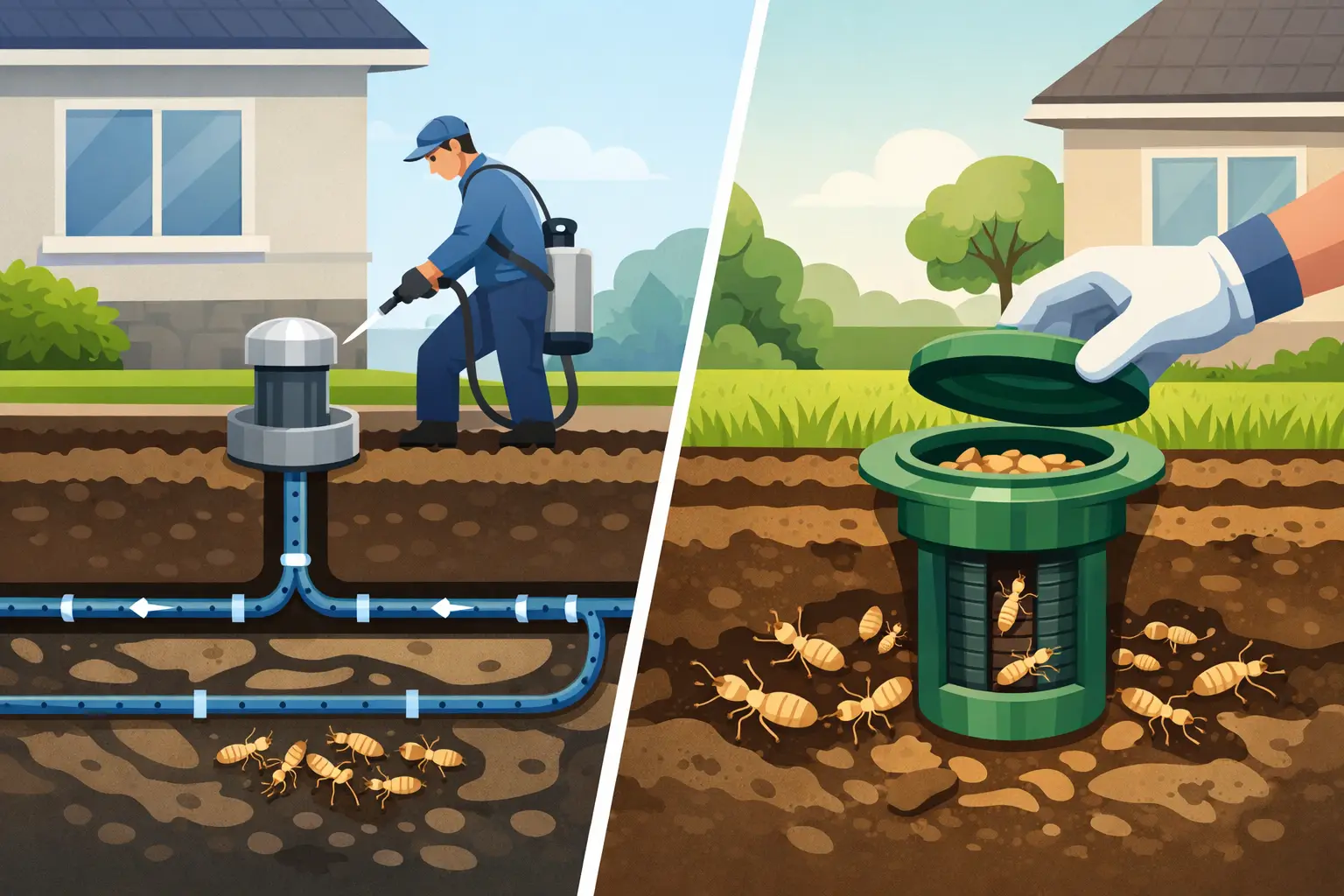
A termite barrier is not a place to guess, especially when the decision affects the structure beneath your home. The choice between a reticulation system versus bait stations comes down to how your property is built, whether termites are already active, the level of ongoing management you want, and how quickly protection must be established.
Both methods can form part of a serious termite defence plan. They do very different jobs, however. A reticulation system creates a renewable chemical treatment zone around a building. Bait stations are monitored points designed to intercept termites and, where required, eliminate an active colony. Choosing the wrong approach can leave gaps in protection, create unnecessary ongoing costs, or give a homeowner false confidence.
Reticulation system versus bait stations: the core difference
A termite reticulation system is usually installed during construction or major landscaping works. Perforated pipework is placed in the soil around the building perimeter and connected to discreet access points. A registered termite management professional can refill the pipework with an approved termiticide at scheduled intervals, restoring the treated soil zone without excavating around the home.
This makes reticulation particularly effective for new homes, extensions and properties where a conventional soil treatment would otherwise require disturbing paving, garden beds, driveways or finished landscaping. It is engineered for repeatable perimeter protection.
Bait stations work differently. Stations are installed in the ground at strategic intervals around the property and inspected on a regular schedule. If termite activity is found, a bait is introduced that termites feed on and share through the colony. This can suppress or eliminate the colony over time, but it is not an instant protective barrier around the building.
The practical distinction is simple: reticulation systems defend the structure through a maintained treated zone. Bait stations are a monitoring and colony-management tool that relies on termites finding, entering and feeding within the stations.
When a reticulation system is the stronger choice
For a new build in Sydney, a replenishable reticulation system is often the more direct long-term solution. It can be planned with the slab, footings, drainage and landscaping rather than retrofitted after access has become difficult. Builders also benefit from a system that can be serviced later without reopening completed works.
Reticulation is well suited to homes with concealed perimeter areas, extensive paving, tight side access or valuable landscaping. Instead of trenching along the outside of the building each time treatment is due, the technician uses the installed ports to distribute termiticide through the pipework. The result is a controlled, non-invasive recharge process.
It is also a strong option where the property owner wants a defined maintenance program. The system needs regular inspections and recharging in line with the product label, site conditions and applicable Australian Standards. A reticulation system is not permanent simply because the pipes remain in the ground. The pipework is permanent infrastructure; the chemical protection must be maintained.
For homeowners asking about termite reticulation recharge cost, the honest answer is that it varies. The perimeter length, number of refill points, system type, chemical selected, access, previous servicing records and local termite pressure all affect the quote. A small, accessible home with a documented system is very different from a large property with damaged ports, missing plans or extensive paved areas.
Where bait stations make sense
Bait stations are especially useful where active termites have been identified, where a soil treatment is restricted or unsuitable, or where the property requires close termite monitoring. They can also be used as part of a broader management plan when a colony is suspected but its entry point is unclear.
Their main strength is targeted colony management. Rather than attempting to create a treated perimeter, a baiting program aims to exploit termite foraging behaviour. That requires patience and disciplined inspections. Termites may not enter a station immediately, even when they are active nearby. Moisture, food availability, station placement, species and seasonal conditions all influence results.
This is why bait stations should never be sold as a fit-and-forget product. Empty stations that are not inspected offer no meaningful defence. A bait program succeeds through correct placement, timely monitoring, proper bait installation and follow-up until activity has been resolved.
For some established homes, baiting is the least disruptive option. For others, it is best used alongside a physical barrier, a soil treatment or a reticulation system. The right answer depends on the building design and the termite risk identified during inspection.
Speed, certainty and ongoing maintenance
A reticulation recharge can establish or restore a chemical treatment zone promptly once the system has been inspected and confirmed serviceable. It provides a more immediate structural defence than waiting for termites to locate bait stations. That is a major advantage for homes in termite-prone areas, particularly where construction details create concealed entry pathways.
Baiting takes longer by design. The termites must find the station, recruit other workers and consume enough bait for it to affect the colony. It can be highly valuable when managed correctly, but it is not the same as a treated soil perimeter and should not be represented as one.
Both systems require professional servicing. Annual termite inspections remain essential, even where a barrier or monitoring program is in place. Termites can exploit untreated construction joints, service penetrations, damaged barriers, bridge points from garden beds or stored materials, and hidden moisture sources. No system removes the need for inspection.
How much does it cost to maintain each option?
People searching “how much to refill termite system” are usually trying to compare a recharge with the cost of ongoing bait station visits. They are not directly comparable expenses.
A reticulation system typically involves periodic recharge costs, plus inspection and reporting. The recharge cycle depends on the termiticide used, the installation design and the treatment label. Because the refill process uses existing pipework, it can be more cost-effective over the life of a home than repeated excavation or broad soil treatment, particularly where external finishes are already complete.
Bait stations usually involve an installation cost followed by recurring monitoring fees. If termites are found, bait consumption, additional visits and colony-management work can increase the program cost. This is justified where baiting is the correct treatment strategy, but it should be budgeted as an active monitoring service rather than a one-off installation.
If you are comparing a termite barrier recharge price in Sydney, request a site-specific assessment rather than relying on a generic figure. Confirm what is included: system testing, access-port repairs, recharge volume, product used, treatment certificate, inspection scope and any service warranty conditions. A low quote that excludes the work needed to make the system functional is not value.
Questions to ask before choosing a system
Before approving either option, ask whether termites are currently active, whether there is an existing physical or chemical barrier, and whether the building has a documented termite management plan. The age and condition of the home matter too. A new construction project can integrate reticulation precisely; an older property may need a combination of treatment, monitoring and rectification work.
Ask the provider to explain where the protective zone will be, how it will be serviced, what access is required and what inspection interval applies. If bait stations are recommended, ask how frequently they will be checked and what happens if termites bypass them. If a reticulation system is recommended, ask whether all pipework and ports will be pressure-tested and whether the treatment coverage is suitable for the building layout.
Homeowners searching for a termite reticulation recharge near me or pest control Sydney reticulation refill should prioritise a specialist who understands multiple system types. Termguard, Altis, TermStop, TermX, Camilleri, Cavtech and other installations have different layouts, refill methods and servicing requirements. Correct identification protects the system and avoids an incomplete recharge.
Build a defence plan, not a one-off treatment
The strongest termite protection is matched to the property, maintained on schedule and verified through thorough inspections. A reticulation system is generally the better long-term perimeter defence for homes designed to support it. Bait stations are valuable for monitoring and active colony management, especially where treatment access is limited or termite activity must be tracked closely.
Do not wait for mud leads, hollow timber or visible damage before acting. Arrange a professional assessment, confirm the protection already in place and put the correct servicing schedule in writing. For specialist advice on an existing system, a recharge quote or a termite inspection, Book online or call Termiguard on 1800 837 643.