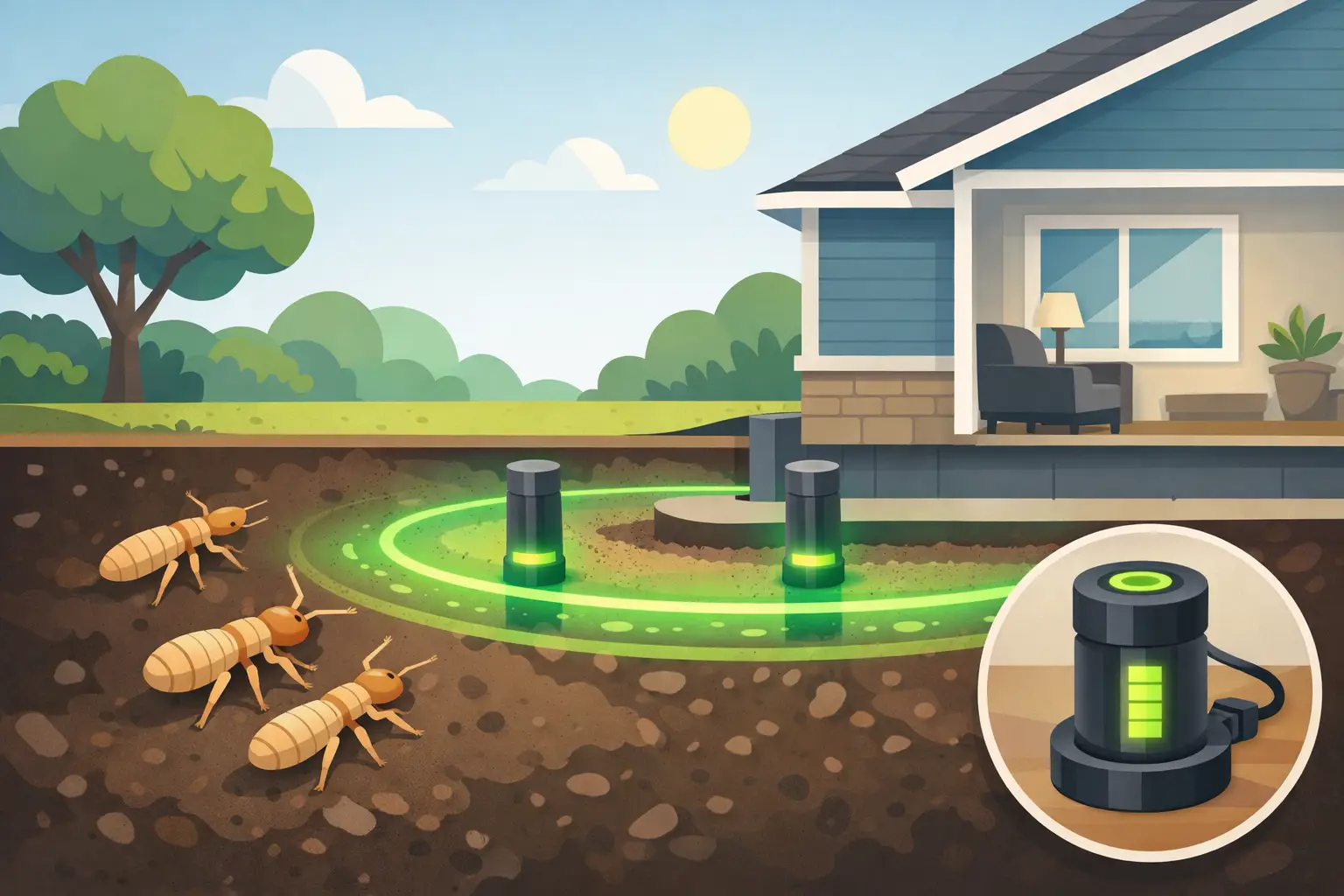
If your home already has a refillable termite barrier in place, the real question is not whether it needs attention – it is whether the termite reticulation system recharge is being done at the right time, with the right product, and by a technician who understands the system installed around your slab. A neglected reticulation line can give owners a false sense of security, and that is where expensive damage starts.
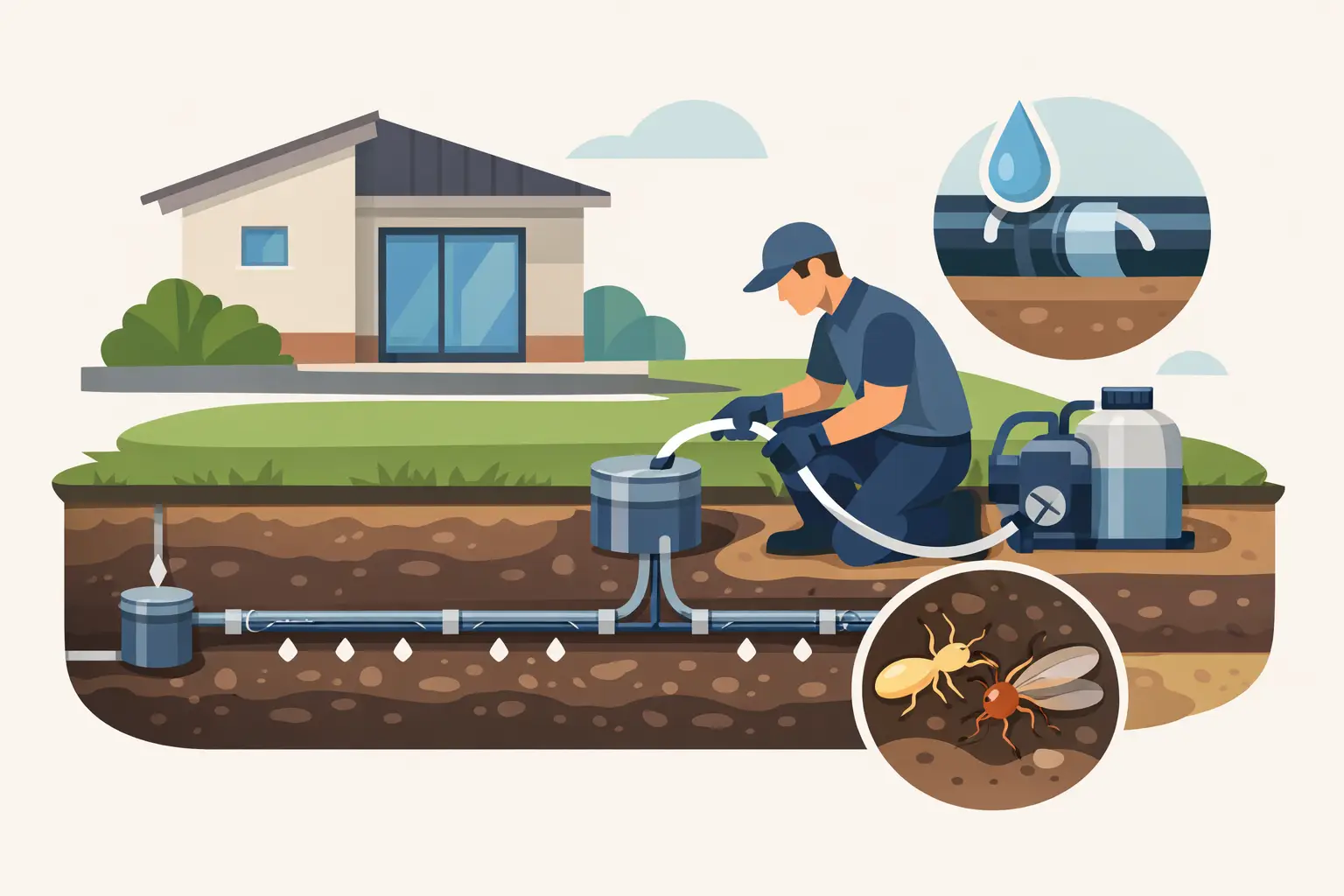
A reticulation system is designed to deliver termiticide through a network of pipes fitted around the perimeter of a building. When it is installed and serviced correctly, it provides a practical way to maintain an ongoing chemical barrier without trenching up the whole property every few years. That is a major advantage for established homes, renovations, and building projects where preserving paving, gardens, paths, and finished surfaces matters.
What a termite reticulation system recharge actually does
A recharge restores the active chemical protection in the soil around the home. The pipework itself is not the treatment. It is the delivery method. The protection comes from the approved termiticide distributed through that network at the correct pressure, volume, and concentration.
That distinction matters because many property owners assume that if the system is physically there, the house is still protected. It does not work that way. Over time, the chemical zone degrades and must be replenished in line with the product label, the system design, environmental conditions, and the inspection history of the property.
In practice, a proper recharge is also a servicing event. It is the opportunity to check whether the system is accessible, whether the lines are intact, whether distribution is even, and whether there are areas of the property where coverage may have been interrupted by later works such as extensions, new paths, landscaping, drainage changes, or concreting.
When is a termite reticulation system recharge due?
There is no one-size-fits-all answer, and that is exactly why blanket advice can be risky. Recharge timing depends on the chemical originally used, the brand and layout of the reticulation system, the soil conditions, the age of the installation, and the termite pressure around the property.
Some systems are due based on the service interval of the approved chemical, while others may need earlier attention because the site conditions are harsher than expected. Coastal exposure, drainage issues, disturbed soil, and heavy garden irrigation can all affect performance. A home in a termite-prone part of Sydney with mature gardens and frequent moisture around the slab edge may need a more cautious servicing approach than a dry, open site with easy inspection access.
The safest approach is to rely on the original treatment records, current inspection findings, and a technician who works across major systems rather than treating every recharge the same way. If those records are missing, the system can still often be assessed, but more care is needed before any chemical is introduced.
Why delayed recharges create real risk
Termites do not wait for convenient timing. Once the protective zone weakens, they can exploit concealed entry points through slab penetrations, cold joints, cracks, and hidden edges where timber elements become vulnerable. By the time visible signs appear inside the home, damage may already be established.
This is why a termite reticulation system recharge should never be treated like a routine top-up with no urgency behind it. It is part of the home’s defence system. Delaying it because the house looks fine is like assuming a smoke alarm battery is good because there has not been a fire.
The other risk is compliance and warranty exposure. For homeowners and builders, missing service intervals can affect the value of the original protection program. If the system is designed as a replenishable barrier, then ongoing servicing is part of keeping that protection active. Without it, the installation may no longer be doing the job it was specified to do.
How the recharge process should be handled
A professional recharge starts before any chemical is pumped into the ground. The technician should identify the system, confirm whether it is suitable for recharge, review past treatment history where available, inspect the site conditions, and check access points, caps, and line condition.
From there, the treatment must be matched to the system and the property. This is not guesswork. Different barrier systems and termiticides have specific requirements, and using the wrong product or method can compromise performance. Precision matters here because the whole purpose of a reticulation network is controlled distribution.
Once the recharge is completed, records should be updated clearly. The owner should know what product was used, when it was applied, what parts of the system were serviced, and when the next inspection or recharge is expected. Good documentation is not an extra. It is part of responsible termite risk management.
Not every reticulation system is in the same condition
This is one of the biggest reasons homeowners should avoid assuming a recharge is straightforward. Some systems are well maintained, fully accessible, and still functioning as intended years after installation. Others have suffered from blocked lines, damaged fittings, buried access points, poor modifications to the property, or simply long periods without servicing.
In those cases, a recharge may still be possible, but it may need remedial work first. If the system cannot distribute termiticide properly, pumping chemical through it will not create the level of protection the owner expects. A specialist should be honest about that. The goal is not just to perform a service. The goal is to restore effective defence.
For builders and project managers, this is also why system selection during construction matters. Refillable systems can be highly effective and practical over the life of the building, but only if future servicing has been considered from day one. Access, documentation, compatibility, and maintenance planning all affect long-term performance.
Recharge does not replace termite inspections
A chemical barrier and an annual inspection do different jobs. The recharge maintains the treated zone around the structure. The inspection checks for activity, entry conditions, moisture issues, bridging risks, and changes to the property that may undermine the barrier.
That means even a freshly serviced system should still be inspected on schedule. Timber in contact with soil, leaking showers, blocked subfloor vents, garden beds pushed up against weep holes, and concealed additions can all create conditions that increase termite risk regardless of treatment history.
The strongest protection strategy is layered. Physical barriers, refillable systems, regular inspections, and site condition management each have a role. Relying on only one part of that system leaves gaps.
What homeowners should ask before booking a recharge
The most useful question is not just, “How much does it cost?” It is, “Do you know this system, and can you confirm the right recharge method for this property?” That shifts the focus from price alone to protection quality.
You should also expect clarity around the product being used, the service interval, whether the system has been tested or inspected, and what happens if faults are found. A contractor with broad experience across systems such as Termguard, Altis, TermStop, TermX, Camilleri, Cavtech, HomeGuard, Kordon, GreenZone, and TermSeal is far better placed to assess what is actually installed and what servicing path makes sense.
For Sydney homeowners in established suburbs where additions, paving, and landscaping have changed the original site over time, that practical system knowledge is especially important. The barrier on paper and the barrier that exists today are not always the same thing.
Why specialist servicing matters
Termite protection is not a generic spray job. A reticulation recharge is part of an engineered barrier strategy, and it should be treated with that level of care. The right provider will look beyond the access point and consider the entire protection envelope around the home.
That includes recognising when recharge timing should be brought forward, when a system has been compromised, and when the property needs more than a refill to stay properly defended. It also means giving owners direct advice, not vague reassurance.
This is where a specialist contractor earns their place. Companies such as Termiguard focus on long-term termite defence, not one-off treatments that sound convenient but leave questions unanswered later. When your barrier is designed to be replenished, servicing it properly is part of protecting the structure, the warranty position, and the value of the asset.
If your recharge date has passed, your records are unclear, or you are not sure whether the system around your home is still active, treat that uncertainty as a warning sign. The best time to deal with termite protection is before termites test it.