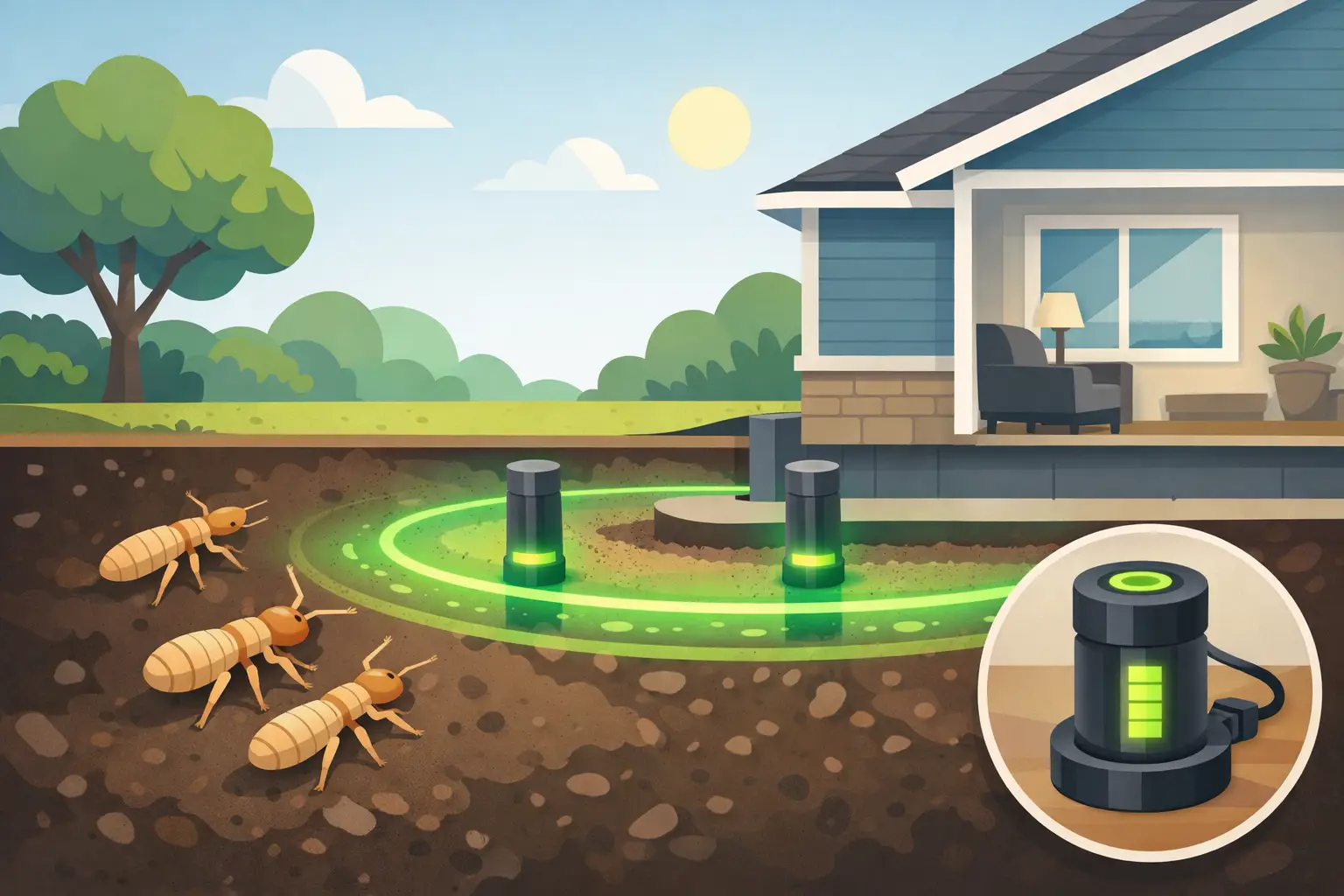

A new slab and fresh timber do not make a home safe from termites. In fact, construction can disturb termite activity, create concealed entry points and leave timber framing vulnerable before the keys are handed over. Knowing how to protect new build from termites means treating termite defence as a designed construction system, not a spray applied at the last minute.
For Sydney homes, the right protection needs to suit the site, the building design, local termite pressure and the future maintenance plan. The goal is simple: deny termites hidden access, make inspection practical and ensure the barrier can be maintained for the life of the building.
Start with a site-specific termite protection plan
Termite protection should be addressed before the slab is poured, not after the build is complete. A proper pre-construction assessment considers the soil, slope, drainage, nearby trees, retained stumps, neighbouring termite activity and the way the home will sit on the block.
This matters because termites travel underground and can enter through gaps as small as a few millimetres. They do not need exposed timber to reach a house. They can bridge around poorly detailed barriers, travel through construction joints and build concealed mud leads behind cladding, services and landscaping.
Your builder, architect and termite specialist should confirm the protection method early enough to coordinate penetrations, slab edges, weep holes, retaining walls and access points. Last-minute changes can create compliance issues, delays and expensive rework.
Choose a compliant barrier system, not a one-off spray
Australian new builds generally require termite risk management in accordance with the relevant building requirements and Australian Standard AS 3660.1. The best system depends on the construction method and the block, but the principle remains the same: termites must be blocked, exposed or controlled before they can reach concealed structural timbers.
A complete system may use a physical barrier, a chemical soil treatment, a replenishable reticulation system or a carefully designed combination of these measures.
Physical termite barriers
Physical barriers are installed during construction around slab penetrations, service entries, perimeter zones or subfloor areas. Depending on the system, they may use graded particles, stainless steel mesh, polymer components or durable sheet materials. Their value is not that they kill termites. Their value is that they prevent hidden access or force termites into visible areas where they can be detected.
Physical barriers can be highly effective, but only when installed precisely. One unprotected pipe penetration or damaged section can compromise the intended line of defence. Make sure the installer provides the required documentation and that the barrier remains visible or inspectable where the system design requires it.
Chemical soil treatments
A chemical soil treatment creates a treated zone beneath or around the building. Termites moving through that zone are controlled before they reach the structure. This can be a strong option for suitable sites, particularly when it is installed before concrete placement and integrated with the building program.
The trade-off is longevity. Soil treatment does not last forever, and its performance can be affected by soil disturbance, drainage changes, excavation, landscaping and later building work. It needs a documented maintenance plan rather than an assumption that the original treatment will protect the house indefinitely.
Replenishable termite reticulation systems
A reticulation system uses concealed pipework to deliver termiticide to critical treatment zones without digging up the perimeter of the home. It is a practical long-term option for owners who want future protection without invasive re-treatment.
For builders, the benefit is clean installation during construction. For homeowners, it provides a controlled way to replenish the protective treatment when the system is due for recharge. Systems need to be installed correctly, clearly labelled and serviced by a qualified termite professional using the correct recharge method and product.
Protect every penetration and construction junction
The most vulnerable areas of a new build are often the least visible. Plumbing pipes, electrical conduits, shower recesses, expansion joints, service penetrations and slab connections all need to be included in the protection design.
Do not assume a thick concrete slab is termite-proof. Termites can work through cracks, gaps around penetrations and unprotected construction interfaces. They can also gain entry above the slab through cladding details, concealed timbers or landscaping that bridges inspection zones.
Before handover, confirm that the installed system matches the approved design. Ask for the termite management notice, product information, installation certificate, site plan and details of any ongoing maintenance requirements. These records protect the homeowner, support warranty obligations and make future inspections far more accurate.
Keep drainage and landscaping from defeating the barrier
A well-installed barrier can be undermined by poor water management. Termites are drawn to damp, sheltered conditions, so drainage around a new home is part of termite defence.
Ensure roof water is directed away from the building, air-conditioning drains do not discharge beside the slab and garden irrigation is not constantly soaking the perimeter. Fix plumbing leaks promptly, especially under sinks, behind wet-area walls and around hot-water systems.
Landscaping should also preserve clear inspection access. Avoid piling soil, mulch, pavers, timber edging or garden beds above the slab edge, weep holes or designated inspection zone. A stylish garden that conceals the building perimeter can also conceal termite entry.
Timber structures need extra thought. Decks, pergolas, planter boxes, fences and stored building materials should not create a hidden bridge to the home. Where timber is necessary near the house, design the area so the wall and slab edge can still be inspected.
Build in future inspections from day one
No termite management system removes the need for regular inspections. Barriers are a vital line of defence, but properties change. Gardens mature, drainage shifts, renovations introduce new penetrations and termites remain active in the environment.
A professional termite inspection should be scheduled at least annually, with more frequent checks where site conditions, prior activity or building design justify it. The inspection should cover accessible internal areas, exterior walls, roof voids, subfloors where present, outbuildings, fences, gardens and signs of moisture or concealed entry.
New homeowners should be given a clear handover schedule. That includes the installation date, the next inspection due date, the barrier type, warranty terms and whether a chemical treatment or reticulation system needs future servicing. Protection is strongest when nobody has to guess what was installed beneath the slab.
Plan for reticulation recharge before it is due
A replenishable system is only valuable if it is serviced at the correct intervals. The termite reticulation recharge cost depends on the property size, system layout, treatment zone, product used and access to recharge points. There is no reliable one-price answer without inspecting the system and confirming its condition.
Homeowners often ask, “how much to refill termite system?” The better question is whether the original pipework, access ports and barrier design are intact and suitable for recharge. A proper service should verify the system, apply the treatment as specified and provide updated service records.
If you are comparing a termite barrier recharge price Sydney provider, look beyond the cheapest figure. Confirm that the contractor understands your specific system and can service recognised installations such as Termguard, Altis, TermStop, TermX, Camilleri, Cavtech, HomeGuard, Kordon, GreenZone and TermSeal where applicable.
Searching for “termite reticulation recharge near me” or “pest control Sydney reticulation refill” should lead to a specialist who treats the recharge as a technical protection service, not a quick chemical top-up. Incorrect products, incomplete delivery or missed zones can leave a false sense of security.
Avoid the shortcuts that create termite risk
The most costly failures usually start with a shortcut: relying on a basic spray, covering weep holes with soil, leaving timber offcuts under the house, failing to retain certificates or skipping inspections because the home is new.
A termite system should be selected for the home’s design and maintained as part of normal property care. This is particularly important in termite-prone Sydney suburbs, where active colonies can be present in established trees, neighbouring gardens and bushland corridors.
Termiguard designs and services long-term termite protection systems for new construction, including physical barriers, chemical treatments and refillable reticulation installations. For a tailored protection plan, an installation review or a future recharge assessment, book online or call now on 1800 837 643.
The best time to secure a new home is while every edge, penetration and treatment zone is still accessible. Build termite protection into the project properly, keep the records, and give the property a defence that can be inspected and maintained long after construction is finished.