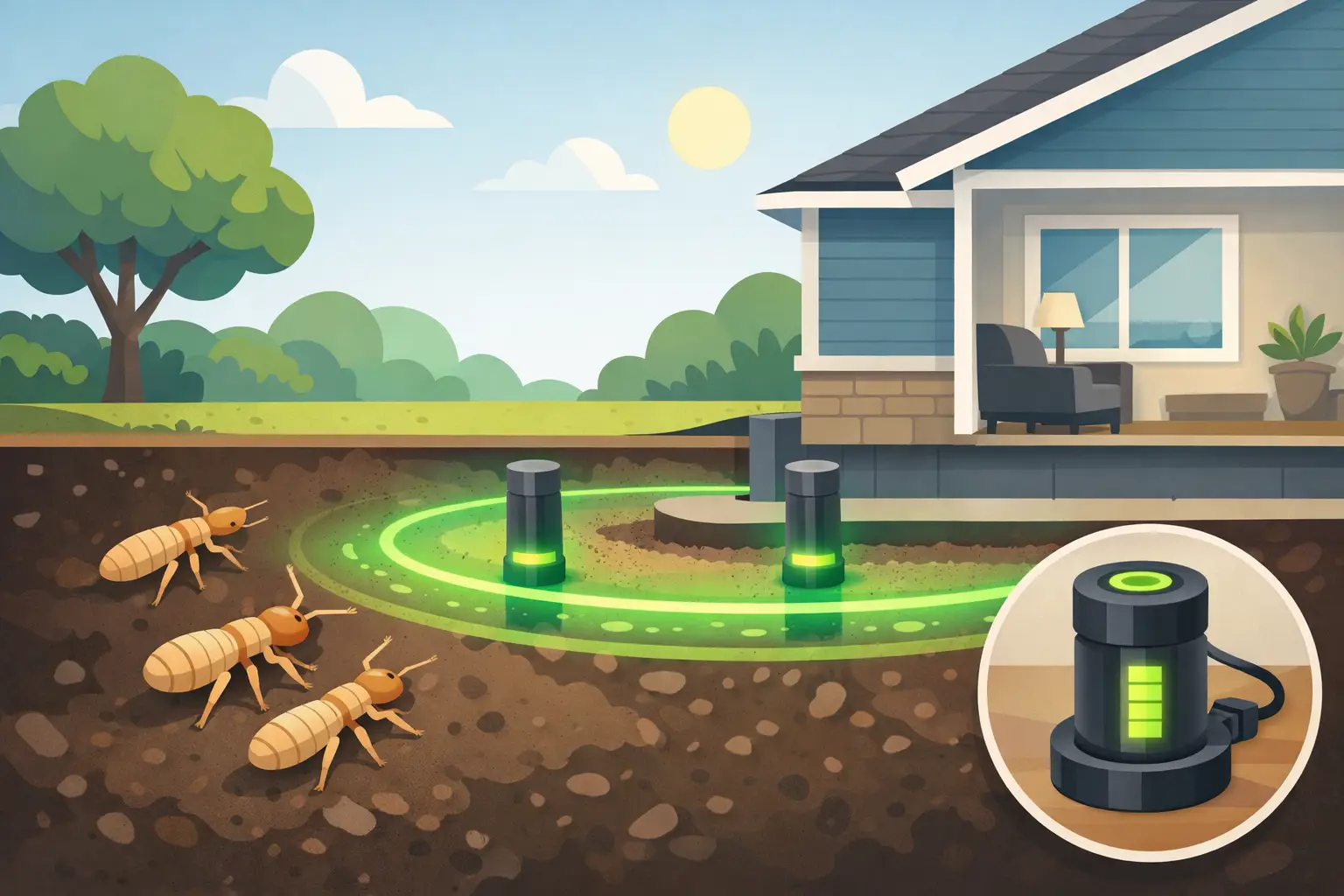

You usually find out how insurance treats termite damage at the worst possible moment – when a skirting board sounds hollow, a door frame starts crumbling, or a pre-purchase inspection uncovers damage that has been building for months or years. If you are asking is termite damage covered by insurance, the short answer is usually no. In most cases, insurers treat termite activity as a preventable maintenance issue rather than a sudden, unforeseen event.
That answer frustrates plenty of homeowners, and for good reason. Termite damage can be extensive, expensive and structurally serious. But from an insurer’s point of view, the key issue is not how bad the damage is. It is whether the damage happened suddenly and unexpectedly, or whether it developed gradually in a way the property owner could have identified and managed.
Is termite damage covered by insurance in Australia?
For most standard home and contents policies in Australia, termite damage is excluded. Policy wording differs from insurer to insurer, but the pattern is consistent. Damage caused by termites, vermin, insects, pests, gradual deterioration, wear and tear, or lack of maintenance is generally not covered.
That matters because termite attack almost never looks like a one-off event. Colonies work quietly inside timber, wall cavities and subfloors. By the time visible signs appear, the infestation has often been active for a long period. Insurers know this, so they commonly classify the resulting damage as something that should have been prevented through regular inspection, barrier maintenance and timely treatment.
This is why homeowners are often shocked twice – first by the damage itself, then by the rejected claim.
Why insurers usually say no
Insurance is designed to respond to sudden insured events such as storm impact, fire or escape of water. Termites do not fit neatly into that model. They exploit gaps in protection, moisture issues, concealed entry points and untreated construction details. In other words, they take advantage of conditions that can often be reduced with proper termite management.
From the insurer’s side, the logic is straightforward. If a risk can be controlled by routine inspections and preventive systems, then the responsibility sits with the property owner. That is why policy exclusions often bundle termites together with rot, rust, corrosion, mould and general neglect.
There is also a practical reason. Termite activity can be hard to date precisely. If an insurer cannot determine when the damage started, or if it appears to have developed over time, the claim becomes even harder to support.
Are there any exceptions?
There can be limited exceptions, but homeowners should be careful not to rely on them. Some policies may cover part of a loss if a separate insured event occurs and termite damage is only incidental to that event. For example, if an insured event exposes previously hidden termite damage, the event itself might be covered while the termite-related repair work is not.
In rare situations, a claim may also turn on very specific wording. Some policies differ around resultant damage, temporary make-safe work, or whether an assessor identifies another contributing cause. But these are exceptions, not the rule, and they should never be treated as a substitute for active termite protection.
If you want a real answer for your property, read the product disclosure statement carefully and ask your insurer direct questions in writing. General assumptions are risky when major structural costs are involved.
The real issue is prevention, not claim recovery
Once termites are established, the conversation changes fast from insurance to repair cost. Timber replacement, wall removal, joinery work, flooring repairs and structural remediation can become significant. In some properties, the cost of delayed action is far higher than the cost of maintaining a proper termite defence program.
That is why serious termite management is not just a pest control issue. It is an asset protection issue. For homeowners, buyers and builders, the smarter question is often not whether insurance will pay, but whether the property has an effective and maintainable barrier system in place.
A professional protection plan may include inspections, monitoring, a treatment program, and where suitable, a replenishable reticulation system or other compliant barrier solution. The value is not just in stopping current activity. It is in creating long-term defence that can be serviced, recharged and documented over time.
What homeowners should do before damage appears
The biggest mistake is waiting for visible signs. Termites do not announce themselves early. They work behind plaster, inside framing, under floors and through concealed entry zones. By the time paint bubbles or timber sounds drummy, meaningful damage may already exist.
For existing homes, regular inspections are the baseline. In termite-prone areas across Sydney, that is not optional if you are serious about protecting the structure. Inspections identify activity, conducive conditions and failures in existing systems before the problem escalates.
If your home already has a reticulation setup, servicing matters just as much as installation. Many owners assume the system will protect the property indefinitely, then discover the chemical zone has not been recharged on schedule. That gap can be costly. Questions like termite reticulation recharge cost, how much to refill termite system, and termite barrier recharge price Sydney are worth asking early, not after damage has occurred.
For new builds, the right approach starts before the slab is poured. A properly specified termite barrier system should suit the construction method, site risk and long-term servicing requirements. Builder-friendly installation is only part of the job. The system also needs to be maintainable across the life of the property.
If you are buying a property, do not rely on insurance assumptions
Pre-purchase buyers often assume any serious hidden issue will somehow be covered later. That is a dangerous assumption with termites. If damage is found after settlement, the insurer may reject the claim, and the previous owner is unlikely to carry the cost unless there is a separate legal issue around disclosure.
That is why a timber pest inspection matters so much before exchange. It gives you a clearer view of active infestation, previous damage, high-risk areas and the condition of existing protection systems. It can also reveal whether a reticulation system is present and whether it has been maintained properly.
For buyers comparing properties, this is not a minor detail. A home with documented barrier protection and service history is in a far stronger position than one with no evidence of ongoing termite defence.
What to check in your policy and your property
If you own a home, there are two separate checks that matter. The first is your policy wording. Look for exclusions relating to termites, insects, vermin, gradual damage, deterioration and maintenance. The second is the actual condition of your property. An insurance policy does not stop an infestation. A termite barrier, inspection regime and prompt treatment response do.
You should also check whether any existing system has current service records. If you have a replenishable barrier, ask when it was last recharged and what product was used. Search terms like termite reticulation recharge near me and pest control Sydney reticulation refill are common because many owners know the system exists but do not know whether it is still doing its job.
That uncertainty is exactly where risk grows.
Why long-term termite systems matter more than one-off spraying
A quick spray may look cheaper in the short term, but it rarely delivers the level of engineered protection that high-risk properties need. Effective termite defence is about coverage, compliance, monitoring and future serviceability. That is especially true for homes with refillable reticulation systems, where the ability to recharge the barrier without invasive re-treatment can protect both the structure and the ongoing budget.
For many property owners, the better investment is a system that can be inspected, maintained and documented over time. That creates continuity. It also reduces the chance of the all-too-common situation where owners believe they are protected but have actually let the system lapse.
In Sydney conditions, where termite pressure can be high across coastal, suburban and bush-adjacent areas, a neglected barrier is not much of a barrier at all.
When to act
If you have seen mud leads, damaged timber, bubbling paint, tight-fitting doors or unexplained hollow sounds, do not wait for an insurance answer before arranging an inspection. If you are unsure whether your existing system is still active, do not assume. If you are building, do not leave termite protection to the last minute or treat it as a box-ticking exercise.
Most insurers will not carry the cost of termite damage. That leaves the responsibility where it has always been – with early detection, proper system design and ongoing maintenance. Strong termite defence is not about hoping a policy responds. It is about making sure the property is protected before termites get the chance.
If you want certainty, get the structure inspected, confirm your barrier status and keep your protection current. That is how you defend the building, the budget and your peace of mind.