A house does not need a visible termite problem to be at risk. In Sydney, termites often move underground, enter through concealed gaps and stay active behind walls or under slabs long before anyone sees damage. That is exactly why homeowners and builders ask how termite barriers work – because prevention is far cheaper, cleaner and more reliable than structural repairs after the fact.
How termite barriers work at a practical level
Termite barriers work by stopping termites from entering a building unseen. That sounds simple, but the method depends on the system installed. Some barriers physically block concealed entry. Others create a treated zone in the soil that termites cannot cross without being affected. The aim is not just to keep termites away for a few months. The aim is to protect the structure over the long term and make termite activity easier to detect before major damage occurs.
The key point is that termites do not need a large opening. A tiny gap around plumbing, a crack in concrete or an unprotected construction joint can be enough. Good barrier design focuses on these entry points. It is engineered around the building, not sprayed loosely and forgotten.
For most homes, termite protection falls into two broad categories – physical barriers and chemical barriers. Many properties also have replenishable reticulation systems, which allow future re-treatment without trenching up the whole perimeter.
Physical termite barriers
A physical barrier is built into the structure or installed around critical entry points so termites cannot pass through hidden. Depending on the product, this might involve graded stone, stainless steel mesh, impregnated sheeting or purpose-made collars and penetrations around pipes and slab joints.
The strength of a physical system is permanence. Once installed correctly, it does not rely on chemical life to do the whole job. That makes it especially valuable in new construction, where the barrier can be integrated into the build from the start. Builders and certifiers often prefer this approach because it can align well with compliance requirements and provide a clear, durable defence layer.
That said, physical does not mean maintenance-free. If later works disturb the slab edge, garden beds bridge the barrier, paving covers inspection zones or renovations cut through protected areas, the system can be compromised. A barrier is only as effective as the conditions around it.
Chemical termite barriers
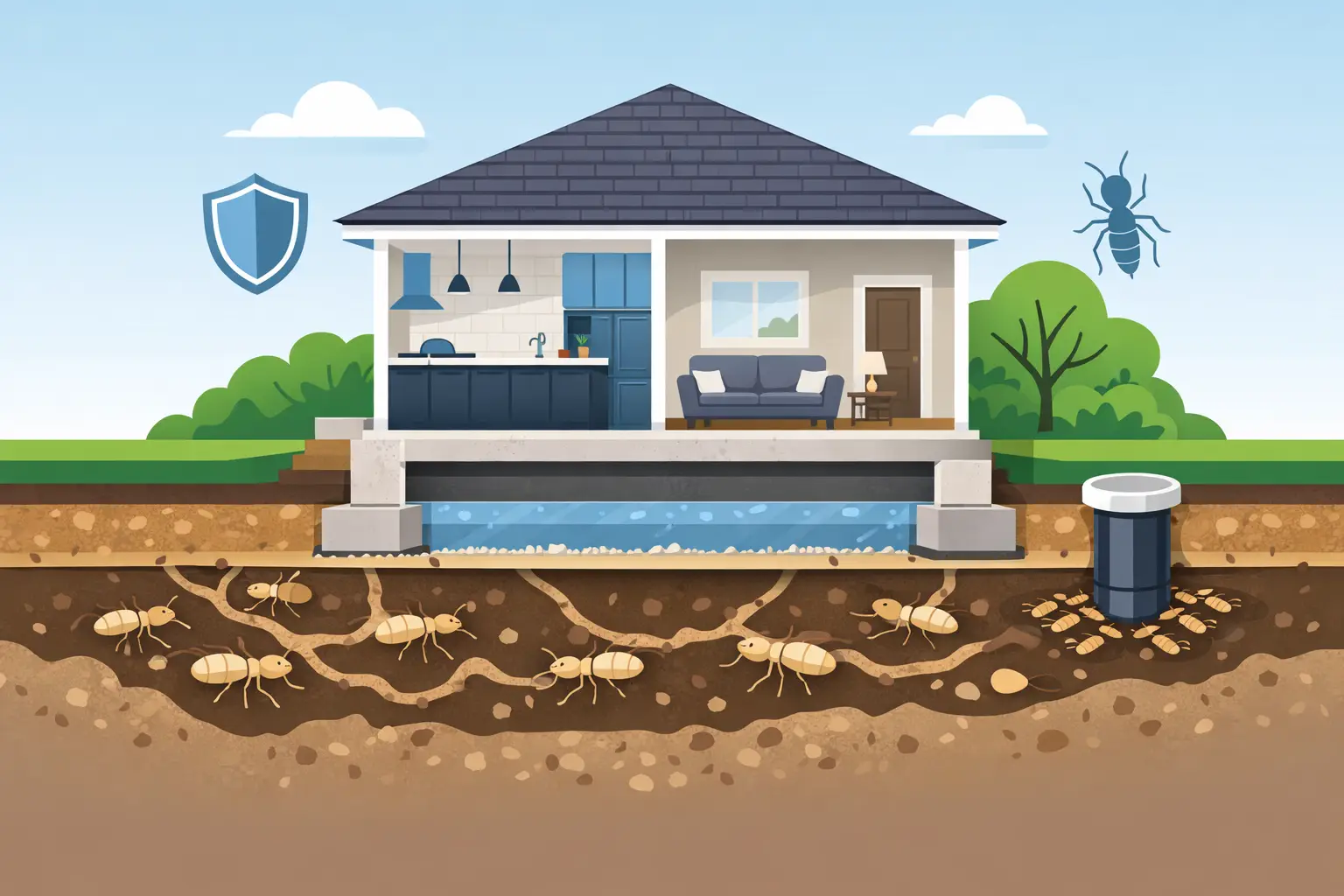
Chemical barriers work by treating the soil around and beneath a building to create a protective zone. When termites move through that zone, they are either repelled or exposed to a termiticide that affects the colony. Modern non-repellent products are often preferred because termites cannot easily detect them, which improves transfer through the colony.
This type of protection is common for existing homes because it can often be installed around a completed structure. The treatment may involve trenching, rodding, drilling through concrete paths or slabs, and injecting the termiticide into the soil at precise intervals. Done properly, it forms a continuous treated zone around likely entry paths.
The word continuous matters. Termites only need one untreated section to exploit. If access is poor, drainage is an issue or parts of the perimeter were missed, performance drops. Chemical barriers are highly effective when installed to standard, but they depend on correct application rates, site conditions and future monitoring.
How termite reticulation systems fit in
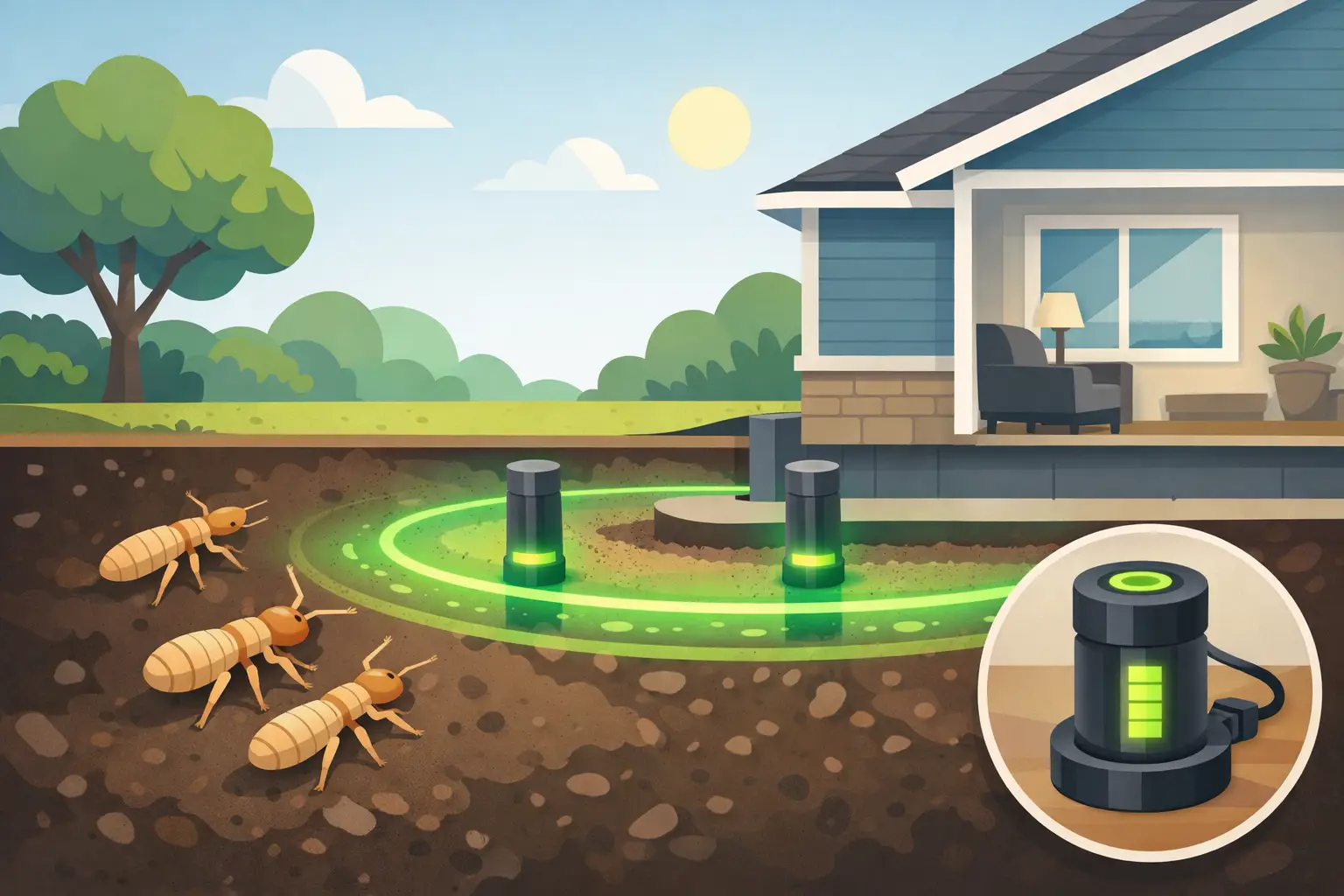
For many newer homes, particularly slab-on-ground construction, a termite reticulation system is one of the smartest ways to maintain ongoing protection. These systems use a network of pipes installed around the perimeter or under slab areas so termiticide can be reintroduced later without major excavation.
That matters because no chemical treatment lasts forever. Soil movement, moisture, product life and site disturbance all affect longevity. A replenishable system gives owners a practical path to re-establish the barrier when the time comes. It turns termite protection into a maintainable defence system rather than a one-off job.
This is where people often ask about termite reticulation recharge cost, how much to refill termite system, termite barrier recharge price Sydney, termite reticulation recharge near me and pest control Sydney reticulation refill. The answer is that price depends on the system type, product used, property size, access and whether the installation is still functioning as intended. What matters more than chasing the cheapest refill is making sure the recharge is carried out correctly, documented properly and matched to the specific barrier system on site.
Why barriers do not make inspections optional
One of the biggest mistakes property owners make is assuming a termite barrier means termites can be ignored. It does not. Barriers reduce risk. They do not remove it entirely.
There are several reasons for this. Termites can bridge over a barrier through built-up soil, landscaping, stored timber or foam insulation. Building alterations can create new entry points. Drainage problems can affect treated soil. In some cases, poor original installation leaves vulnerable gaps that only become obvious later.
That is why routine termite inspections remain essential even when a barrier is in place. An inspection checks whether the protection is still intact, whether conditions around the home are increasing termite pressure and whether any hidden activity is developing despite the system. For buyers, it also helps confirm whether claimed barrier protection is current, compliant and serviceable.
It depends on the building stage
If the property is still in design or construction, the best barrier strategy is usually one that is planned early and integrated properly. Pre-construction systems can be installed more completely, more neatly and often more cost-effectively than trying to retrofit protection after the build is finished.
If the home is already built, the right option depends on access, slab design, drainage, previous barrier history and the level of termite pressure on the site. Some homes suit a full chemical treatment. Others benefit from a reticulation recharge, a targeted upgrade or a combined approach.
There is no single barrier that suits every house. A freestanding brick veneer home on a flat block presents different risks from a split-level property, a townhouse with limited side access or a home with extensive paving and garden beds against the walls. Good protection is site-specific.
What a good termite barrier is really designed to do
People sometimes think of a termite barrier as a wall termites bounce off. In reality, a good barrier is designed to do three things at once. It reduces concealed entry, forces termites into visible areas if they try to get through, and supports long-term monitoring and maintenance.
That is why quality installation matters as much as product choice. Even the best system underperforms if it is installed without precision. Pipe penetrations, cold joints, slab edges, weep holes, expansion joints and service entries all need careful treatment. Termite protection is detailed work. Small misses create big liabilities.
How to tell if your current barrier may need attention
You do not need to wait for mud leads or damaged skirting boards to question the state of your barrier. If your system was installed years ago and has not been inspected, if you have a reticulation system that has never been recharged, or if landscaping and renovations have changed the perimeter, your protection may no longer be doing what it should.
The same applies if you bought a property with paperwork that is vague or incomplete. A label on a meter box or a note in old building documents does not automatically mean the barrier is current. You need to know what system was installed, when it was last serviced and whether site conditions still support its performance.
For homeowners and builders alike, the strongest approach is to treat termite defence as an ongoing system, not a once-and-done product. That means choosing the right barrier, keeping inspection access clear, scheduling inspections and recharging replenishable systems when required.
In termite-prone parts of Sydney, that level of discipline is not overkill. It is how you protect the building before termites get the chance to work unseen. If you want durable defence rather than guesswork, barrier protection should be planned, installed and maintained with the same precision as any other critical building system.