A termite barrier installed beneath or around a home should not be treated as a set-and-forget promise. Soil conditions change, chemical protection gradually diminishes, and termites do not wait for a convenient time to test a weak point. The most valuable rechargeable termite barrier benefits come from maintaining a designed line of defence that can be replenished without digging up gardens, lifting pavers or disrupting the building.
For Sydney homeowners and builders, that difference matters. A refillable reticulation system gives the property a practical pathway for ongoing protection, rather than relying on a one-off perimeter treatment that may be difficult to renew accurately years later.
What is a rechargeable termite barrier?
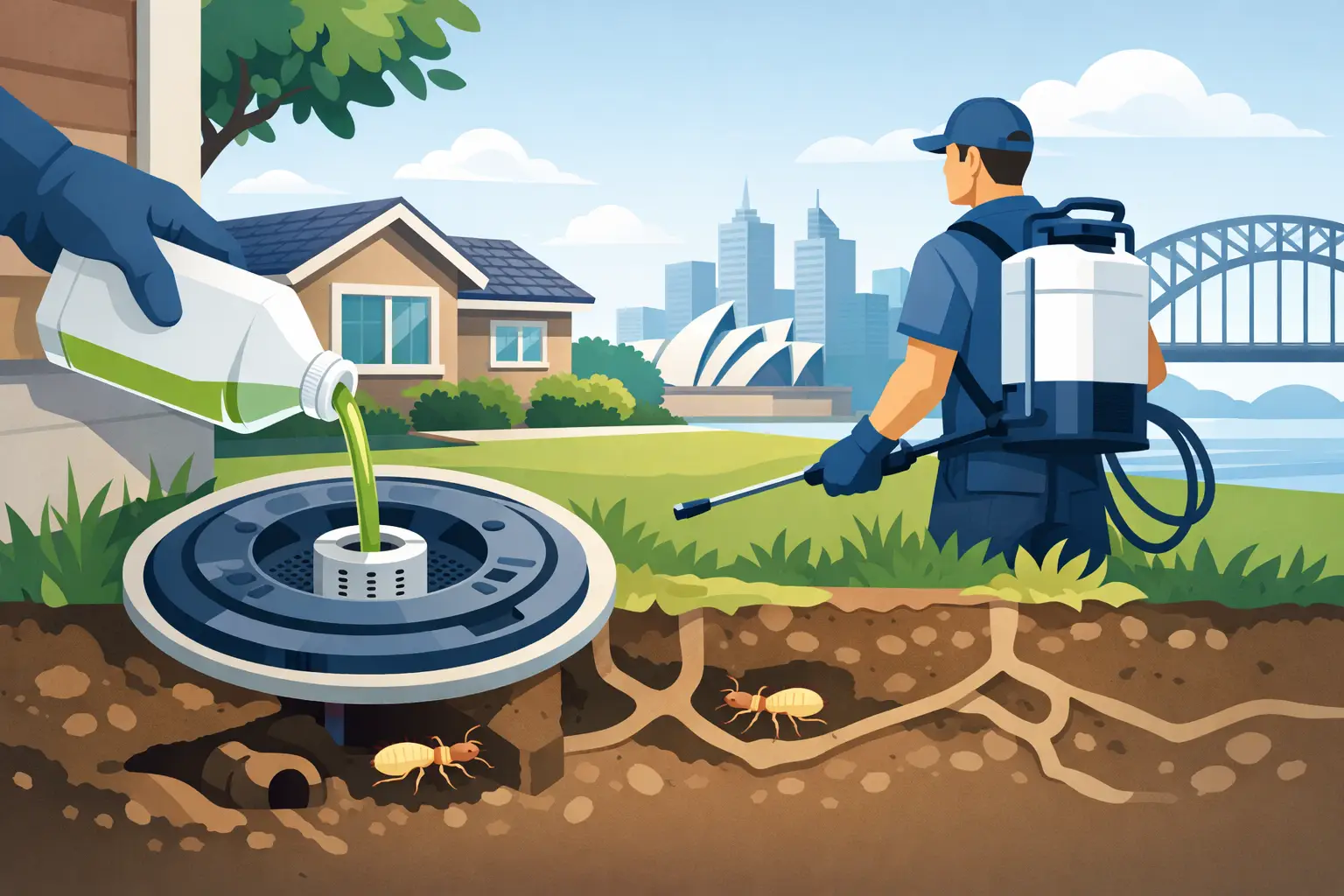
A rechargeable termite barrier is usually a reticulation system installed during construction or retrofitted where suitable. It consists of durable pipework placed around the external perimeter, and sometimes under slab areas, with controlled outlets that distribute a registered termiticide into the soil zone.
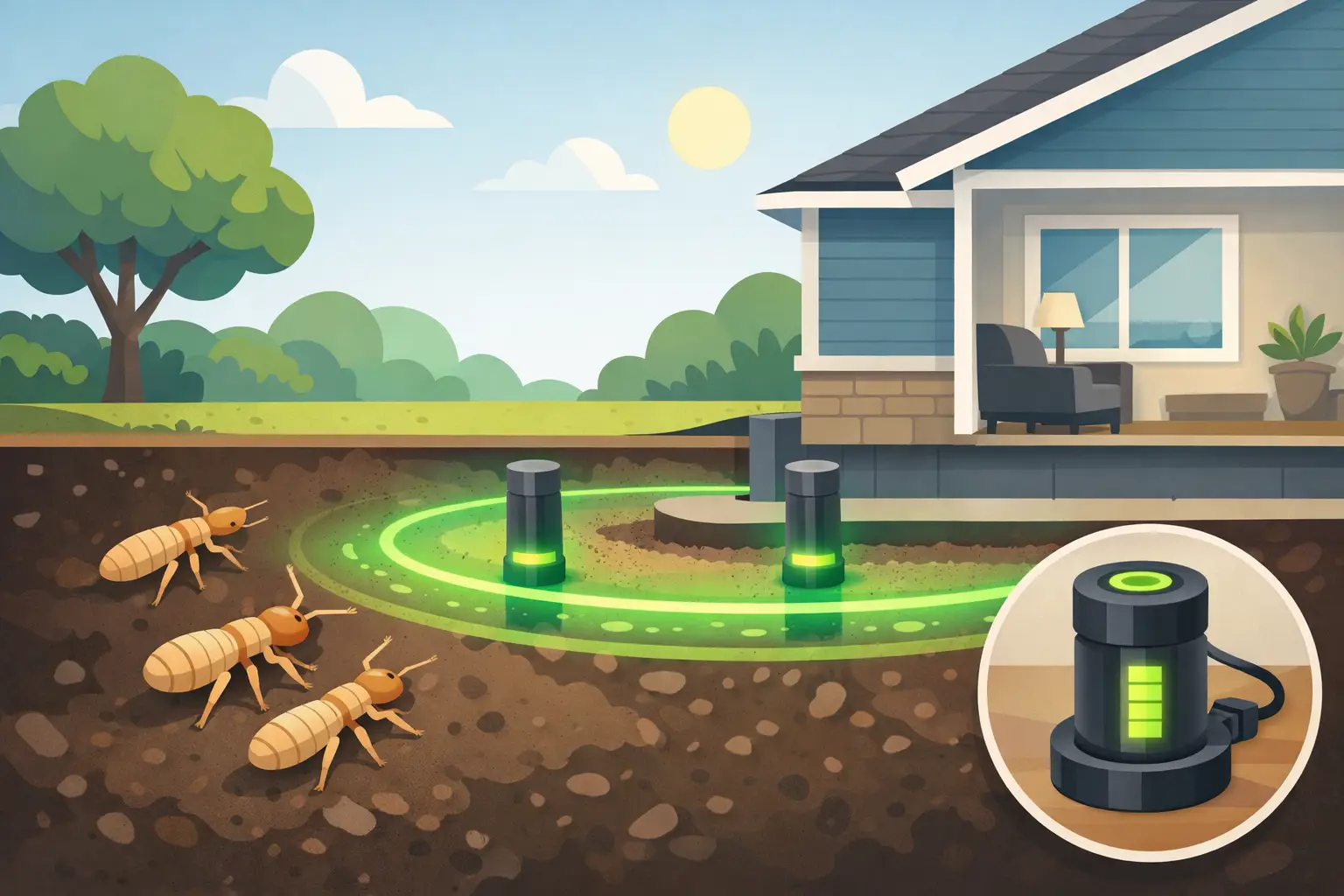
At scheduled intervals, a licensed technician connects to the system’s charge points and replenishes the treatment. The pipe network is designed to deliver the product evenly through the intended protection zone, creating a treated barrier termites must cross before they can reach concealed structural timbers.
This is not the same as simply spraying visible ground around a house. Proper barrier protection is planned around the construction design, likely termite entry points, drainage, landscaping and access for future servicing. Systems such as Termguard, Altis, TermStop, TermX, Camilleri, Cavtech and other approved barrier options may have different design and servicing requirements. The right system depends on the site, the building stage and the required level of protection.
Rechargeable termite barrier benefits that matter long term
Renew protection without major disruption
The clearest advantage is non-invasive re-treatment. With a conventional soil treatment, future replenishment may require trenching beside walls, moving mulch, cutting through paths or working around established landscaping. A reticulation system provides designated access points, so the treatment can be reintroduced with far less disturbance.
That protects more than the garden. It reduces the chance of costly repairs to paving, garden edging, irrigation and finished surfaces. For builders, it also makes it easier to hand over a home with a maintenance pathway already in place. For homeowners, it means maintaining termite protection does not have to become a renovation project.
More consistent treatment placement
Termites exploit gaps. An unevenly applied soil treatment can leave vulnerable sections, particularly where external finishes, retaining walls, service penetrations and landscaping complicate access. Reticulation pipework is engineered to distribute treatment along a defined route, helping technicians apply the product where it is needed.
Consistency still depends on proper installation, correct product selection and professional servicing. A pipe system cannot compensate for poor design or ignored maintenance. But when installed and recharged correctly, it creates a more controlled method of renewing the chemical component of the termite defence.
Protection that supports the life of the property
Termite risk does not end when construction is complete. In fact, many homes become more exposed over time as gardens mature, drainage patterns shift, moisture builds around subfloors or new structures create concealed entry paths. A replenishable system recognises that termite management is an ongoing property responsibility.
This makes particular sense for homes in termite-active parts of Sydney, including bushland-fringe, coastal and established suburban areas. The goal is not to assume a barrier makes inspections unnecessary. The goal is to combine a maintained barrier with regular professional inspections, so termite activity can be identified before significant damage occurs.
A practical asset-protection decision
Structural termite damage can be extensive before it becomes visible. Insurance commonly excludes termite damage, leaving owners exposed to repair bills that may far exceed the cost of scheduled barrier servicing. Rechargeable systems help spread the cost of prevention over time while preserving a reliable way to maintain protection.
For property buyers, records showing the barrier type, installation details, service history and recharge dates can also provide useful evidence that termite risk has been managed proactively. It is not a substitute for a pre-purchase timber pest inspection, but it is better than having no documented protection strategy at all.
How recharge servicing works
Before a recharge, the technician should identify the system, inspect accessible components and confirm that charging points remain serviceable. They will consider the original installation, prior treatment records, site changes and the product approved for use with that system. The treatment is then introduced through the reticulation lines at controlled pressure and volume.
A professional service is also an opportunity to inspect the conditions around the property. Excess moisture, leaking taps, poor drainage, timber stored against the home, concealed slab edges and garden beds built too high against walls can all increase termite pressure or make inspection more difficult. Recharging the barrier is valuable, but correcting contributing conditions strengthens the overall defence.
After servicing, keep the documentation. Your treatment certificate, product details, recharge volume and recommendations form part of the property’s termite protection record. They are particularly important when maintaining warranty conditions or planning the next inspection and recharge.
Termite reticulation recharge cost: what changes the price?
Homeowners often ask about termite reticulation recharge cost or how much to refill termite system protection. There is no responsible one-price answer because the cost depends on the property and the system already installed.
The length of pipework, number of charge points, treatment zone, access, selected termiticide, system condition and amount of product required all affect the quote. A large home with multiple wings, difficult access and extensive perimeter lines will generally require more product and labour than a compact single-storey dwelling. If damaged caps, blocked lines or missing records need attention first, that can also change the scope.
When comparing a termite barrier recharge price Sydney homeowners should look beyond the lowest figure. Confirm whether the quote includes a system assessment, treatment application, service documentation and clear recommendations for the next inspection. A cheap refill that skips verification or provides no records is not the same as a properly managed protection service.
Recharge timing is not guesswork
The right recharge interval depends on the product used, the manufacturer’s directions, the installation design, local conditions and the terms of any warranty. Some treatments have different effective life expectations than others. Do not rely on a calendar reminder inherited from a previous owner without checking the treatment certificate.
Regular inspections remain essential even when the chemical barrier is current. Termites can bridge treated zones through cracks, construction faults, service penetrations or concealed pathways. Physical barriers, exposed slab edges and inspection access all play a role. A rechargeable barrier is a powerful component of termite management, not a licence to stop looking.
If you are searching for termite reticulation recharge near me or pest control Sydney reticulation refill services, choose a provider that can identify and service the system already protecting your home. Compatibility matters. The technician should understand the requirements of the installed product, not try to force every property into a generic treatment plan.
When a rechargeable system may not be the right answer
Rechargeable barriers are highly practical for many new builds, but they are not automatically the best option for every existing home. Retrofitting may be limited by concrete paths, boundary access, building design or the condition of the surrounding soil. In some cases, a targeted soil treatment, physical barrier upgrade, monitoring program or a combined approach will provide better value.
The key is to assess the property’s actual risk rather than buying protection based on a label. Homes with known termite activity need a thorough inspection and treatment plan before maintenance options are discussed. Homes without an existing reticulation system may still achieve strong protection through a carefully designed alternative.
Termiguard approaches termite protection as an engineered defence, not a quick spray around the fence line. If your system is due for review, call 1800 837 643 or book online for an assessment and quote. The best time to establish a reliable recharge schedule is while the barrier is still working and before termites find the gap.