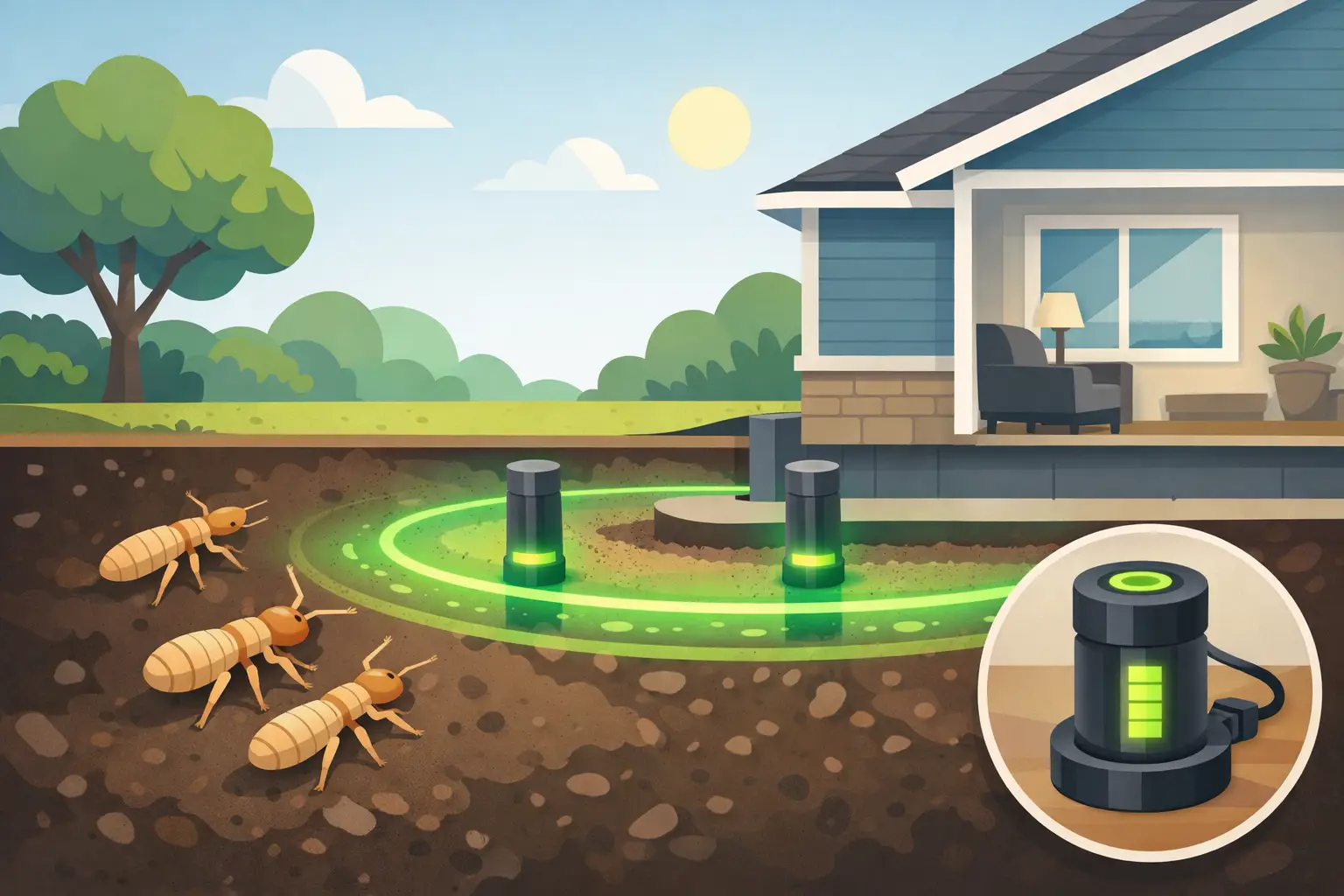

If you’re weighing up physical barrier vs chemical barrier protection, you’re already asking the right question. The wrong termite system is not just a budget issue – it can affect compliance, future access for re-treatment, warranty conditions and, in the worst cases, structural damage that costs far more than prevention ever would.
For homeowners, buyers and builders, the real decision is not which option sounds better on paper. It is which system gives your property the strongest long-term defence based on the build type, site conditions, termite risk and how the system will be maintained over time.
Physical barrier vs chemical barrier: what is the difference?
A physical barrier is a termite protection system designed to block, deter or expose termite entry using durable materials installed as part of the building fabric. Depending on the product, that can mean graded stone, stainless steel mesh or laminated barrier systems integrated around slab penetrations, perimeters and construction joints.
A chemical barrier uses a termiticide applied to soil around and beneath the structure to create a treated zone. When termites move through that zone, they are repelled, affected or eliminated depending on the chemistry and product design.
Both systems are widely used in Australia. Both can be compliant when correctly specified and installed. Both can also fail if they are poorly designed, badly installed or left unmaintained. That is where the decision needs more than a simple pros and cons list.
Where physical barriers perform well
Physical systems are often chosen for new construction because they can be integrated early and become part of the protection strategy from day one. Builders and specifiers like them because they are visible in the design phase, can suit particular slab details and, in some cases, reduce reliance on future chemical replenishment.
The biggest strength of a physical barrier is permanence of material. It does not rely on an active chemical zone in the soil. If it is installed correctly and not bridged, cut, punctured or covered over, it can provide ongoing protection without the same refill cycle associated with some chemical systems.
That said, permanence is not the same as immunity. Physical barriers are only as good as their continuity. A single service penetration, expansion joint, garden bed build-up or renovation detail can create a concealed entry point if the barrier is bypassed. This is why inspections remain essential even when a physical system is in place.
For builders, physical systems can also be attractive where a site program allows clean coordination between trades. For homeowners, they can be appealing if the goal is a long-term installed defence with minimal disruption once the house is complete.
Where chemical barriers perform well
Chemical systems are highly effective when designed and applied properly, and they are often the more practical solution for existing homes where retrofitting a physical barrier is either difficult or unrealistic.
A quality chemical treatment can protect complex perimeters, subfloor zones, construction joints and high-risk entry points without major structural alteration. This makes chemical barriers especially useful for established homes, extensions, remedial works and properties that need immediate termite defence.
Another major advantage is flexibility. Soil conditions, access constraints and building design vary from one property to the next. Chemical treatment programs can be tailored to the site rather than forcing the site to suit the product.
The trade-off is maintenance and lifespan. No homeowner should assume a chemical treatment is a set-and-forget fix forever. Product life depends on the active ingredient, application quality, soil disturbance, drainage conditions and whether the treated zone remains intact. That is why routine inspections and scheduled re-treatment or replenishment matter.
The role of reticulation systems
This is where many property owners get confused. A reticulation system is not simply a spray job with a fancy name. It is an engineered replenishable delivery system installed around the property, allowing termiticide to be recharged into the barrier zone without the same level of excavation or drilling required for some conventional retreatments.
For many homes, especially in Sydney conditions where long-term access and maintenance planning matter, reticulation offers a practical middle ground between permanence and renewability. It gives the property an ongoing defence strategy rather than a once-only application.
It also changes the cost conversation. Owners often ask about termite reticulation recharge cost, how much to refill termite system setups, or the termite barrier recharge price Sydney households should expect over time. The answer depends on the product, the lineal metres, chemical volume, accessibility and whether the system has been serviced properly since installation. A cheap refill is not good value if the system has blockages, damage or poor coverage.
If you are searching for termite reticulation recharge near me or pest control Sydney reticulation refill services, the key issue is not simply who can top it up. It is whether the provider understands the specific system installed and can verify it is still delivering complete protection.
Which option is better for a new build?
For a new build, the answer often depends on how early termite protection is considered. If the barrier system is specified during planning, there is more freedom to choose from physical products, chemical systems, reticulation options or a combined approach.
Physical barriers can be very strong on new builds because access is easy before slab pour and services are finalised. They can also align well with builder workflows when selected early. But the design must account for penetrations, slab edges, joints and future landscaping.
Chemical and reticulation systems are also common on new construction because they can deliver broad coverage and future serviceability. For many residential projects, a replenishable system is a smart long-term decision because the barrier can be maintained without tearing up finished areas later.
If the project is in a high-risk termite zone, or the owner wants stronger long-term control over future servicing, a specialist may recommend a layered approach rather than treating physical barrier vs chemical barrier as an either-or decision.
Which option suits an existing home?
Existing homes rarely offer the same installation freedom as a new build. That makes chemical treatment the more practical option in many cases. A physical barrier usually cannot be retrofitted comprehensively without significant invasive works, and partial physical protection can create a false sense of security if other areas remain exposed.
For an established property, the better question is often how to create a continuous treated zone and how that zone will be maintained. In some homes, this means a standard chemical soil treatment. In others, it may mean installing or servicing a refillable reticulation system to support ongoing protection.
This is particularly relevant if the property already has a legacy system in place. If you have an older reticulation setup, the issue is not whether it exists but whether it still functions properly, can be recharged and remains compliant with current protection needs.
Cost matters, but value matters more
Physical barriers can carry higher upfront costs on some projects, especially depending on product type and installation complexity. Chemical systems may appear more affordable at the start, but they come with ongoing inspection and possible replenishment costs.
That does not make one better value by default. A cheaper initial treatment that cannot be effectively maintained may cost more over the life of the property. Likewise, a premium physical system may not deliver the expected value if later building works bridge the protection or leave hidden gaps.
Good termite defence is about lifecycle performance. You are not buying a label. You are paying for an installed, inspectable and maintainable protection strategy.
Compliance, inspections and ongoing responsibility
No matter which system is installed, compliance and inspection obligations do not disappear. Australian termite management standards exist for a reason. The barrier must be appropriate for the construction method, correctly installed and supported by ongoing inspection.
This point gets missed far too often. Owners hear terms like permanent barrier or long-life treatment and assume the risk has been removed. It has not. Termites adapt to moisture, landscaping changes, concealed entry points and maintenance neglect. A compliant barrier is essential, but inspections are what confirm that the defence is still intact.
For buyers, this matters before settlement. For homeowners, it matters after renovations, drainage changes or garden upgrades. For builders, it matters because the right system should protect the structure without creating headaches for future certification or servicing.
So, physical barrier vs chemical barrier – what should you choose?
Choose based on the building stage, the accessibility of the site, the termite pressure, the ability to maintain the system and the consequences of future disruption. A physical barrier can be an excellent fit for new construction where the design allows proper continuity. A chemical barrier can be the smarter, more practical defence for existing homes or sites where flexibility matters. Reticulation systems deserve serious consideration when long-term replenishment and serviceability are part of the plan.
The strongest result often comes from specialist advice, not product bias. That means assessing the property properly, identifying the risk points and choosing a system that can still protect the building years from now, not just pass handover.
If you are planning a build, buying a home or reviewing an ageing termite system, act before termites test the weakest point. Long-term protection starts with a barrier that fits the structure – and a maintenance plan that does not leave your property exposed.