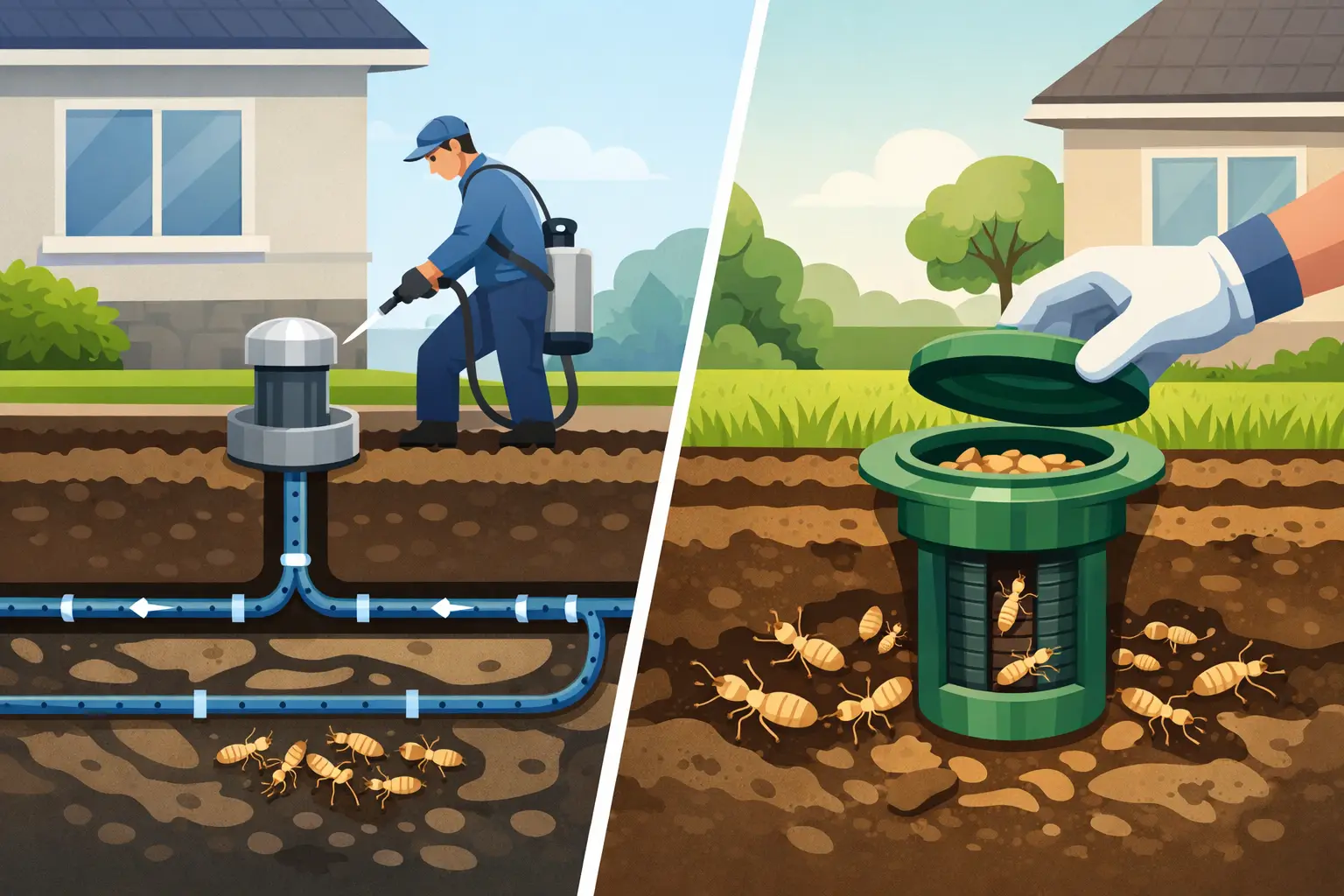

If you have a refillable termite system around your home, the termite recharge cost matters long before you see mud leads or damaged timber. A recharge is not a cosmetic service. It is what keeps the chemical zone around the structure active, compliant and able to defend the building the way the system was designed to.
For many Sydney homeowners, the problem is not knowing whether the price they have been quoted is fair, or what that price actually covers. Some recharges are straightforward. Others involve multiple fill points, larger perimeter runs, restricted access, previous neglect or a system that has not been serviced in years. That is why there is no honest one-price answer that suits every property.
What affects termite recharge cost?
The biggest factor is the system itself. Not all reticulation and replenishable barrier systems are the same, and not all homes have the same layout, perimeter length or number of injection points. A modern slab-on-ground home with good access is usually simpler to service than an older property with additions, paving, tight side access or landscaping over key sections.
Chemical volume also changes the price. Larger homes and more extensive barrier lines need more product to fully recharge the system. If the treatment zone has to be reinstated across a broader footprint, the material cost rises quickly. That is one reason termite reticulation recharge cost can vary so much from one quote to the next.
Access matters more than many owners expect. If fill points are buried, covered, damaged or hard to reach, the service takes longer and may need minor preparation before the system can be recharged correctly. A contractor who prices purely on the refill itself, without allowing for inspection and system condition, may be cutting corners somewhere else.
Timing also affects value. If you recharge at the proper interval recommended for the product and system, the job is usually more predictable. If the barrier has lapsed, or there are signs of termite pressure, the site may need a more detailed inspection and a different scope of work before the property is properly protected again.
Typical termite recharge cost ranges
In practical terms, most homeowners asking about how much to refill termite system protection want a realistic range. For an average residential reticulation recharge, you may see pricing start from several hundred dollars and move into the low thousands depending on property size, chemical requirements and system complexity.
A smaller home with an accessible and well-maintained system may sit at the lower end. A larger property, a home with complicated perimeter lines, or a site requiring more product and labour will sit higher. If someone offers a very low termite barrier recharge price Sydney homeowners should be careful. The cheapest figure can leave out inspection, pressure testing, confirmation of product volume, reporting or any allowance for system faults.
This is where owners often compare the wrong numbers. A low quote is not always a lower total cost if the recharge is incomplete or the barrier is not re-established properly. With termite defence, the price only makes sense when measured against the standard of protection delivered.
What should be included in the price?
A proper recharge service should do more than pump chemical into a line and leave. At a minimum, the contractor should confirm what system is installed, assess whether it is serviceable, identify fill points, calculate product requirements and recharge the system in line with the manufacturer requirements and the property layout.
For many homes, the service should also include an inspection of visible risk areas around the structure. That does not replace a full annual termite inspection, but it does help identify obvious issues such as concealed access points, bridging risks, moisture problems or areas where the barrier may be compromised.
Reporting matters too. If you sell the property, make a warranty claim, or simply want confidence that the system has been maintained, documentation has real value. A professional recharge should leave you knowing what was done, what product was used and when the next service is due.
Why one home costs more than another
Two homes on the same street can have very different termite recharge cost outcomes. One may have a compact footprint and clean perimeter access. The other may have retaining walls, extensions, dense garden beds, decorative paving and sections of the system that are difficult to reach without extra labour.
Construction type can also affect the service. Homes with additions, split levels or unusual slab edges can complicate the barrier layout. Builders and specifiers already understand this on new projects – termite protection is only as strong as the continuity of the barrier. The same logic applies when a recharge is carried out years later.
There is also the issue of prior servicing. If the system has been consistently maintained, it is generally simpler and safer to recharge. If it has been ignored, damaged or altered during landscaping or renovation work, the contractor may need to spend more time verifying whether the barrier can still be reinstated as intended.
Termite reticulation recharge cost versus standard treatment
A reticulation recharge is not the same as a fresh perimeter drill-and-treat service. Homeowners sometimes compare them as if they are interchangeable, but they solve slightly different problems. A recharge uses the installed delivery system to replenish the chemical barrier around the structure. A conventional treatment may require drilling, trenching or direct application where no refillable system exists.
If your property already has a replenishable system, keeping it serviceable is usually the cleaner and more efficient path. It is designed for ongoing defence without the disruption of starting from scratch each time. That long-term advantage is a major reason many builders and owners choose refillable systems in the first place.
Still, it depends on system condition. If a reticulation network is severely damaged or can no longer provide effective coverage, repair or an alternative treatment strategy may be needed. That is why a proper assessment comes before any honest quote.
When should you recharge a termite system?
The right timing depends on the product used, the system design and the service history. Some properties are serviced on a set interval. Others need attention based on product life, inspection findings and environmental conditions around the home.
Waiting until you are unsure is not a strong strategy. A lapsed barrier leaves a gap in protection, and termites do not wait for convenient timing. In high-risk areas or homes with known termite pressure, delayed servicing can become far more expensive than the recharge itself.
For homeowners searching termite reticulation recharge near me, the better question is not just who can do it, but who can verify the barrier is being restored properly. Fast availability is useful. Correct reinstatement is what protects the asset.
How to read a quote properly
A quote should tell you more than the final figure. It should make clear what system is being serviced, what product is proposed, whether inspection is included, and what assumptions have been made about access and condition. If those details are missing, ask before approving the job.
You should also ask whether the service includes documentation and whether any exclusions apply. For example, if sections of the system are inaccessible or damaged, that should be clearly stated. Good contractors are direct about trade-offs. They do not pretend every property can be serviced under perfect conditions.
For Sydney properties, especially in established suburbs with mixed housing stock, this matters. Pest control Sydney reticulation refill work can range from simple modern installs to older systems requiring experienced handling. Quotes should reflect that reality, not hide it.
Is the cheapest option worth it?
Usually not if your goal is long-term structural defence. A recharge that is priced too low may rely on reduced product volume, minimal inspection time or assumptions that the system is functioning perfectly when it has not been checked properly. That is not savings. It is exposure.
What you are paying for is not just chemical. You are paying for correct diagnosis, accurate replenishment and confidence that the protection around the building has been restored with precision. When termite pressure is the risk, false economy can get very expensive very quickly.
If you need clarity on termite recharge cost for a home with a reticulation system, get the property assessed on its actual layout and service history. A precise quote is always more useful than a generic promise. If you want a service team that works across major systems and treats termite protection as engineered defence rather than a quick spray, book the recharge before the barrier lapses and the risk shifts back to your home.