When termites are active under or around a home, speed matters – but so does choosing a treatment that actually matches the building, the infestation and the long-term risk. Termidor termite treatment is widely used because it is designed to transfer through termite activity and suppress the colony, not just kill a few insects at the point of contact. That sounds simple on paper. In practice, the result depends on access, soil conditions, construction detail and whether you are treating an active problem or trying to build lasting protection around the structure.
For homeowners, buyers and builders, that distinction is where expensive mistakes happen. A one-off application can be effective in the right setting, but termite defence should never be reduced to “spray and hope”. The real job is protecting the structure.
What is Termidor termite treatment?
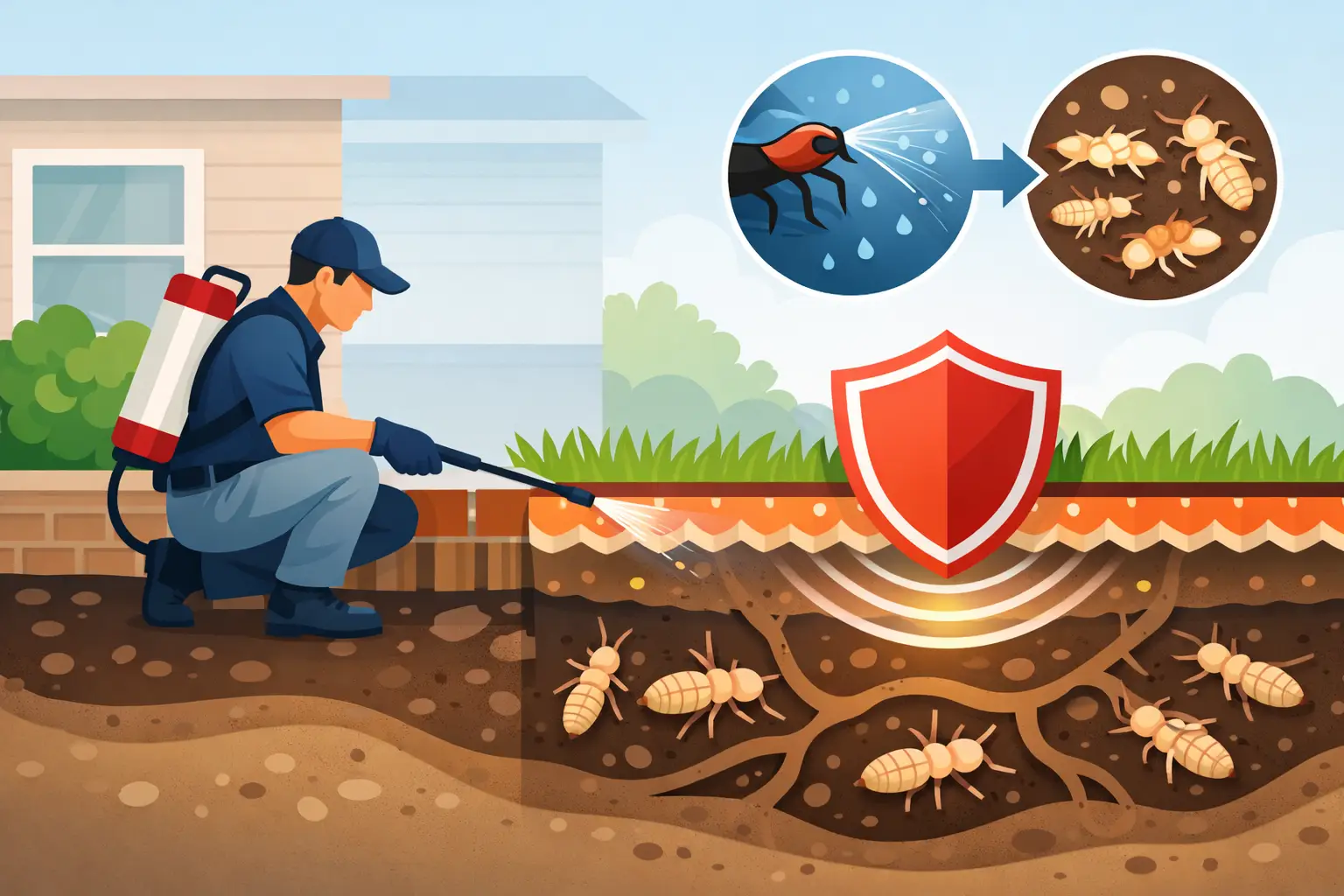
Termidor termite treatment is a non-repellent chemical termite treatment used in soil and, in some cases, targeted treatment zones around structures affected by termite risk. Because termites do not detect it in the same way they avoid some older products, they continue moving through treated areas and carry the active ingredient back through the colony.
That transfer effect is the main reason it is so well known. Instead of creating a simple repellent line that termites may work around, a non-repellent treatment is designed to intercept them without changing their behaviour straight away. For active infestations, that can be highly effective. For preventative work, it can form part of a broader termite barrier strategy.
The key phrase there is “part of”. No chemical treatment should be discussed as if it operates in isolation from the building itself. Slab penetrations, construction joints, drainage lines, landscaping changes and previous renovations all affect performance.
How Termidor termite treatment works on a property
With a standard soil application, the treatment is placed into the soil adjacent to and beneath critical parts of the structure. The objective is to establish a continuous treated zone where termites are most likely to enter. If the termites pass through that zone, they pick up the active ingredient and spread it through grooming and contact within the colony.
For an active infestation, a technician may also use targeted treatment methods based on where activity has been identified. That does not mean every infestation can be solved by applying product to one obvious point. Termites often enter in concealed areas, and visible damage is usually only part of the story.
This is why proper inspection matters before treatment starts. You need to know whether the issue is a localised attack, a broader entry problem, or a sign that the existing barrier has failed or been bridged. Without that clarity, even a strong product can be used in the wrong way.
Where it fits best
Termidor termite treatment is often a strong fit for existing homes where a chemical soil zone can be installed or reinstated around the structure. It can also suit situations where termites are active and a non-repellent approach is needed to manage colony transfer.
It may be appropriate around homes with straightforward perimeter access, exposed soil zones and clear treatment paths. It can also work well where the goal is to strengthen protection after inspection has identified gaps in the current defence.
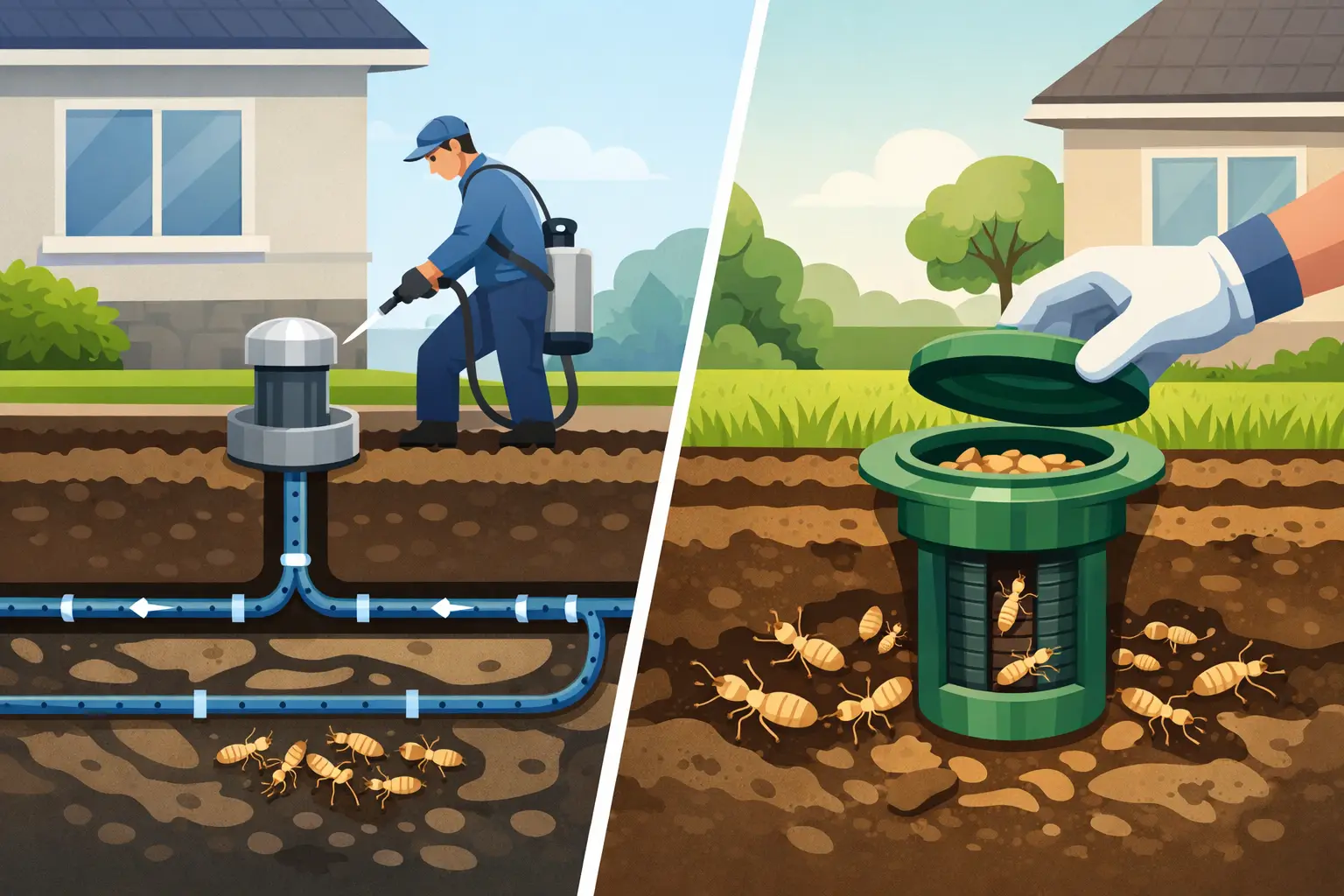
But there are limits. If hard landscaping, extensions, paving, internal wet areas or inaccessible construction details prevent a continuous treatment zone, the outcome becomes more complex. In those cases, drilling, trenching or combining treatment methods may be necessary. Sometimes the smarter answer is not simply more chemical. It may be a monitored protection plan, a recharge of an existing reticulation system, or a different barrier strategy that suits the construction better.
When a barrier system may be the better long-term move
This is where many property owners need straight advice. Treating termites and protecting a building are related, but they are not identical.
If you are building a new home, major extension or duplex, the conversation should not start with a reactive treatment product. It should start with an engineered termite barrier system that complies with the relevant requirements and protects the structure from day one. That may involve physical barriers, chemical soil treatments, replenishable reticulation systems, or a combined approach depending on the design.
For existing homes with refillable systems already in place, the real issue may be maintenance rather than replacement. Many owners ask about termite reticulation recharge cost, how much to refill termite system infrastructure, or the termite barrier recharge price Sydney properties can expect after the original installation has aged. Those are sensible questions because a recharge can often restore the protection of the installed system without invasive new works.
If the house has a reticulation setup, a proper inspection should determine whether the system is serviceable, due for recharge or compromised. Searching termite reticulation recharge near me or pest control Sydney reticulation refill will not tell you whether the system has been installed correctly, whether all zones are charging evenly, or whether landscaping and building changes have created untreated breaks.
Cost depends on more than the product
People often expect a flat answer on price. With termite work, that is rarely honest.
The cost of Termidor termite treatment depends on the size of the structure, treatment access, soil conditions, drilling requirements, severity of the infestation and whether the work is curative, protective or both. A straightforward perimeter application on a home with good access is a different scope to a property with extensive paths, internal slab treatment points and concealed activity in multiple areas.
If the home already has a reticulation system, comparing a fresh perimeter treatment against a recharge is worth doing. In some cases, servicing the existing system is the cleaner and more cost-effective path. In others, a recharge is not enough because the system is damaged, incomplete or no longer suited to the property configuration.
The right quote should explain what is being treated, where continuity can and cannot be achieved, and what follow-up is required. If a proposal only talks about litres of product or quick turnaround, it is probably missing the real structural risk.
Inspection first, treatment second
The strongest termite decisions are made after a proper inspection, not before. That applies whether you are a homeowner seeing mud leads in the garage, a buyer lining up a pre-purchase inspection, or a builder trying to specify compliant protection for a project.
An inspection should identify active areas, likely entry points, moisture issues, barrier breaches and construction features that affect treatment coverage. It should also tell you whether the visible signs are current activity or old damage from a previous event.
This is particularly important in Sydney conditions, where termite pressure can be high and many homes have a mix of slab sections, subfloor areas, retaining walls, paved edges and garden beds hard against the structure. The more interrupted the perimeter, the more important treatment design becomes.
Why one treatment is not the whole answer
Even when Termidor termite treatment is the right choice, ongoing protection still matters. Termites do not stop being a risk because one application has been completed. Soil can be disturbed. Garden works can bridge treated areas. New concrete, plumbing works or drainage changes can create fresh entry paths.
That is why serious termite protection includes scheduled inspections and, where relevant, maintenance of installed systems. Long-term defence is built through monitoring, barrier integrity and timely re-treatment when needed. Property owners who skip this usually do not realise the risk until termites have already found the next weak point.
For builders and specifiers, this matters at handover as well. The selected system should not only meet the build requirement. It should also be serviceable over time, with a clear path for inspection, recharge or re-treatment as the home ages.
Choosing the right contractor matters as much as the chemical
A good product cannot compensate for poor treatment design. The contractor needs to understand active termite behaviour, construction detail, standards compliance and the difference between a quick treatment and a durable protection strategy.
That is especially relevant when comparing termite treatment with reticulation servicing, refillable barriers and integrated protection options. A specialist provider should be able to tell you when Termidor is the right solution, when it needs to be combined with other work, and when another system is the better fit for the building.
If you need a quote for active termites, a barrier assessment or a recharge inspection, get an Instant Quote or Book online, or call now on 1800837643. If you are weighing up broader system servicing, ask about Termigurd Reticulation support as part of the property’s long-term defence plan.
The safest approach is not chasing the fastest treatment. It is choosing the method that closes the entry path, suits the building and keeps protecting the structure after the immediate termite activity is gone.