A termite problem rarely starts where you can see it. It starts in the soil, below the slab edge, beside footings, under paths, and around service penetrations where termites can move quietly into a structure. That is why chemical soil barrier termite treatment remains one of the most effective ways to defend a home or building project. Done properly, it creates a treated zone in the ground that termites must pass through before they reach the structure.
For homeowners, that means protection where the risk actually begins. For builders and project teams, it means a practical system that can be integrated into construction and maintained over time. The key is not just applying chemical to soil. The key is designing a continuous barrier, applying it to the right areas, and making sure it remains compliant and serviceable.
What chemical soil barrier termite treatment actually does
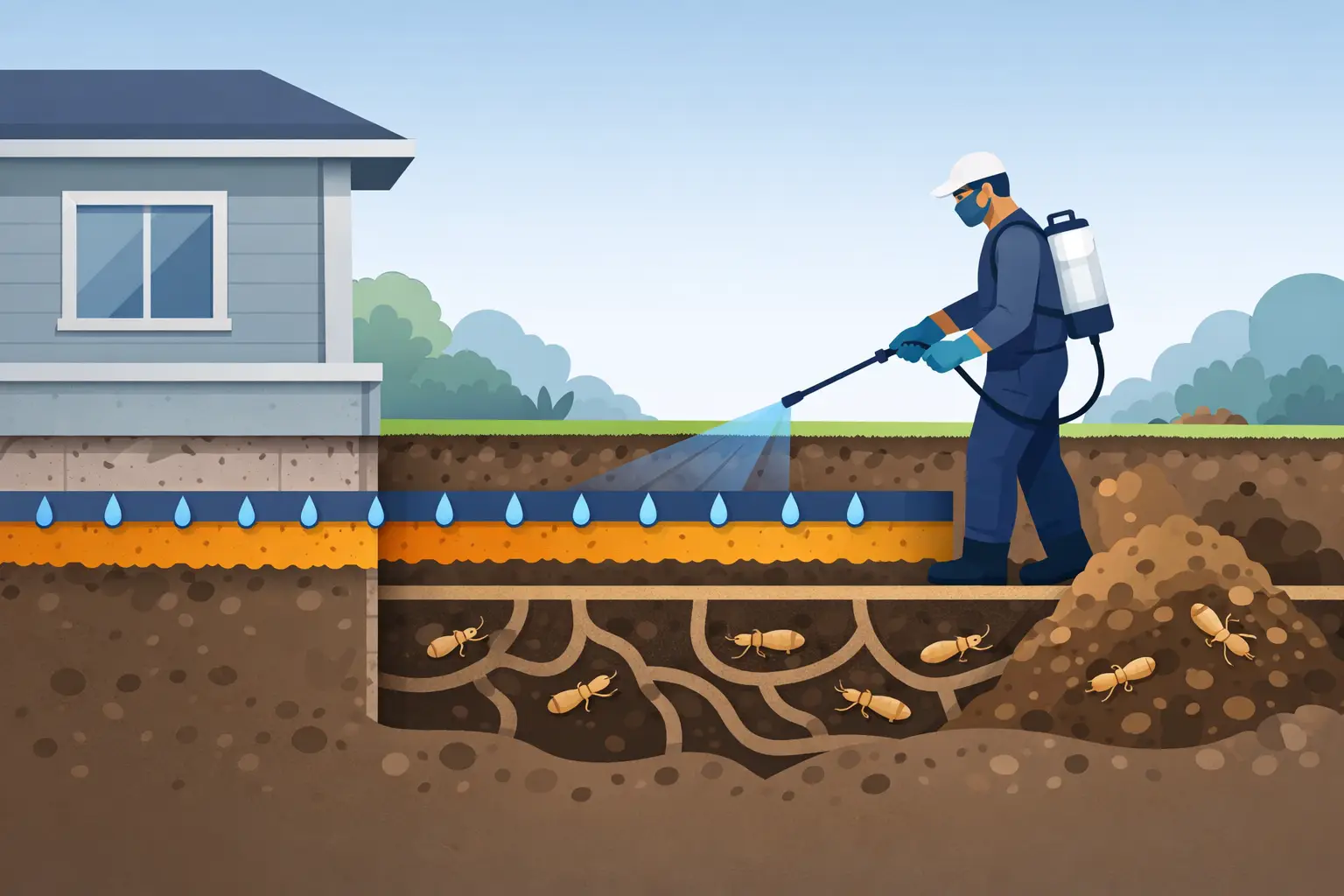
A chemical soil barrier termite treatment places termiticide into the soil around and, in some cases, beneath critical parts of a building. The goal is to establish a treated zone that intercepts termite movement. Depending on the product used, termites may be repelled, affected after contact, or transfer the active ingredient through the colony.
This is where a lot of confusion starts. Many people think of termite treatment as a one-off spray around the house. That is not a reliable barrier strategy. A proper soil treatment is about coverage, depth, trenching, rodding, application rates, and attention to construction details such as cold joints, external perimeters, expansion joints, and pipe penetrations. Miss one high-risk access point and you can leave a gap in the defence.
For that reason, the quality of the installation matters as much as the product itself. A strong termiticide applied poorly is still a weak barrier.
Why this method is still widely used
Chemical barriers remain common because they are versatile and effective across both existing homes and new construction. On established properties, they can often be installed with targeted trenching and injection around the perimeter. On building sites, they can form part of a broader termite management system before slabs are poured or during key construction stages.
They also suit Sydney conditions well because many properties have mixed risk factors – garden beds against walls, paved edges, varied subsoil, moisture sources, and concealed entry points created by renovations or landscaping. In these settings, a properly planned barrier offers a level of protection that is practical, measurable, and easier to maintain than relying on visual checks alone.
That said, chemical barriers are not magic. If drainage is poor, gardens are built up over weep holes, or untreated soil bridges are created later, the barrier can be compromised. Protection works best when the system and the property are managed together.
Chemical soil barrier termite treatment for new and existing homes
New construction
For new builds, chemical soil barrier termite treatment can be integrated before construction elements make access difficult. This usually allows for better coverage at critical stages and can work alongside physical termite management products where required by the design, site conditions, or specification.
Builders often prefer systems that are practical on site and do not slow the program. That is fair. But convenience should never come at the cost of continuity. A fast install that leaves vulnerable penetrations or perimeter sections untreated is a false economy. The better approach is coordinated termite protection that suits the slab design, service layout, and compliance requirements from the start.
Existing homes
On existing homes, installation depends on access and construction type. A house with clear perimeter soil access is usually more straightforward than one boxed in by paths, patios, retaining walls, or decorative concrete. In those cases, treatment may involve a mix of trenching, drilling, and pressure injection to reach the right zones.
This is where experience counts. Existing homes rarely present textbook conditions. There may be extensions, old barrier systems, filled-in garden beds, or moisture issues that change how the treatment should be carried out. The right solution is often tailored rather than standard.
What affects performance and lifespan
Not all barriers last the same amount of time in the real world, even when the label life looks strong on paper. Soil type, rainfall, drainage, disturbance, landscaping, and construction changes all affect how well a barrier performs over time.
Clay soils, sandy soils, and heavily disturbed fill can behave very differently. If the treated zone is later dug up for plumbing, paving, garden works, or retaining walls, continuity may be broken. Even something as ordinary as adding a new garden edge against the house can alter moisture and access conditions.
That is why ongoing inspection matters. A chemical barrier is a serious line of defence, but it still needs verification. Annual termite inspections help identify whether the barrier remains intact and whether any bridging or concealed access has developed since installation.
Choosing between a conventional treatment and a replenishable system
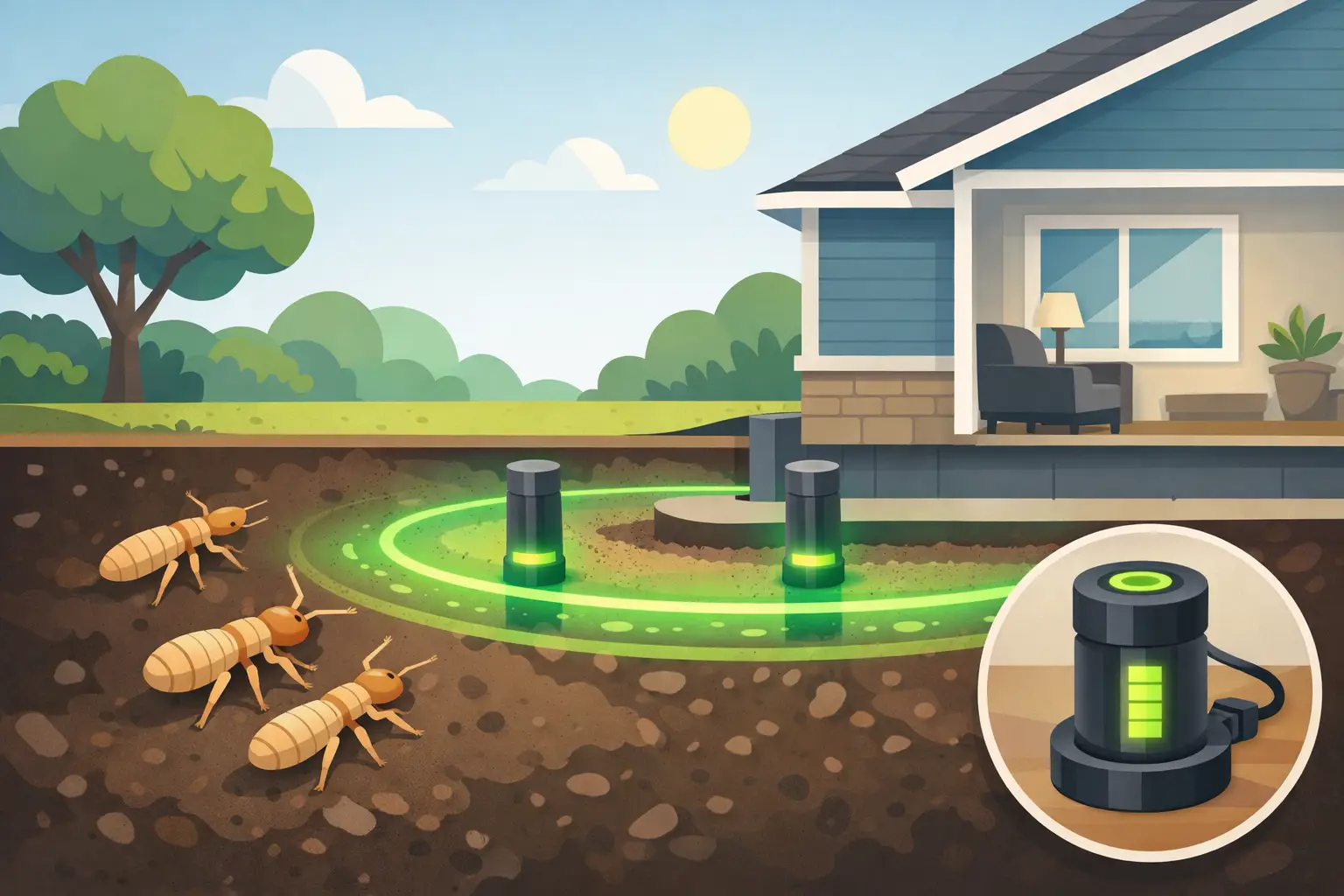
This is one of the more important decisions, especially for long-term owners. A conventional soil treatment is applied directly to the soil at the time of service. A replenishable reticulation system allows termiticide to be reintroduced into the barrier through installed delivery lines without major excavation.
For some homes, a conventional application is perfectly suitable. It can be cost-effective and highly effective where access is good and future disturbance is unlikely. For other properties, particularly where long-term maintenance is a priority, a refillable system can offer a more serviceable path. Recharging a reticulation setup is less invasive and can make future protection easier to manage.
That is often where practical questions come up, especially from owners of existing systems. They want to know the termite reticulation recharge cost, how much to refill termite system infrastructure already in place, or the likely termite barrier recharge price Sydney property owners should budget for. The honest answer is that it depends on the system type, chemical volume, property layout, and whether the network is still functioning as intended. A site-specific assessment is the only reliable way to price it properly.
If you are comparing options, do not just compare the upfront invoice. Compare future serviceability, compliance records, inspection access, and whether the system can be maintained without tearing up the perimeter later.
Common mistakes that weaken a termite barrier
The biggest mistake is treating termite protection like general pest control. They are not the same job. A perimeter spray aimed at insects above ground is not a substitute for a properly installed termite soil barrier.
Another mistake is assuming a barrier means zero maintenance. Homes change. Landscaping changes. Moisture conditions change. Renovations create new penetrations. If inspections stop, the risk rises.
The third mistake is choosing on price alone. Cheap work usually cuts time, coverage, or detail. With termite management, gaps are expensive. Structural repairs cost far more than getting the barrier right the first time.
When chemical barriers make the most sense
A chemical barrier is often the right choice when you need broad perimeter protection, the construction type allows effective application, and there is a clear plan for future inspection and maintenance. It is especially valuable where termite pressure is high, concealed entry risk is significant, or the property is being built or renovated and access to key zones can be controlled.
It may also be the strongest option when paired with other measures. In higher-risk settings, termite defence is rarely about a single product. It is about a managed system – inspection, monitoring, moisture control, and where suitable, refillable infrastructure that supports long-term protection.
For property owners searching termite reticulation recharge near me or pest control Sydney reticulation refill services, the real issue is not just who can pump chemical into the line. The real issue is whether the system is being assessed, recharged correctly, and supported by proper ongoing termite management.
What to ask before booking a treatment
Ask how the barrier will be applied to your specific construction type. Ask which risk points are being addressed and what limitations exist if paths, patios, or slab design restrict access. Ask how the work will be documented and what maintenance schedule is recommended after installation.
If you already have a reticulation setup, ask whether it can be recharged, whether the line network is operating properly, and whether the treatment will restore effective coverage. If you are building, ask how the termite system fits the construction sequence and future compliance needs.
A serious provider should be able to explain the treatment clearly, identify the constraints honestly, and stand behind the outcome with a service-led plan rather than a quick spray-and-go approach.
The best termite protection is the one that still works years after the invoice is paid. Chemical soil barrier termite treatment can deliver that protection, but only when it is planned with precision, installed properly, and backed by ongoing oversight. If the goal is to protect the structure, not just tick a box, the barrier needs to be treated as part of the building’s long-term defence.