
A termite barrier is not a box-ticking exercise. The choice between a reticulation system vs soil treatment affects how your home is protected today, how easily that protection can be renewed, and what happens when the chemical barrier reaches the end of its service life. For Sydney homes and new builds, the right answer depends on access, construction stage, site conditions and the protection strategy you want in place for the long haul.
What separates the two options?
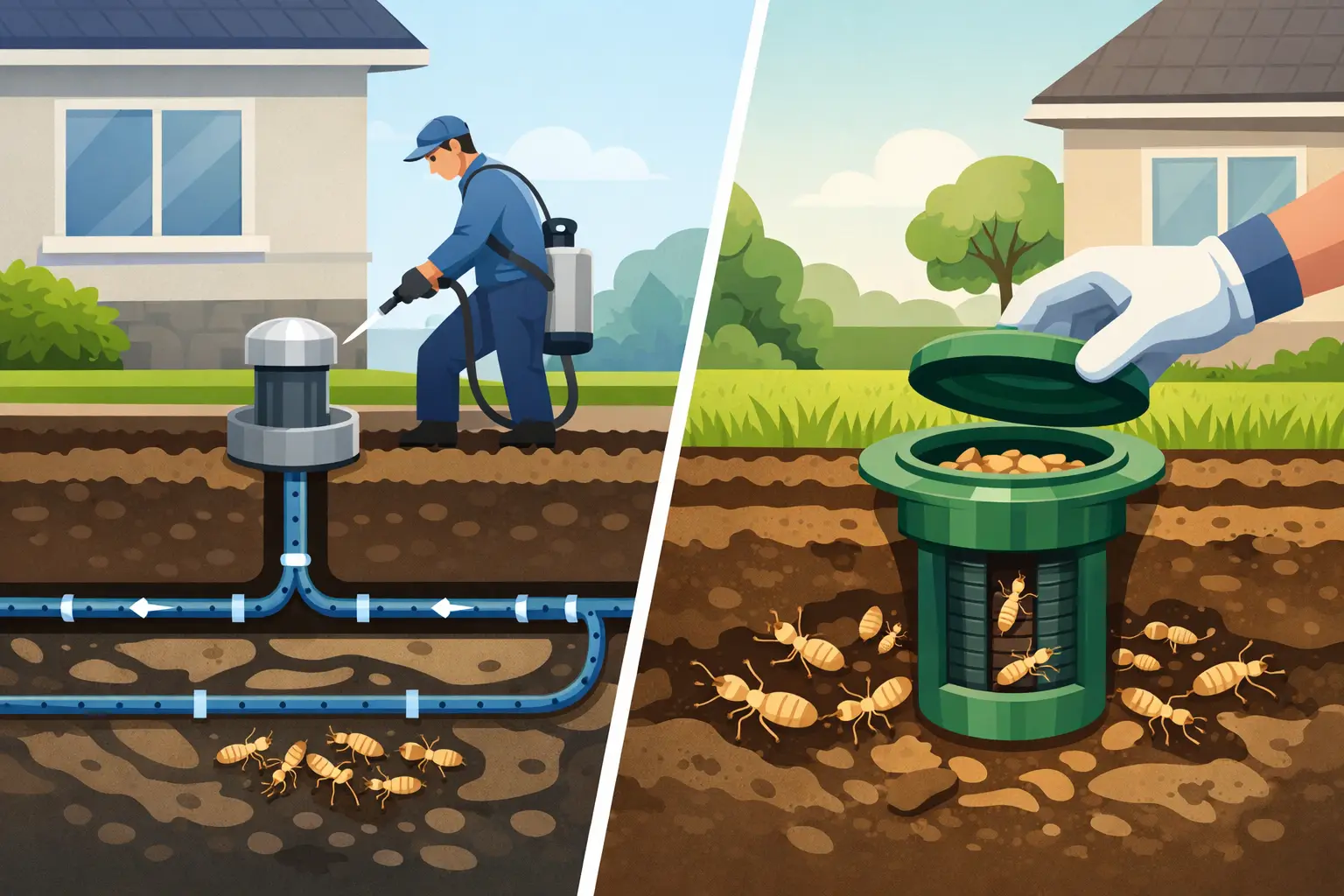
A chemical soil treatment is applied directly to the soil around and beneath a building area. It creates a treated zone that termites must cross to reach concealed timber and other vulnerable structural elements. This treatment is commonly installed before a slab is poured, around footings and service penetrations, or applied to an existing home through targeted trenching, drilling and injection.
A termite reticulation system is a network of purpose-designed pipes installed beneath or around the building perimeter. Instead of excavating again when a treatment needs renewing, a technician applies approved termiticide through accessible recharge points. The chemical is distributed through the pipework into the surrounding soil, reinstating the treated zone with far less disruption.
Both methods can provide serious termite defence when correctly designed, installed and maintained. Neither is a lifetime set-and-forget solution. Soil conditions, building alterations, drainage work, landscaping and the product used all influence how long a chemical barrier remains effective.
Reticulation system vs soil treatment: the practical difference
The key difference is not simply the chemical. It is the future access to the soil where protection needs to be maintained.
With a conventional soil treatment, re-treatment may require technicians to dig along external walls, lift pavers, drill through concrete paths or treat carefully around gardens and services. That can be entirely appropriate where access is open or where the treatment is localised. It is often the most direct option for a specific termite risk area or a property without an existing system.
With reticulation, the infrastructure is installed once, ideally during construction when the site is exposed. Later recharges can be completed through concealed but accessible fill points. This makes planned maintenance cleaner, faster and better suited to homes with established landscaping, narrow side access, decorative paving or difficult perimeter conditions.
For builders, reticulation can also support a more organised handover process. The system location, product records, installation certificate and recharge requirements can be documented for the owner, helping protect the value of the termite management plan after construction is complete.
Where a conventional soil treatment makes sense
A direct soil treatment is often the right call for existing buildings where no reticulation pipework has been installed. It can be tailored to the construction type and the active risk, whether that means a full external perimeter treatment, treatment around slab penetrations, or a focused response after termite activity has been identified.
It is also useful where a site has straightforward, accessible soil. If a technician can safely trench and treat the required zone without damaging hardscaping or disrupting the property, the added cost of installing a retrofit reticulation system may not be justified.
For new builds, a pre-construction soil treatment can be highly effective when installed at the correct stage and integrated with the project’s broader termite management design. Physical barriers, graded slab edges, drainage details and regular inspections still matter. Chemical treatment is strongest when it is part of an engineered defence, not the only line of protection.
Where reticulation earns its place
A reticulation system is most valuable where future re-treatment would otherwise be invasive. Think of a finished home with paving tight to the walls, extensive garden beds, a pool surround, retaining walls or limited access down the side of the house. In these settings, the ability to replenish the barrier through recharge points can prevent a major maintenance job later.
It is particularly well suited to new construction. Installing pipework before landscaping and hard surfaces are completed is generally more efficient and gives the owner a clear path for future chemical renewal. The system does not eliminate the need for inspections, but it makes barrier maintenance more manageable.
Reticulation is also a strong option for homeowners who want a planned protection program rather than reactive pest control. You can schedule inspections, review the condition of the system and recharge when required under the product label, warranty conditions and site-specific risk assessment.
Cost is about the next treatment too
The upfront price is only one part of the decision. A conventional soil treatment may cost less at installation, particularly on an open, uncomplicated site. But the next treatment can become more expensive if access is blocked by concrete, paving, landscaping or extensions.
Questions such as how much to refill a termite system and the likely termite reticulation recharge cost do not have one honest answer. The price depends on the pipe layout, treatment zone, chemical selected, number of recharge points, property size, access and whether the system has been maintained correctly. A larger home with several zones naturally requires more material and time than a compact single-level dwelling.
Homeowners searching for a termite barrier recharge price in Sydney should be cautious of flat-rate offers that do not account for system type and site conditions. A proper quote should confirm the installed system, assess access to fill points, identify any damage or alterations, and set out what is included in the recharge and documentation.
For a pest control Sydney reticulation refill, the cheapest quote is not automatically the safest. Incorrect product selection, poor dosing, blocked pipework or failure to verify distribution can leave gaps in the protection zone. Those gaps are exactly what concealed termite entry exploits.
Do not treat either option as permanent
The word “barrier” can create false confidence. Termites can travel through concealed pathways, exploit construction faults and enter through areas disturbed by plumbing, cabling, landscaping or renovations. Chemical protection reduces risk, but it must be checked as part of an ongoing termite management plan.
Annual termite inspections remain essential, even where a reticulation system or soil treatment is in place. A qualified inspection looks for conditions that attract termites, moisture issues, concealed entry points, changes to the building and signs of activity that a barrier alone cannot reveal.
This is especially important in Sydney’s termite-prone suburbs, where warm conditions, established gardens and moisture around homes can create ideal foraging conditions. If you are buying a property, do not assume a visible recharge point means the system is current. Ask for installation details, prior recharge records and inspection reports.
How to choose for your property
Start with the construction stage. For a new home, installing a replenishable system before finishes, paths and gardens go in can offer long-term maintenance advantages. For an existing dwelling, assess whether accessible soil treatment can provide effective coverage without costly disruption.
Next, consider the future layout. If you plan to install paving, decking, a pool, retaining walls or dense landscaping close to the structure, future access should carry real weight in the decision. Reticulation can preserve a practical way to maintain chemical protection after those works are complete.
Finally, match the solution to the whole termite management plan. A system needs to suit the building design, approved products, local conditions and warranty requirements. Termiguard works across major barrier systems and can assess whether a new installation, direct treatment, inspection program or recharge is the correct protective move.
If you are looking for termite reticulation recharge near me, do not wait until the previous treatment is long overdue or termite activity has appeared. Call 1800 837 643 to arrange an assessment and get clear advice on the protection your home can actually rely on.
The best choice is the one that keeps your termite barrier serviceable after the builders have left, the landscaping is finished and the property is worth far more than the day you bought it.