
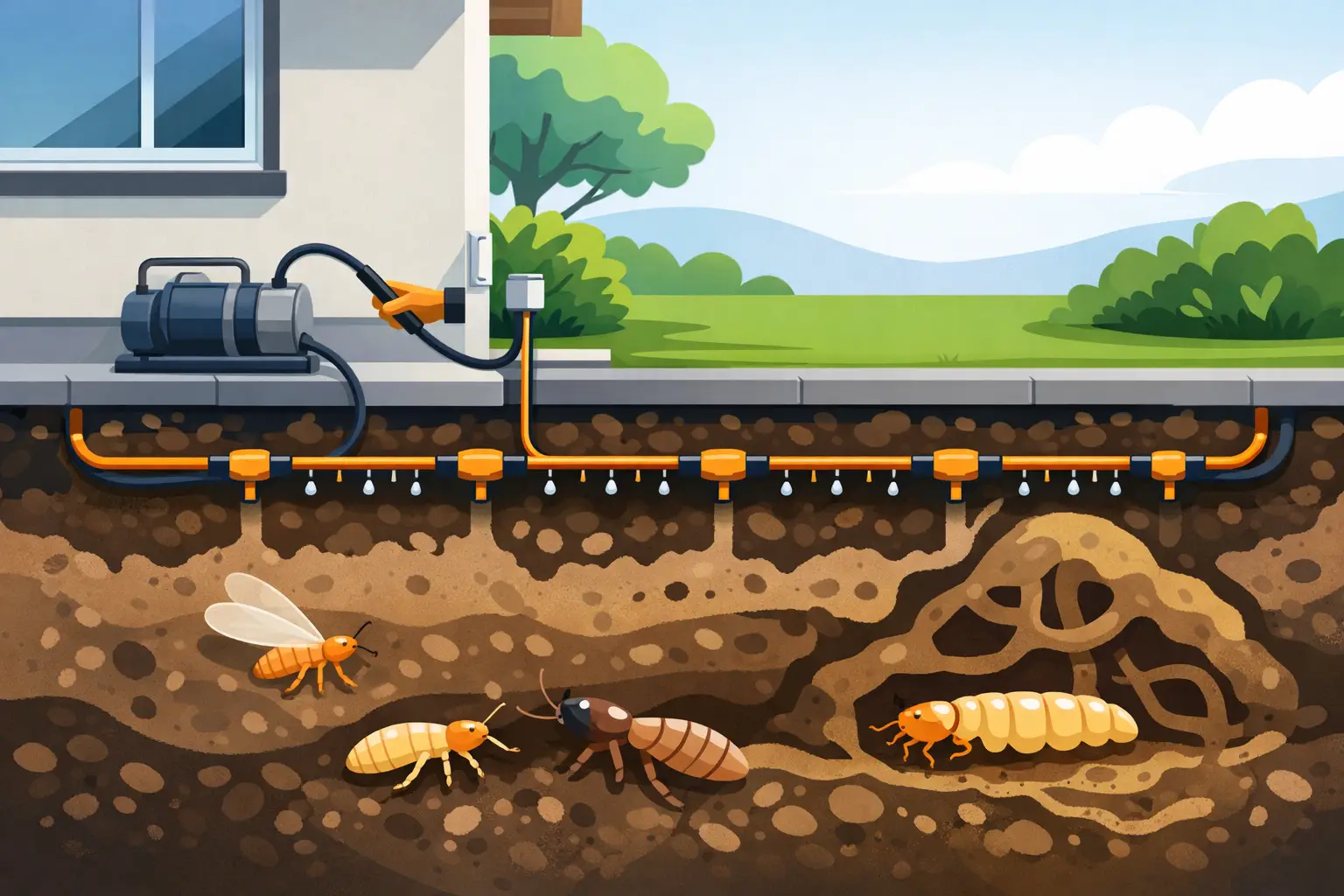
Most termite damage starts out of sight, which is exactly why homeowners are often surprised to learn they already have a protection system built into the slab edge or soil line. If you have ever wondered how termite reticulation works, the short answer is this: it is a refillable pipe network installed around a building so termiticide can be evenly reintroduced into the soil barrier without ripping up paving, gardens or finished surfaces.
That sounds simple enough, but the detail matters. A reticulation system is only effective when it has been correctly designed, installed, recharged and checked over time. For homeowners, that means long-term protection with less disruption. For builders and project teams, it means a system that can be installed during construction and serviced later without major invasive work.
How termite reticulation works in practice
A termite reticulation system is a series of purpose-designed pipes laid in the soil adjacent to vulnerable parts of the structure, usually around the perimeter and sometimes under or beside specific risk zones. Those pipes have outlets or perforations that allow termiticide to disperse through the surrounding soil when the system is charged or recharged.
The aim is not to spray the house itself. The aim is to establish and maintain a treated zone in the soil where concealed termite entry is most likely to occur. Subterranean termites travel through the ground. If they attempt to bridge the treated zone, the termiticide affects them before they can gain access to structural timber.
Most systems include a fill point or inlet that a technician uses to introduce the chemical. Once connected, the termiticide flows through the pipe network and disperses into the target soil area. When the system has been installed properly, this helps deliver a more controlled and consistent application than trying to trench and flood finished areas years after construction.
Why builders and homeowners choose reticulation
The biggest advantage is serviceability. Traditional soil treatments can be very effective, but once landscaping, paths, driveways and outdoor areas are finished, retreatment can become disruptive and expensive. Reticulation solves that problem by allowing future replenishment through access points already built into the protection system.
That matters in Sydney conditions, where soil type, drainage, landscaping changes and building additions can all influence how well a termite barrier performs over time. A refillable system gives you a practical way to maintain the barrier as the original termiticide ages, rather than assuming one treatment will last forever.
For builders, reticulation can also support compliance and make future maintenance more straightforward for the owner. For homeowners, it can reduce excavation, preserve finished surfaces and keep the protection strategy active across the life of the property.
What a termite reticulation system actually includes
Not every system is identical, but the core components are similar. There is usually a network of flexible or rigid piping installed in the soil, one or more access points for charging the system, and a treatment layout designed around the construction details of the home.
The design has to suit the site. Slab-on-ground construction, step-downs, external paths, piers, retaining walls and garden beds can all affect how the system is planned. This is where experience matters. A system that looks present on paper can still underperform if it does not account for the way termites are likely to move around that particular structure.
Some homes also have a mix of termite defence measures, such as physical barriers in critical penetrations and a chemical reticulation system around the perimeter. That layered approach can be a smart option, especially where long-term access for future treatment needs to be preserved.
How the refill process works
When the termiticide reaches the end of its effective life, the system is recharged by pumping the approved product through the fill points into the pipe network. The chemical then exits the pipe and binds with the surrounding soil to re-establish the treated zone.
This does not mean every recharge is identical. The product used, the volume required and the pressure applied depend on the system type, the property layout and the treatment history. A proper service should also include checking whether the inlets are accessible, whether the lines appear to accept product correctly, and whether site changes have created untreated risk points.
That is why questions like termite reticulation recharge cost or how much to refill termite system do not have a one-size-fits-all answer. A small perimeter on an uncomplicated site will differ from a larger home with multiple charge points, extensions, paving changes or hard-to-access sections. If you are comparing termite barrier recharge price Sydney, the useful question is not just price per refill. It is whether the system is being serviced thoroughly enough to maintain real protection.
How long does a reticulation treatment last?
It depends on the termiticide used, the system design, the soil conditions and the product label requirements. Some treatments are marketed for multi-year performance, but that should never be taken as permission to ignore the system until the final year.
Regular termite inspections are still essential because no chemical barrier is a set-and-forget solution. Soil disturbance, plumbing leaks, landscaping works, drainage changes and even simple wear around the property can compromise sections of the treated zone. The reticulation system makes replenishment easier, but it does not replace inspections.
A good rule is to think of the system as part of an ongoing defence program. The barrier needs to be monitored, the recharge timing needs to be managed properly, and any changes to the home or yard need to be considered before they create a gap.
Where reticulation works well and where caution is needed
Reticulation systems are highly practical for new builds because they can be installed before final surfaces go down. They also work well on homes that already have a refillable system in place and need ongoing servicing without major disturbance.
The trade-off is that performance still depends on correct installation and maintenance. If the system was poorly laid, if the site has been altered heavily, or if sections are inaccessible or damaged, a recharge alone may not solve the problem. In some cases, supplementary treatment or barrier upgrades are the better path.
This is also why a search for termite reticulation recharge near me should lead to a specialist rather than a general spray-and-go operator. Reticulation is not just about adding chemical to a pipe. It is about understanding whether that pipe network is still supporting an effective termite defence line around the structure.
Common misunderstandings about termite reticulation
One common misunderstanding is that reticulation attracts termites. It does not. The system is there to distribute termiticide into the soil, not lure pests toward the house.
Another is that if a property has reticulation, it no longer needs annual checks. That is risky thinking. Termites exploit construction joints, cracks, concealed entry points and any breach in the barrier. Regular inspection remains critical, even where a reticulation system is installed and active.
There is also confusion between a recharge and a full protection review. A recharge restores chemical coverage through the system, but it may not address every new risk around the building. If garden beds have been raised against weep holes, if a pergola has bridged the inspection zone, or if new paths have changed the soil profile, those issues need separate attention.
What homeowners should ask before booking a refill
If your home has a refillable system, ask what type of system it is, when it was last charged, what termiticide is suitable for it, and whether the service includes inspection of the barrier layout and site conditions. Ask whether the work will identify inaccessible or compromised areas, not just refill the lines.
If you are weighing up pest control Sydney reticulation refill services, look for a provider that understands both the system hardware and the broader termite management strategy. The real value is in maintaining a defensible treated zone around the structure, not simply pumping product through an inlet and moving on.
For builders and owners of new homes, it is also worth confirming how future servicing will be documented and when the next inspection and recharge window should be expected. A termite system only protects properly when the paperwork, servicing intervals and site conditions all stay aligned.
Reticulation is one of the most practical ways to preserve a chemical soil barrier over the long term, especially on finished homes where invasive retreatment is the last thing you want. Used properly, it gives you a refillable line of defence that can be maintained with precision instead of guesswork. If your property already has a system, treat it like the asset it is – keep it inspected, keep it serviced, and act before a lapse in protection becomes structural damage.