
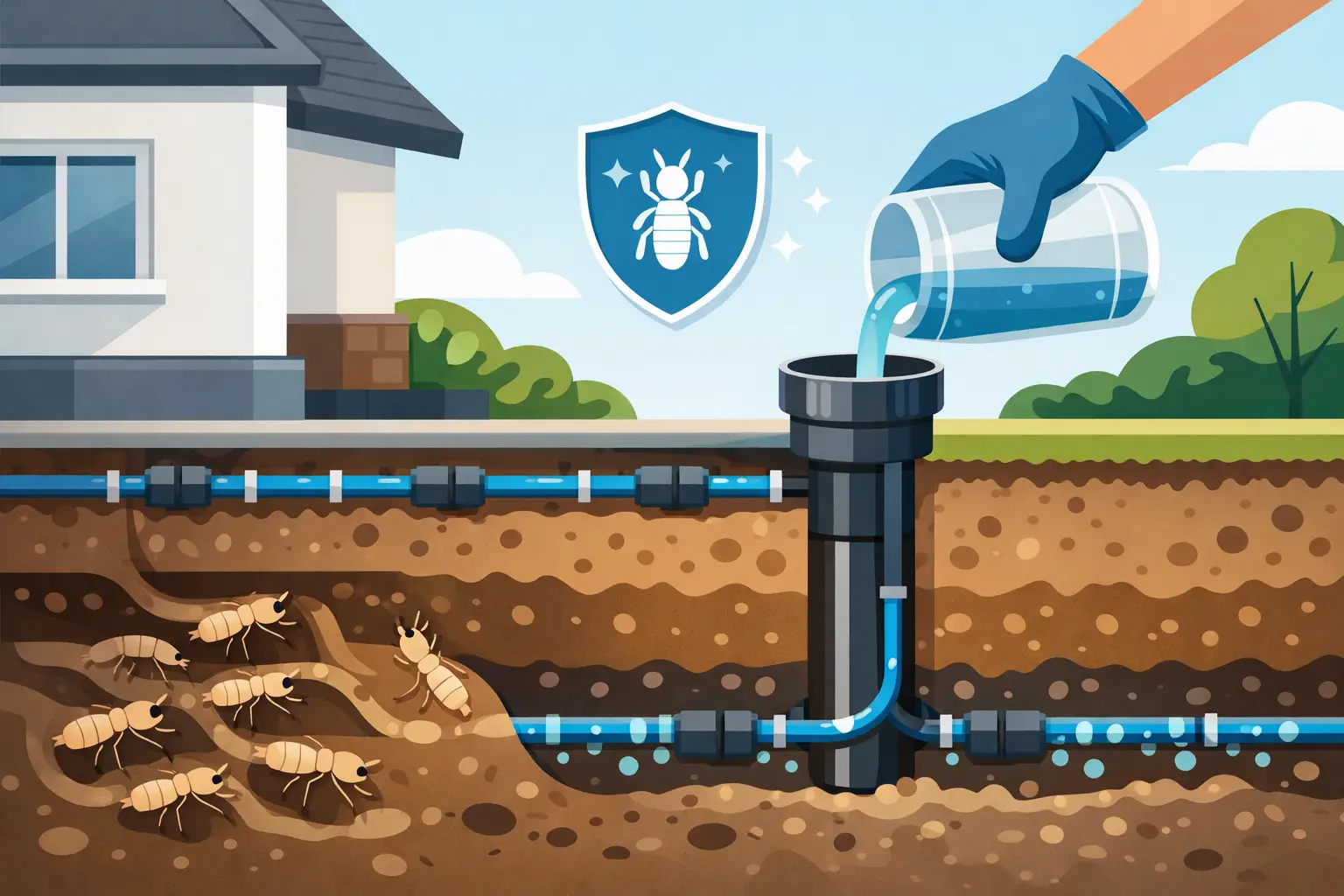
If you are asking how often should a termite reticulation system be refilled, the short answer is this – not on a fixed annual schedule in every case, but only when the installed system, chemical label, site conditions and inspection findings say it is due. Refill too late and you leave the structure exposed. Refill too early and you may spend money before it is necessary. The right answer comes from the barrier design, the product used and a proper service history.
A termite reticulation system is not a set-and-forget pipe in the ground. It is an engineered delivery system designed to recharge the soil treatment zone around a home or building without trenching everything up again. That is the real value. You can maintain the defensive barrier with less disruption, provided the system is serviced correctly and on time.
How often should a termite reticulation system be refilled in Australia?
In practical terms, most termite reticulation systems are refilled at intervals set by the termiticide label and the system manufacturer, often somewhere between 3 and 8 years. That range is broad because not all systems use the same chemistry, not all properties face the same termite pressure and not all installations are equal.
Some products are registered for shorter retreatment intervals. Others can last longer under the right conditions. A home in a high-risk termite zone with moisture issues, landscaping changes or disturbed soil may need closer attention than a clean, well-drained site with stable conditions. That is why a blanket answer can be misleading.
For Sydney homes in particular, regular inspections matter just as much as recharge timing. The reticulation lines may still be physically present, but the protective zone only remains effective if the correct chemical is still active in the soil and the barrier has not been compromised.
What actually determines refill timing?
The first factor is the original termiticide used in the system. Reticulation systems are only as effective as the product pumped through them and the way that product behaves in the soil over time. Different active ingredients have different service lives, different label requirements and different compatibility rules.
The second factor is the condition of the site. Heavy rain, drainage issues, soil movement, excavation, paving changes and garden works can all affect the treated zone. If someone has cut trenches for plumbing, removed paths, added garden beds against the slab or changed the fall of the site, the barrier may no longer perform as intended.
The third factor is inspection history. Annual termite inspections remain essential even if you have a refillable system. A reticulation system does not replace inspection. It supports long-term protection by making re-treatment possible without major disturbance. If inspections show risk points, bridge points or evidence of termite activity, the recharge schedule may need to be brought forward.
Why there is no one-size-fits-all schedule
Homeowners often want a simple rule such as every five years. Sometimes that will be close. Sometimes it will be wrong. A five-year interval might suit one installation and leave another overdue.
This is where many people get caught out. They remember hearing that the house has a termite system, so they assume the property is covered indefinitely. It is not. Reticulation is a delivery method, not a permanent chemical life guarantee. The barrier still has to be renewed in line with the approved treatment program.
For builders and owners of newer homes, documentation matters. The original treatment certificate, system type, product details and service records should all be retained. Without them, it becomes harder to confirm the correct refill interval and harder to protect warranty and compliance positions.
Signs your termite reticulation system may be due for refill
Sometimes the refill date is clear from the service record. Other times the paperwork is missing and the system has been forgotten for years. In that case, a specialist inspection is the safest next move.
Common signs a system may be due include an expired treatment period, no recorded recharge since construction, visible site changes around the perimeter, inaccessible or damaged refill points, and any evidence of termite activity nearby. Even if no termites are visible, an overdue barrier is a risk issue, not a cosmetic issue.
If you have just bought a property and the agent mentioned a reticulation system, do not assume it is current. Ask when it was last recharged, what chemical was used and whether the system was pressure tested or serviced properly. If nobody can answer those questions, treat the protection status as unknown until checked.
How often should a termite reticulation system be refilled after building work?
After renovations, extensions or external works, the original refill timing may no longer tell the full story. If the soil has been disturbed near the slab edge, piers, service penetrations or expansion joints, the barrier may need remediation or partial retreatment regardless of the original schedule.
This is especially relevant when people add decks, pergolas, retaining walls, new paths or garden edging. These changes can create concealed entry points or bridge the inspection zone. Even a chemically active barrier can be compromised by poor detailing above it.
That is why post-building inspections are critical. The question is not only how often should a termite reticulation system be refilled, but whether the barrier layout still matches the property as it stands today.
Refill timing versus annual termite inspections
A lot of owners confuse recharge servicing with inspection servicing. They are not the same thing. A refill restores or renews the chemical protection when due. An inspection checks whether termites are active, whether the barrier has been breached and whether conditions are making attack more likely.
You still need annual inspections, and sometimes more frequent checks in high-risk environments. Coastal exposure, subfloor moisture, poor drainage, dense gardens and nearby termite history can all justify closer monitoring. Skipping inspections because the system was recharged recently is a mistake. Skipping a due recharge because last year’s inspection was clear is also a mistake.
Both services work together. One maintains the barrier. The other verifies the risk.
What affects termite reticulation recharge cost?
People also want to know about termite reticulation recharge cost and how much to refill termite system protection around a house. The price depends on the system brand, number of injection zones, accessibility, chemical volume, property size and whether repairs or fault finding are required before recharge.
A straightforward recharge on a well-maintained system is generally more efficient than a full perimeter re-treatment because the infrastructure is already in place. But not every old system is ready to refill. Blocked lines, damaged caps, missing valves and undocumented products can all add time and cost.
If you are comparing termite barrier recharge price Sydney quotes, make sure the scope is clear. A proper service should confirm the installed system type, assess serviceability, apply the correct product and provide updated documentation. A cheap number without technical detail is not much use if the barrier is not actually restored.
Why system brand and compatibility matter
Reticulation systems are not interchangeable in a careless way. Termguard, Altis, TermStop, TermX, Camilleri, Cavtech and other systems each have servicing requirements, access points and installation characteristics that need to be understood properly. The recharge process must match the hardware and the approved chemical program.
That is where specialist servicing matters. This is not basic pest spraying around the garden bed. It is barrier maintenance tied to the structural defence of the building. The work needs to be carried out with precision because the goal is not a temporary knockdown. The goal is a continuous treated zone where the system was designed to protect.
When to book a refill assessment
If your records show the system is nearing its treatment expiry, book the assessment before it lapses. If you have no records, book one now. If you are searching termite reticulation recharge near me or pest control Sydney reticulation refill because you have found refill ports and do not know their status, that is already enough reason to have the system checked.
The safest time to act is before you have evidence of damage. Once termites are inside, the conversation changes from prevention to treatment, repairs and cost escalation. Long-term protection only works when the barrier is maintained before the risk becomes visible.
If you want certainty, get the system identified, inspected and serviced to the correct schedule for that property. That way you are not guessing, and your termite defence is based on evidence rather than assumptions.
A termite reticulation system earns its value when it is maintained like the protective asset it is. Keep the records, keep the inspections current and refill the system when the treatment program says it is due – not after the barrier has already failed.