
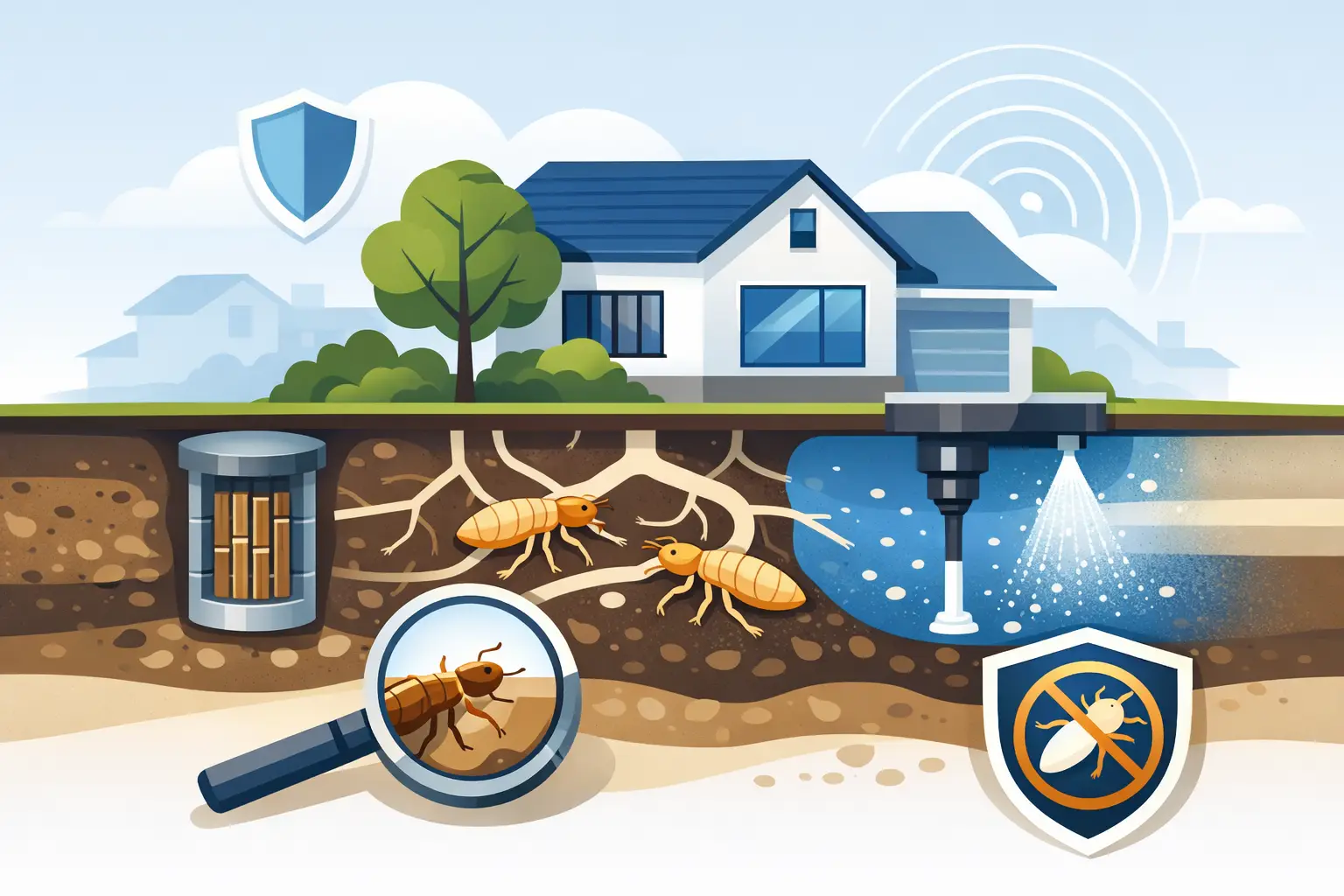
A termite barrier that looks fine on paper can still fail where it matters most – at slab penetrations, cold joints, service entries and the spots no one checks after handover. That is why termite protection systems need to be treated as engineered defence, not a box-ticking exercise. If you are building, buying or maintaining a home in termite-prone parts of Sydney, the right system is less about a product label and more about how the barrier is designed, installed, certified and maintained over time.
What termite protection systems actually do
Termites do not need a dramatic opening to get in. A gap around a pipe, movement in the slab, poor detailing at an expansion joint or a neglected garden bed against the wall can be enough. Effective termite protection systems are designed to either block concealed entry, create a treated zone that termites cannot cross without exposure, or make termite activity visible before structural damage starts.
That matters because termite damage is expensive, disruptive and often discovered late. Insurance generally does not cover it. For homeowners, that means protecting the value of the property. For builders and construction professionals, it also means reducing defects risk, supporting compliance and avoiding callbacks tied to poorly specified or poorly maintained systems.
The main types of termite protection systems
There is no single best solution for every site. The right choice depends on the construction type, site conditions, access, landscaping plans and whether the property is a new build or an existing home.
Physical barrier systems
Physical barriers are installed to prevent concealed termite entry. Depending on the system, that can include graded stone barriers, stainless steel mesh or flexible sheet materials integrated around penetrations, cavities and slab edges. Their appeal is obvious – they do not rely on a chemical treatment zone remaining active in soil.
But installation quality is everything. A physical barrier is only as good as its continuity. If trades damage it, if penetrations change late in the build, or if detailing is incomplete, the protection can be compromised. For that reason, physical systems suit projects where the builder values coordination and the installation can be properly inspected and certified before the next stage proceeds.
Chemical soil treatment systems
Chemical systems create a treated zone in the soil around and beneath the structure. When done properly, they can be highly effective and are commonly used in pre-construction and post-construction applications. They are practical for many residential sites and can be tailored to suit different foundation types.
The trade-off is longevity and access. Soil disturbance, drainage issues, excavation, new paving, garden works and renovations can all affect the treated zone. Some properties also become difficult to retreat without invasive drilling if no replenishment system was installed at the start. That is why a one-off treatment should never be mistaken for permanent protection without a plan for monitoring and future service.
Reticulation and replenishable systems
For many homes, especially where long-term serviceability matters, replenishable systems offer a stronger strategic position. These systems use installed pipework to distribute termiticide to critical zones around the building so the barrier can be recharged without major disruption.
This is where a lot of existing properties gain real value. If a home already has a refillable system, the key question is not whether a barrier once existed – it is whether it is still being maintained correctly. Homeowners often search terms like termite reticulation recharge cost, how much to refill termite system, termite barrier recharge price Sydney, termite reticulation recharge near me and pest control Sydney reticulation refill because they know the infrastructure is there but are unsure what condition it is in. The answer always depends on system type, product label requirements, access, site layout and whether repairs are needed before recharge.
Why system selection should start with the building, not the brochure
A branded product can be excellent and still be the wrong fit for the job. Good specification starts with the structure itself. A slab-on-ground home with straightforward penetrations may suit one approach. A split-level site, suspended floor, complex extension or renovation with altered drainage may require another.
Builders and architects also need to think beyond handover. If the selected system is difficult to inspect, hard to replenish or vulnerable to later landscaping changes, the long-term protection may weaken even if the initial install met the standard. Homeowners usually discover that too late.
The more practical question is this: what system gives the property the strongest defensible protection over the next decade, not just at completion? Sometimes that points to a combined approach, such as a physical barrier at key entry points backed by a replenishable chemical zone that can be maintained without tearing up the site.
Termite protection systems for new builds
New construction is the best time to get termite defence right because access is still open and details can be integrated properly. This is where engineered planning pays off. Penetrations can be protected before the slab is poured, cavity details can be resolved before brickwork closes them off, and reticulation can be installed before driveways, paths and landscaping create future access problems.
For builders, the value is not only risk reduction. A well-chosen pre-construction system is easier to coordinate, easier to certify and easier to explain to the client at handover. It also supports a clearer maintenance pathway, which is where many installations fall apart after the occupancy certificate is issued.
In termite-active areas across Sydney, that serviceability matters. Soil type, moisture, garden design and building additions all affect future performance. A system that can be inspected, tested and replenished is usually easier to defend than one that relies on everyone remembering exactly where the original treatment zone sat years later.
What existing homeowners should check
If you own an established home, the first mistake is assuming an old barrier is still working because there was a sticker in the meter box or a note in the purchase documents. Chemical life spans vary. Physical systems can be bridged or damaged. Reticulation lines can become ineffective if they are not serviced correctly.
The second mistake is focusing only on visible termites. By the time activity is obvious, damage may already be underway. A proper inspection should look at conducive conditions as well as live activity – subfloor moisture, leaking plumbing, timber-to-ground contact, blocked weep holes, poor drainage and landscaping that covers inspection zones.
If the property has a reticulation system, ask whether it has been recharged to schedule, whether the distribution was tested, whether the correct product was used and whether current certification records are available. That information is far more useful than a vague assurance that it was “done a few years ago”.
Cost matters, but cheap protection usually costs more later
Price always matters, but termite work is one of those areas where the cheapest option can create the most expensive outcome. A low quote may leave out system testing, proper detailing, certification, follow-up inspection requirements or the real cost of future replenishment.
That does not mean the highest quote is automatically best either. Some properties do not need the most complex system. What matters is whether the recommendation matches the construction and whether the provider can maintain the protection long term. A good quote should explain the scope clearly, identify any limitations and set out what happens when the barrier needs inspection, recharge or retreatment later.
For homeowners comparing recharge pricing, the figure depends on more than litres applied. Access, line condition, product choice, perimeter length and whether repairs or reinstatement are required all affect cost. The better question is not just what today’s refill costs, but what level of protection and service certainty you are actually buying.
Maintenance is part of the system
No termite barrier should be treated as set-and-forget. Annual inspections remain essential because termites adapt, sites change and barriers can be compromised by works that have nothing to do with pest management. A new garden bed, leaking shower base, stacked firewood or enclosed inspection zone can undermine an otherwise sound installation.
The strongest outcome comes from treating termite management as an ongoing protection program. That means the barrier, the inspection schedule, the property conditions and the service records all work together. For buyers, it also means pre-purchase checks should look beyond whether a system was once installed and assess whether it still offers meaningful protection now.
For clients who want long-term certainty rather than one-off spraying, specialist support makes a clear difference. A provider with experience across major barrier and reticulation systems can usually identify where an existing setup can be restored, where it needs recharge, and where a different strategy is required because the original protection has been compromised.
The safest approach is the one that stays effective after the build is finished, after the landscaping goes in and after the paperwork is filed away. Termites do not care what was specified. They only care where the defence is weak.