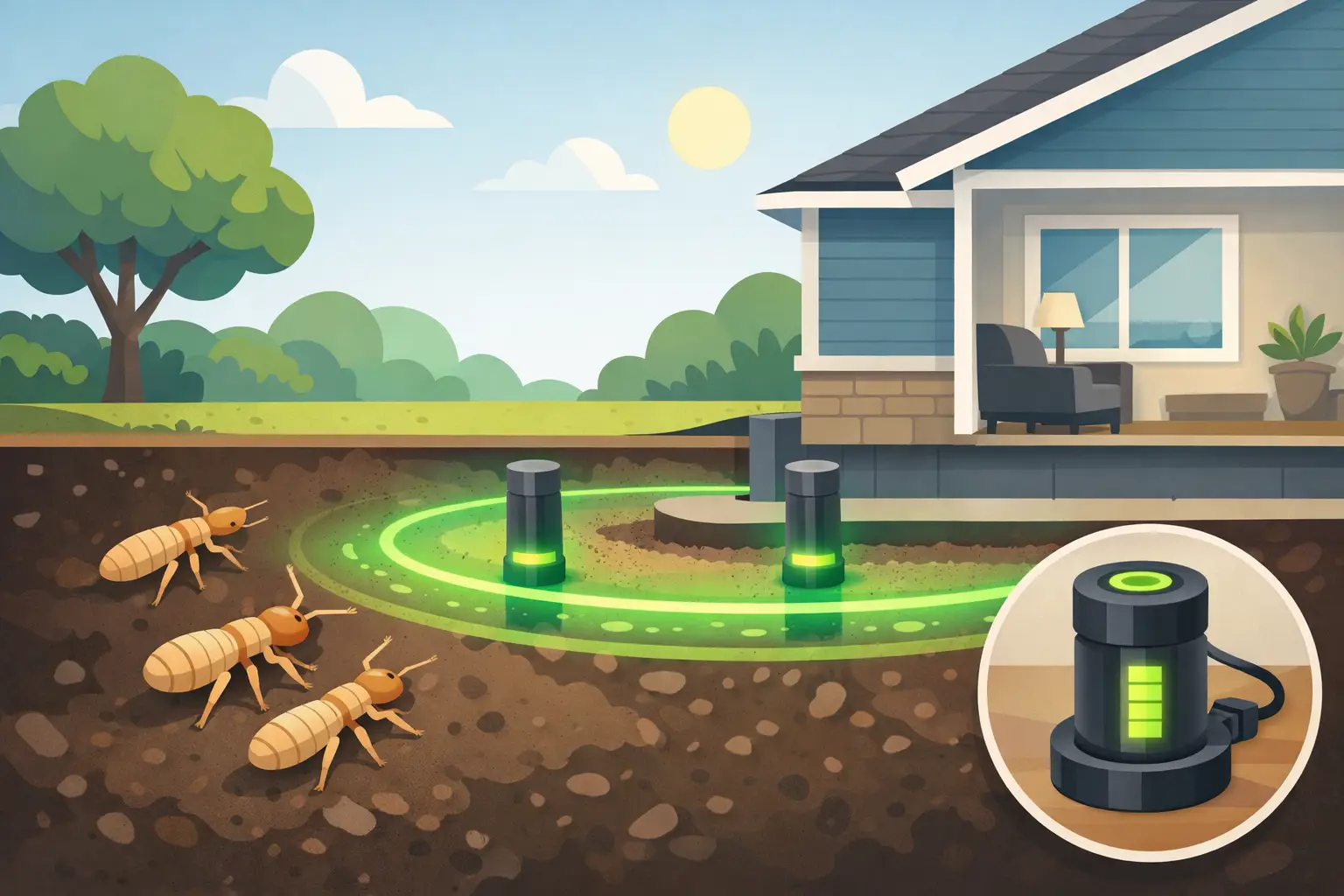
A lot of Penrith homeowners only find out they have a termite reticulation system when someone points to a small cap in the garden bed and says, that needs servicing. By then, the bigger question is whether the barrier is still doing its job. Penrith termite reticulation is not a set-and-forget product. It is a designed protection system that needs the right installation, the right chemical and the right recharge schedule if you want reliable defence around your home.
That matters more in Western Sydney than many people realise. Penrith properties often combine slab-on-ground construction, expanding suburbs, garden irrigation, warm weather and timber landscaping – all of which can influence termite pressure and barrier performance. If your system is due for a refill, overdue for inspection or poorly documented from the original build, waiting is the expensive option.
What penrith termite reticulation actually does
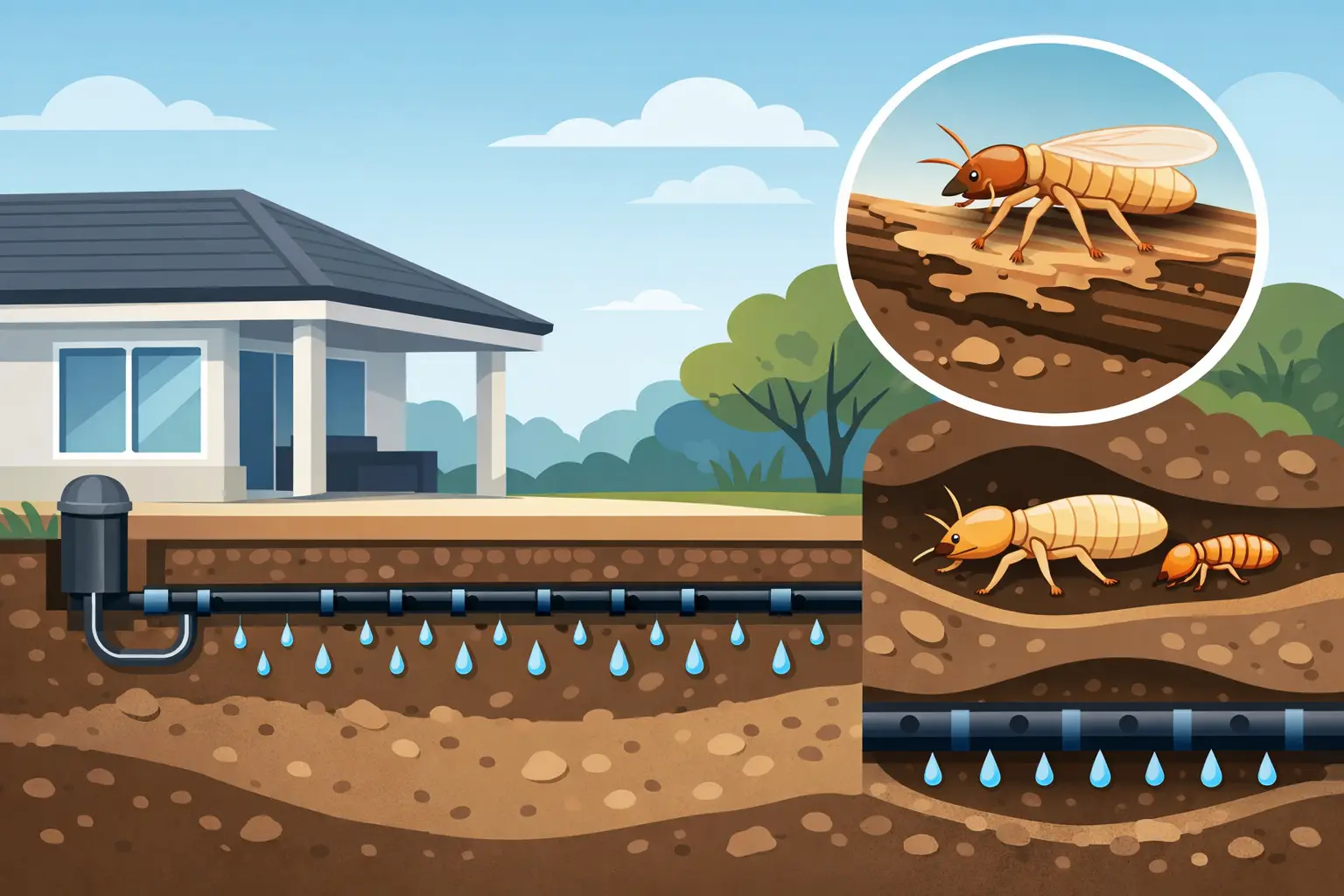
A termite reticulation system is a network of flexible pipework installed around the perimeter of a building, usually before or during construction. That pipework is designed to distribute a termiticide into the soil at critical points around the structure. The purpose is straightforward – create and maintain a treated zone that termites cannot pass through undetected.
Unlike a one-off spray around the house, a reticulation system is built for replenishment. When the chemical charge reaches the end of its effective life, the system can be recharged through designated fill points without trenching up the whole perimeter again. That is the real value. The protection can be renewed with far less disruption, provided the system is still intact and serviceable.
This is why homeowners, builders and property buyers need to think of reticulation as part of an engineered termite barrier, not just a pest control add-on. The pipe itself is not the protection. The treated soil zone is.
Why Penrith homes often suit reticulation systems
In new residential construction, reticulation systems are popular because they work well with slab homes and can be integrated into the building program with less disruption than future invasive work. For builders, that means a cleaner process. For owners, it means there is a practical pathway to ongoing termite defence after handover.
For established homes, the situation depends on what was installed originally. Some Penrith properties already have refillable systems from brands such as Termguard, Altis, TermStop, TermX, Camilleri or Cavtech, but the owners have no service records or do not know the recharge interval. Others have a system that has not been recharged in years. In both cases, the issue is not whether a cap is visible near the wall. The issue is whether the barrier remains compliant, active and effective.
Local ground conditions also matter. Soil type, drainage, paving, landscaping changes and recent renovations can all affect how a treated zone performs over time. A system that was correctly installed ten years ago may still need careful assessment before recharge. Protection is never one-size-fits-all.
When a termite reticulation recharge is due
The recharge schedule depends on the chemical used, the system design and the original installation details. There is no honest answer that fits every home. Some systems require replenishment sooner than owners expect, while others may still be within the treatment life according to the product label and service history.
The safest approach is to check three things – the brand of the reticulation system, the termiticide previously applied and the last documented service date. If any of that is unknown, the property should be inspected before assuming the barrier is still current.
Common signs a recharge may be due include expired treatment dates, missing certificates, renovations that disturbed the perimeter, unexplained moisture issues or a property sale where the buyer wants clear evidence of termite protection. Even without visible termite activity, a gap in the barrier leaves the structure exposed.
Penrith termite reticulation and recharge costs
One of the most common questions is termite reticulation recharge cost. Closely behind it is how much to refill termite system protection around a house. The answer depends on several practical factors – property size, accessibility, system type, fill point condition, the chemical selected and whether repairs or testing are needed before recharge can proceed.
That is why termite barrier recharge price Sydney can vary significantly from one property to another. A straightforward refill on a standard residential system is very different from a larger site with blocked lines, undocumented pipe runs or perimeter changes from paving and extensions. If someone gives you a fixed number without asking about the system, the home and the service history, they are guessing.
A proper quote should reflect what is actually required to restore or maintain the treated zone, not just the time it takes to pump chemical into the line. The wrong product, poor pressure or incomplete distribution can leave weak points in the barrier. Cheap recharges often become expensive failures.
What a proper reticulation service should include
A professional reticulation service is more than a refill. It should start with confirming the system type and checking whether the line is serviceable. The fill points, pipe integrity and likely treatment path all need attention before recharge begins.
From there, the technician should assess the site conditions and whether anything has changed since installation. New paths, planter boxes, retaining edges or additions can interrupt the original barrier line. If the perimeter has been altered, the service may need to be adjusted or supplemented.
The recharge itself must use an approved termiticide suited to the system and the application. Once complete, the owner should receive clear documentation showing the treatment date, product used and the future service timeframe. That paperwork matters for warranty, compliance and resale.
Why inspections still matter after a recharge
A common mistake is treating a reticulation refill as a substitute for termite inspections. It is not. The barrier is one layer of defence. Inspections are the verification step that checks whether termites are active, whether entry risks are developing and whether the protection strategy still matches the property.
This is especially important in areas where gardens, mulch, leaking taps, subfloor moisture or stored timber can increase risk around the home. Even the best barrier system should be supported by regular inspection intervals. Termites exploit weak points. They do not care whether the system was expensive.
For buyers, this matters even more. A home advertised with a termite system can sound reassuring, but without current service records and inspection findings, it may offer a false sense of security. A pre-purchase assessment should confirm whether the reticulation system is active, expired or only partially functional.
Choosing the right contractor for termite reticulation recharge near me
When people search termite reticulation recharge near me or pest control Sydney reticulation refill, they often find general pest providers offering a broad menu of services. The problem is that not every pest controller specialises in refillable barrier systems, system compatibility or pre-construction protection methods.
That distinction matters. A specialist contractor understands the different reticulation brands, the limitations of each layout and how recharge work fits within a full termite management strategy. They also know when a recharge is appropriate, when a repair is needed and when a property needs a different treatment approach entirely.
For builders and specifiers, that experience is critical. The termite system has to support compliance, handover confidence and practical long-term servicing. For homeowners, it comes down to one thing – certainty that the barrier around the structure is real, current and defensible.
The trade-off: refillable convenience versus ongoing responsibility
Reticulation systems offer a genuine advantage because they are designed for replenishment without major excavation. That convenience is a major reason they are widely used in new builds. But convenience is not the same as permanence.
A refillable system only stays valuable if it is inspected, documented and recharged at the correct intervals. If servicing gets missed, the same feature that once made the system attractive becomes irrelevant. The pipe remains in the ground, but the protection can lapse quietly.
That is the part many owners miss. Long-term termite defence is not about installing something once and hoping for the best. It is about maintaining the barrier with precision and acting before the protection window closes.
If your Penrith property has a reticulation system and you are not completely sure when it was last serviced, that uncertainty is your warning sign. The smart move is to verify the system now, while it is still a maintenance job and not a structural problem later.