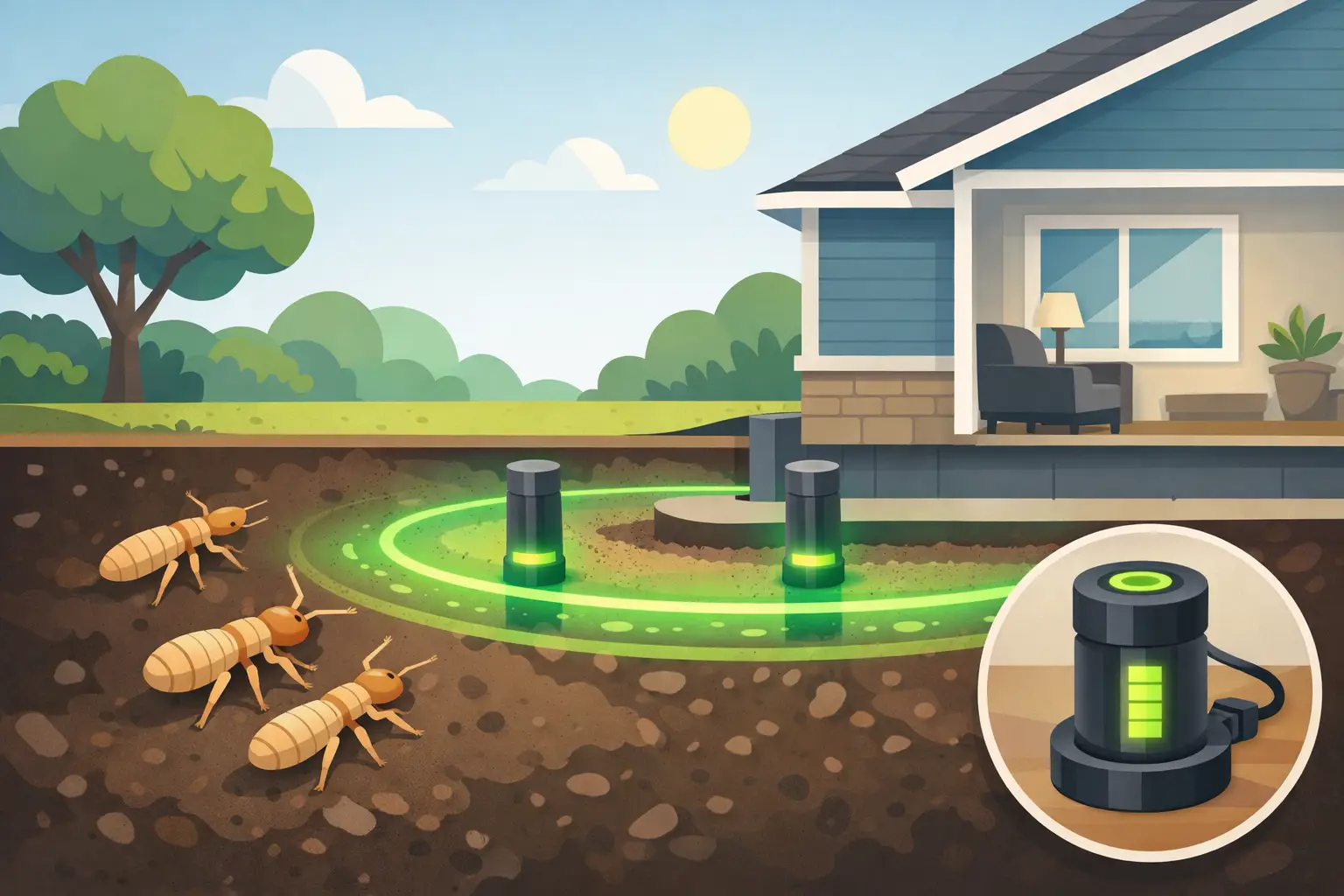

A concrete slab is not a termite-proof foundation. Termites can travel through concealed cracks, around service penetrations, behind wall cavities and across unprotected edges without ever being seen. The best termite defence for slab homes is therefore not a single spray or product. It is an engineered system that blocks concealed entry, allows for future treatment and keeps the property under active protection.
For Sydney homeowners and builders, the right defence must also suit the site, construction method and local termite pressure. A slab home can be highly defensible, but only when protection is installed correctly before the structure closes in and maintained after handover.
Why slab homes need a layered termite defence
Concrete is often mistaken for a complete barrier. In reality, termites do not need a large opening to gain access. They can exploit construction joints, shrinkage cracks, plumbing pipes, electrical conduits, weep holes and slab penetrations. Once they reach timber framing, flooring or cabinetry, the damage can progress behind linings with little outward evidence.
The risk is greatest where the protective treatment is poorly designed, interrupted during construction, or allowed to lapse years later. A visible concrete slab may look secure, yet the critical access points are commonly hidden under walls, around bathrooms, garages and external service areas.
A dependable system has three jobs: create a continuous defence at likely entry points, make any concealed entry easier to detect, and provide a practical way to restore chemical protection where required. That is why the strongest approach combines physical barrier detailing, chemical treatment or reticulation, and routine professional inspections.
The best termite defence for slab homes: a system, not a spray
For most new slab-on-ground homes, a physical termite barrier combined with a replenishable chemical reticulation system provides the most durable long-term strategy. The physical component manages concealed entry at the perimeter and penetrations. The reticulation system allows a technician to recharge the treated zone in future without drilling through internal floors or disturbing the building.
This approach is particularly valuable for homeowners who want protection that can be maintained rather than replaced after the initial chemical treatment expires. It also gives builders a cleaner pathway to meet termite management requirements while protecting the value of the finished home.
Physical barriers protect the vulnerable details
Physical termite barriers are installed during construction around slab edges, service penetrations and other identified risk areas. Depending on the system selected, they may use graded stone, stainless steel mesh, polymer sheeting or purpose-made collars and membranes.
Their purpose is not necessarily to kill termites. It is to deny concealed access or force termites into a visible route where they can be discovered during inspection. This distinction matters. A barrier is only as effective as its continuity, detailing and installation around every pipe, joint and transition.
Products and systems such as HomeGuard, Kordon, TermStop, TermX, GreenZone and TermSeal can be specified for different construction details. The correct choice depends on the building design, soil conditions, drainage, landscaping plans and compatibility with other trades. There is no benefit in choosing a premium system if its critical junctions are not installed with precision.
Reticulation makes future protection practical
A termite reticulation system is a network of pipes installed beneath or around the slab in targeted treatment zones. It enables termiticide to be distributed into the soil after construction and re-applied at scheduled intervals, without invasive drilling through tiles, carpet, floor coverings or concrete.
This is the major advantage for slab homes. Traditional post-construction treatment may require drilling at internal perimeters to reach the soil below. Reticulation gives the property a designed-in recharge pathway instead.
Systems including Termguard, Altis, Camilleri and Cavtech are built for this purpose. A specialist should identify which system is installed, test that it is serviceable and apply the correct recharge method. Pipe layout, access points and treatment records all affect whether the system can deliver reliable coverage.
Chemical treatment closes the gap
A chemical soil treatment establishes a treated zone that termites must cross before reaching the structure. It can be used as a standalone method in some circumstances, but its useful life is not indefinite. Soil disturbance, drainage changes, landscaping works and natural degradation can affect performance over time.
For a new slab home, chemical treatment is strongest when it supports an integrated barrier strategy and is backed by a documented inspection and recharge plan. For an existing home without reticulation, targeted soil treatment may still be the right response, but access limitations and the likelihood of future drilling need to be considered upfront.
What to specify before the slab is poured
The pre-construction stage is where termite protection is easiest to install properly and least expensive to maintain later. Once the home is complete, missed penetrations and absent reticulation lines become difficult and costly to rectify.
Builders and owners should ensure the termite design addresses the full construction sequence, not just the slab pour. That means confirming protection at service penetrations, slab edges, construction joints, garage interfaces, external walls, utility areas and planned changes in ground level.
It also means preventing other works from compromising the barrier. Landscaping, paving, garden beds, render, deck posts and stored materials can create concealed bridges over a protected perimeter. The building may have a compliant termite system at handover, then lose its inspection zone during the first landscaping project.
Keep the termite management documentation, installation certificate and system plan with the property records. These documents help future inspectors identify the system and advise on servicing requirements.
Reticulation recharges: cost, timing and value
Homeowners frequently search for the termite reticulation recharge cost, how much to refill termite system, or termite barrier recharge price Sydney after finding access points around their home. The honest answer is that pricing depends on the system type, property perimeter, number of treatment zones, condition of the lines and the chemical required.
A proper refill is not simply connecting a hose and pumping product into a pipe. The technician should identify the installed system, inspect accessible components, assess whether the lines remain functional, calculate the treatment volume and provide records of the recharge. If the system has been damaged by building works or landscaping, repairs may be required before treatment can be delivered as intended.
Searching for a termite reticulation recharge near me or pest control Sydney reticulation refill should lead to a provider with specific experience across major reticulation platforms, not a general pest spray service. The objective is to restore the designed protective zone, not apply a one-off treatment with no pathway for future servicing.
Inspections are the proof your defence is holding
No termite system should be treated as set-and-forget. Australian conditions, moisture, vegetation, drainage and construction changes can all influence termite pressure around a slab home. Regular professional inspections are the early-warning layer that identifies mud leads, damaged barriers, moisture issues and changes that may compromise protection.
Annual inspections are commonly appropriate, although higher-risk properties may require more frequent checks. Homes near bushland, coastal areas, established trees or known termite activity need a more cautious program. An inspection should cover accessible internal areas, the substructure where applicable, roof voids, external perimeter, gardens and service entries.
If live termites are found, avoid disturbing them. Do not spray household insecticide, break open workings or pull apart damaged timber. Disturbance can cause the colony to retreat and establish a new concealed route. Arrange a specialist assessment so the colony and entry pathway can be addressed strategically.
Choose protection that can be defended for years
The best system for one slab home may not be the best for another. A simple new build with clear perimeter access may suit one barrier and reticulation layout, while a complex design with multiple levels, internal wet areas and tight boundary conditions may need more detailed treatment planning.
What should not change is the standard: continuous protection at vulnerable points, a maintainable treatment method, clear installation records and scheduled inspections. Termiguard designs termite defence around the building rather than relying on a basic spray, with systems selected for practical servicing and long-term protection.
If you are building, buying or maintaining a slab home, act before termites create a concealed pathway. Call 1800 837 643 to discuss your protection options, or book an inspection or instant quote online.