
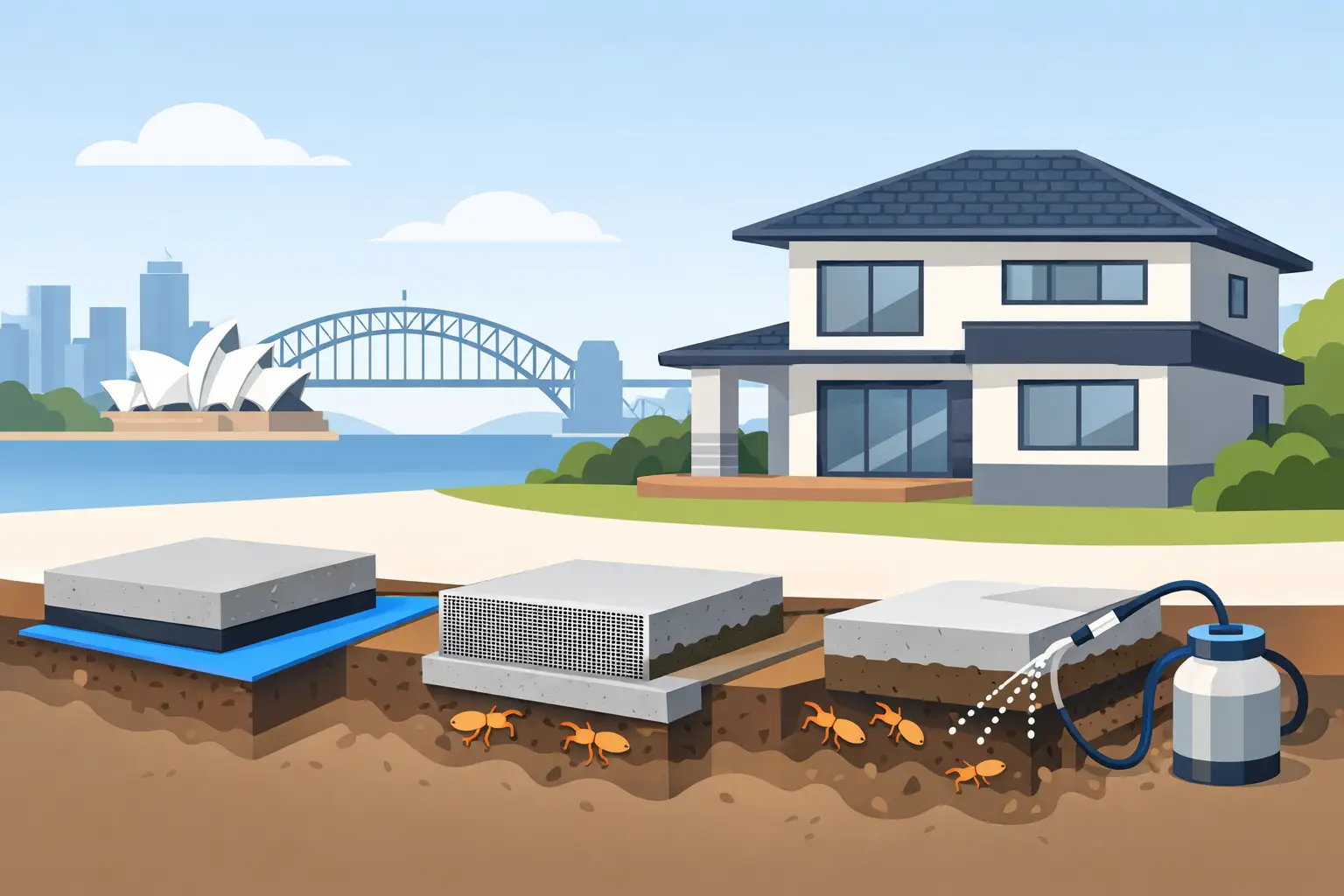
The best termite barrier materials do not simply create a line around a building. They form a continuous, inspectable defence that denies concealed termite entry and protects a major asset from expensive structural damage. For Sydney homes and new builds, the right choice depends on the construction design, soil conditions, access for future servicing and the level of long-term protection required.
A termite barrier should never be selected on product price alone. A cheap system that cannot be inspected, repaired or replenished can become a costly weak point once landscaping, paving or building additions change access around the home. Effective termite protection is engineered around the building from the start.
What Makes a Termite Barrier Material Effective?
Termites can enter through gaps as small as 1.5 mm. That means the strongest material is not necessarily the best-performing system if it is poorly detailed around penetrations, slab edges, construction joints and service pipes.
A dependable barrier material needs to do one or more of three things: physically block termite access, force termites into visible inspection zones, or establish a treated soil zone that termites cannot cross without exposure. It must also suit the building method and comply with the relevant Australian termite management requirements, including AS 3660 where applicable.
For a new home, the priority is usually continuous protection built into the construction sequence. For an existing property, the practical answer may be a chemical treatment or replenishable reticulation system that can be serviced without lifting floors or excavating established gardens.
Best Termite Barrier Materials for New Builds
Stainless steel mesh barriers
Stainless steel mesh is one of the most durable physical termite barrier materials available. The mesh aperture is designed to prevent termite passage while allowing drainage and ventilation where required. It is commonly installed beneath slabs, around service penetrations, at construction joints and in subfloor areas.
Its greatest advantage is permanence. Steel mesh does not rely on a chemical active ingredient, so it does not need periodic replenishment. When installed correctly, it remains a long-term physical defence within the structure.
The trade-off is precision. Mesh must be properly lapped, sealed and integrated with every penetration. A small installation error can compromise a large area. It is also generally a higher upfront investment than a basic chemical treatment, but can be an excellent choice for premium construction and difficult-to-access areas.
Graded stone barriers
Graded stone systems use carefully sized aggregate that termites cannot move through or tunnel around easily. These systems can be installed beneath slabs and around structural elements to create a physical barrier while maintaining drainage.
Stone barriers are durable and chemical-free, but they demand strict site control. Soil, mortar droppings or building debris mixed into the aggregate can create pathways for termites. They are best suited to designs where the barrier can be installed cleanly and protected during construction.
They also need to work with the overall drainage design. Water management is essential because persistent moisture around a home can increase termite pressure, regardless of which barrier material is selected.
Polymeric sheet barriers
Purpose-made polymer sheet barriers are widely used in Australian construction. Products in this category are installed beneath slabs, behind retaining interfaces, around penetrations or in concealed zones where a continuous membrane is needed. Depending on the system, the sheet may work as a physical barrier, a chemical barrier incorporated into a polymer layer, or both.
Sheet systems can be highly effective because they cover broad areas quickly and can integrate neatly with slab construction. They are particularly useful where detailed pipe penetrations need a consistent treatment method.
However, they are not forgiving of damage. Trades working after installation can puncture or displace a sheet barrier. The installer, builder and site supervisor need a clear handover process so the barrier remains intact until the slab is poured or the relevant construction stage is complete.
Concrete and exposed slab-edge detailing
Concrete is not termite-proof on its own. Termites can use cracks, joints and concealed edges to enter a building. However, a correctly designed and visible slab edge can form an important part of a termite management system by making mud leads easier to detect during inspections.
This is why external finishes, paving, garden beds and render must not bridge the inspection zone. A physical barrier is only as useful as the visibility it preserves. Covering slab edges after handover may look tidy, but it can remove the early-warning access your termite system was designed to provide.
Chemical Soil Barriers and Reticulation Systems
Chemical soil treatments remain a strong option for many Sydney properties, particularly where physical barriers are not practical or where an existing home needs protection. A professional treatment establishes a treated zone in the soil around the building and, where access allows, beneath susceptible areas.
The quality of the application matters as much as the product. Termites will exploit untreated gaps around pipes, patios, paths, garden structures and additions. The treatment plan must account for the actual property, not follow a one-size-fits-all spray pattern.
A replenishable reticulation system is often the smarter long-term chemical solution. It consists of purpose-installed pipework that distributes treatment chemical through defined zones around or beneath the building. At the required service interval, the system can be recharged through accessible ports rather than requiring broad excavation or disruptive drilling.
This makes reticulation especially valuable for homes with established landscaping, extensive paving, pools, narrow side access or construction layouts that make future soil treatment difficult. Systems such as Termguard, Altis, TermStop, TermX, Camilleri, Cavtech, HomeGuard, Kordon, GreenZone and TermSeal each have specific installation and servicing requirements. The right system is the one matched to the building, correctly installed and supported by an ongoing service plan.
Physical or Chemical: Which Material Is Better?
There is no universal winner. Physical materials are attractive where permanent, chemical-free protection is required and the barrier can be installed with full continuity during construction. Chemical barriers are flexible, effective and often more practical for existing homes, especially when delivered through a serviceable reticulation network.
For many new builds, the strongest approach is layered defence. A physical barrier may protect critical concealed points, while a chemical treatment or reticulation system provides a replenishable perimeter defence. Clear slab-edge inspection zones and regular professional inspections complete the system.
This approach recognises the reality of termite risk: no barrier should be treated as a reason to stop inspecting. Changes to drainage, garden beds, timber structures, leaks and renovations can alter termite pressure years after construction is complete.
Choosing Materials Around Your Building Design
Builders and architects should select barrier materials early, before slab preparation and services installation. Late decisions create rushed detailing around penetrations, clashes with plumbing and electrical work, and avoidable construction delays.
Homeowners should ask whether the proposed system can be inspected, whether it is refillable, what areas it protects, and how future extensions or landscaping will affect it. Also ask who will issue the installation documentation and who can service the system in future. A barrier without records, access points or a maintenance pathway is not a complete protection strategy.
For existing homes, a termite inspection should come before selecting materials. The inspection identifies conducive conditions, active termite evidence, concealed entry risks and access restrictions. It also determines whether treatment is required before a preventive barrier is installed.
Termite Reticulation Recharge Costs and Planning
The termite reticulation recharge cost varies with the system design, treated perimeter, chemical volume, access and whether repairs or testing are required first. Anyone asking how much to refill termite system should be wary of a flat quote issued without confirming the pipe layout, recharge points and current condition.
A termite barrier recharge price Sydney homeowners receive should reflect the actual system and its service history, not just the length of the front boundary. If you are searching for termite reticulation recharge near me or pest control Sydney reticulation refill, choose a specialist who can identify the installed system, test serviceability and document the recharge properly.
Termiguard provides tailored termite barrier installations, inspections and reticulation recharges for homes and building projects across Sydney. Call 1800 837 643 or Book online for a precise assessment of the protection your property needs.
The right barrier material is the one that remains continuous, visible where it should be visible, serviceable where it needs replenishment, and backed by disciplined inspections. Build that defence properly now, and your home is far less likely to become the next costly termite repair.