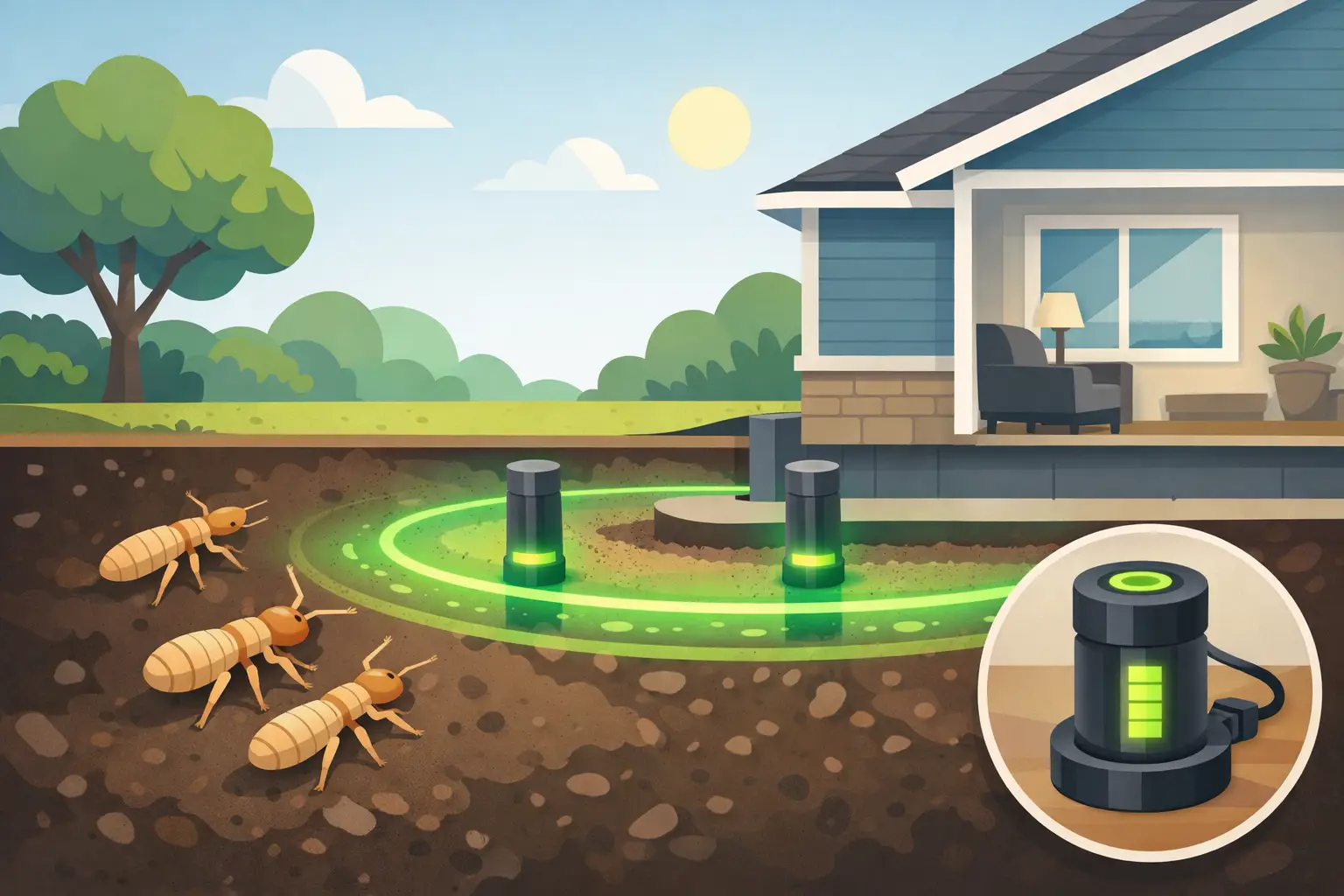

A termite barrier is one of the few parts of a new build that does its best work when nobody sees it. Once the slab is poured and the walls are up, mistakes are expensive, disruptive and often impossible to fix properly. That is why new construction termite protection needs to be treated as a core building system, not a last-minute add-on before handover.
For homeowners, builders and specifiers, the real question is not whether protection is needed. In Sydney and other termite-prone areas, it is how to choose a system that suits the site, complies with the standard, and can still defend the structure years after the keys are handed over.
Why new construction termite protection matters so early
Termites do not wait for a home to age. If conditions are right, they can begin probing a structure soon after completion. The risk starts at design and ground stage because termite entry points are created through slab penetrations, joints, service lines, weep holes and concealed construction details.
That is why the right time to plan protection is before or during construction, not after landscaping and paving have boxed everything in. Early planning gives you access to the full range of options, including physical barriers, chemical soil treatments and replenishable reticulation systems. It also reduces the chance of trade clashes, rework and certification issues.
A lot of people assume a quick perimeter spray will do the job. It will not. Effective termite defence for a new build is engineered around the whole structure. The system has to account for how the building meets the ground, where services penetrate, what the soil conditions are, and how future inspections and maintenance will be carried out.
The main types of new construction termite protection
No single system is right for every project. The best fit depends on the slab design, site access, soil type, construction sequence, budget and how important refillability is over the long term.
Chemical soil treatments
A pre-construction chemical treatment is applied to soil before the slab is poured or around key areas during construction. When installed correctly, it creates a treated zone that termites must pass through or avoid. This approach can be highly effective, but performance depends on proper application, the active ingredient used, site conditions and whether the treated zone remains intact after drainage works, trenching or landscaping.
The trade-off is durability versus disturbance. Chemical systems can provide strong protection, but they are vulnerable if the soil is later moved or the barrier is broken by post-construction works.
Physical termite barriers
Physical systems are installed around penetrations, joints, cavity areas and other termite entry points. Products in this category are designed to obstruct concealed access and force termite activity into view. This makes inspection easier and helps preserve the building’s inspection zone.
Physical barriers can be an excellent choice for builders and owners who want a more permanent form of defence built into the structure. The detail matters, though. A good product installed poorly is still a weak point.
Reticulation systems
A replenishable reticulation system is installed around the perimeter or under key sections of the structure so termiticide can be reintroduced later without invasive drilling or trenching. For many new homes, this is one of the smartest long-term options because protection can be maintained over time rather than treated as a once-and-done event.
This is where long-term ownership costs need a realistic look. Many buyers ask about termite reticulation recharge cost, how much to refill termite system setups, or the likely termite barrier recharge price Sydney homeowners should expect. The answer depends on the system brand, property size, chemical volume, access and servicing history. There is no honest flat answer that suits every home. What matters more is whether the original system was designed so future recharging is straightforward, compliant and non-invasive.
What builders and homeowners often get wrong
The most common mistake is choosing on upfront price alone. A cheap install that cannot be properly maintained later often becomes the expensive option. If a barrier cannot be recharged easily, if inspection zones are blocked, or if site works destroy continuity, the owner may face disruptive remedial works later.
The second mistake is assuming all systems are interchangeable. They are not. Different products suit different slab designs and build methods. A specialist installer should be able to work across major systems such as Termguard, Altis, TermStop, TermX, Camilleri, Cavtech, HomeGuard, Kordon, GreenZone and TermSeal, then recommend the system that fits the build rather than pushing a single product onto every job.
The third mistake is forgetting that a termite system is only as strong as its future service plan. Even the best new construction installation needs inspections. Some systems also need periodic replenishment to maintain the protective zone. If no one is tracking that schedule, the protection can quietly degrade while the owner assumes the house is covered.
How to choose the right system for your build
The right system starts with a proper reading of the building, not a generic quote. Slab-on-ground construction, split-level homes, suspended floors, stepped sites and dense service penetrations all create different termite risks.
Ask whether the system suits the build sequence and whether it can be certified cleanly at completion. Ask how future trades will affect it. Ask whether landscaping, paving, driveways or retaining walls are likely to interrupt the barrier. Ask what inspection access needs to remain visible after handover.
For many Sydney projects, especially where owners want lasting serviceability, replenishable systems deserve serious consideration. They allow future treatment replenishment without tearing up finished areas. That matters in established suburbs where owners later search for termite reticulation recharge near me or pest control Sydney reticulation refill after realising their original installer never explained the maintenance side.
A system should also match the client’s risk tolerance. Some owners want the certainty of an integrated physical barrier. Others prefer the flexibility of a reticulation system they can recharge over time. In some cases, a combined approach gives the strongest outcome.
Compliance, certification and the long game
New construction termite protection is not just about putting product in the ground. It has to align with the relevant Australian Standard and the building details on site. Certification matters because it records what was installed, where it was installed and what maintenance conditions apply after completion.
That paperwork is not admin for admin’s sake. It becomes critical at sale time, warranty time and inspection time. If a future buyer asks what system protects the property, vague answers do not help. Builders also benefit from clear documentation because it reduces disputes and gives clients confidence that the protection was installed correctly.
This is where specialist contractors earn their place. They understand the handover between design, construction and ongoing maintenance. They know how to preserve inspection zones, coordinate with other trades and install systems that can still be serviced years down the track.
New construction termite protection is not a set-and-forget system
One of the biggest misconceptions in the market is that termite protection installed during construction lasts forever with no follow-up. It does not. Every system has conditions. Some rely on the treated zone remaining undisturbed. Some require scheduled inspections. Some need periodic replenishment to maintain performance.
That is why owners should be given a clear post-construction plan from day one. It should set out what was installed, when inspections should occur, what activities could compromise the barrier, and whether a future recharge is likely. That is especially important for refillable systems, because proactive servicing is far easier and cheaper than trying to recover protection after years of neglect.
A serious provider treats termite defence as an ongoing protective program, not a one-off spray. That is the difference between basic pest control thinking and engineered structural protection.
When specialist installation makes the difference
On a straightforward project, a basic installer may appear to save money. On a real-world site with penetrations, delays, design changes and trade pressure, that shortcut often shows up later as a weak point. The installer needs to understand not just the product, but the build.
That means identifying where termites are most likely to gain concealed access, coordinating timing with slab preparation and services, and making sure the final system remains inspectable and maintainable. It also means being able to advise on the practical side of ownership, including likely servicing pathways and how future recharge works for reticulation systems.
For homeowners, that expertise buys confidence. For builders, it reduces call-backs. For architects and certifiers, it supports a cleaner, more defensible outcome.
If you are planning a build, the best time to make the right decision is before the slab locks everything in. Get the protection designed properly, installed precisely and documented clearly. The house will never be easier to defend than it is during construction, and that early decision can protect the structure for years after handover.