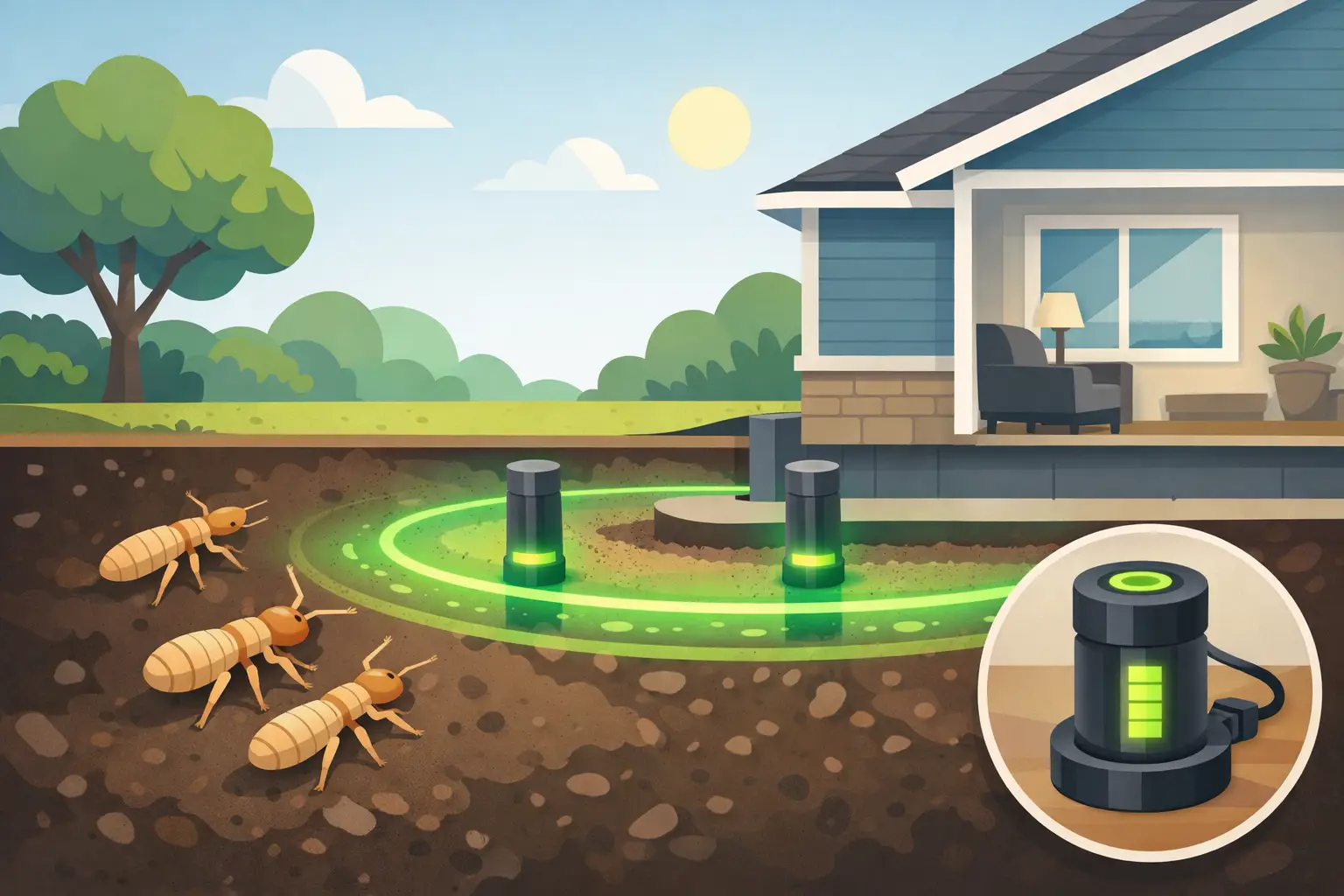

When termite protection is treated as a box to tick before the slab goes down, the cost usually looks small. When it is missed, under-specified or installed badly, the repair bill can become a structural problem. That is why pre construction termite treatment cost should never be judged on price alone. The real question is what level of defence you are buying, how long it will perform, and whether it suits the build you are about to lock in.
For homeowners, builders and specifiers, this matters most before the concrete is poured and the walls are lined. This is the stage where termite protection can be integrated properly into the building process, rather than patched in later at a higher cost and with more compromise.
What does pre construction termite treatment cost in Australia?
In most new residential projects, pre construction termite treatment cost typically ranges from several hundred dollars for a basic chemical soil treatment through to several thousand dollars for more complex physical or reticulation-based systems. On a standard single dwelling, many projects fall somewhere between $1,500 and $4,500, but broad averages can mislead.
A flat, straightforward slab-on-ground build is very different from a split-level home, a site with multiple penetrations, or a build that requires a premium physical barrier system to satisfy design and performance expectations. The final figure depends on the barrier type, the construction method, the size of the footprint, the number of service penetrations, and the ongoing maintenance strategy.
The cheapest quote is rarely the cheapest outcome. A lower upfront price may mean a one-off treatment with limited long-term flexibility, while a higher price may include a refillable reticulation system, better installation control and easier future replenishment without major disruption.
Why prices vary so much
There is no single termite barrier that suits every build. The variation in cost comes from how the system is designed to defend the structure over time.
System type changes the budget
Chemical soil treatments are often the entry point on price. They involve applying a registered termiticide to the soil before or during construction to create a treated zone around and beneath the building elements. When installed correctly, they can provide strong protection, but their performance is tied to product life, soil conditions and whether the treated zone remains intact during the build.
Physical barriers usually cost more upfront because they rely on installed materials and detailing around slab penetrations, joints, cavities or concealed entry points. These systems are often chosen where owners and builders want a more engineered barrier approach, particularly when long-term durability and reduced reliance on a single initial chemical application are priorities.
Reticulation systems sit in a different category again. They are installed during construction so termiticide can be distributed through a network around the structure and replenished later. The upfront cost is generally higher than a basic spray treatment, but they can offer a major long-term advantage because recharging the system is more controlled and far less invasive than trying to re-treat an existing home after the fact.
The building design matters
A simple rectangular slab is easier and faster to protect than a home with step-downs, articulation, internal courtyards, attached garages, retaining interfaces, piers or suspended sections. Every penetration through the slab creates another point that must be detailed correctly.
If the site has unusual footings, extensive plumbing, electrical and hydraulic services, or complex junctions between different structural elements, installation time and system material costs will rise. Good termite defence is precise work. The more complex the geometry, the more labour and planning it requires.
Site risk and location can influence the system
In higher termite pressure areas, a more robust approach may be justified. Parts of Sydney, the Central Coast and Wollongong can present elevated termite activity, and local environmental conditions can affect what system is sensible. Soil type, drainage, landscaping plans and moisture management all play a part.
A builder or owner focused only on the lowest installation price may overlook the fact that some sites demand stronger long-term protection than others. That is not overservicing. It is risk management.
Comparing the main options
Chemical treatment
Chemical pre-treatments are commonly selected because they can be cost-effective at the construction stage. They work best when the treated zone is applied to specification and not disturbed by later works. Their limitation is that future performance depends on product longevity, site conditions and whether any untreated gaps are created during construction or renovations.
For some projects, this is a practical choice. For others, especially where long-term servicing access matters, it may be too basic.
Physical barrier systems
Physical systems usually carry a higher upfront cost, but they are often attractive for owners who want a more permanent style of defence built into the structure itself. Depending on the product and design, they may protect critical concealed entry points and complement compliance requirements well.
The trade-off is that installation must be exact. A premium product installed poorly is not premium protection.
Reticulation systems
Reticulation systems are often one of the smartest long-term investments in termite-prone areas. They are designed for replenishment, which means the protection can be renewed in a controlled way without trenching around finished landscaping or drilling through completed areas later.
The initial spend is usually higher, but the lifecycle value can be stronger, especially for owners planning to stay in the property and builders who want a maintainable, standards-aligned defence strategy.
What should be included in the price?
When assessing pre construction termite treatment cost, ask what is actually covered. A proper quote should not just name a system and a dollar amount. It should make clear what product or barrier type is being installed, where it is being installed, what standards or specifications it is designed to meet, and what documentation is provided at completion.
Certification matters. So does the installation sequence. If termite protection is not coordinated properly with the builder, plumber, concreter and bricklayer, protection gaps can be created even when the right system has been selected.
You should also understand the maintenance path. Some systems need inspections and future replenishment to remain effective. That is normal. The key is whether the system is designed to make that future servicing practical.
The hidden cost of going too cheap
There is a difference between value and a low number on a quote. Cheap termite protection often becomes expensive in three ways.
First, it may not suit the construction details, which creates weak points from day one. Second, it may be difficult or costly to maintain once the home is finished. Third, it can leave owners with less confidence around warranty support, compliance documentation and long-term serviceability.
For builders, that risk does not stop at handover. If a barrier system creates future disputes, callbacks or questions around compliance, the original saving can vanish quickly. For homeowners, the cost of remedial termite work and structural repairs can dwarf the original installation price many times over.
How to budget properly for pre construction termite treatment cost
The best time to budget for termite defence is during early planning, not when the slab booking is already locked in. Allow for the system to be chosen alongside the footing design, service layout and construction method. That gives you room to compare options based on protection performance, not just urgency.
If you are building a long-term family home, it often makes sense to consider systems that support future replenishment and easier servicing. If you are a builder, consistency matters. A specialist installer who understands multiple barrier systems and can work with your programme is often worth more than a lower quote from a generalist.
It also helps to think in annualised terms. A system that costs more upfront but is easier to maintain over the life of the property may be the better financial decision. This is especially true in termite-active areas where ongoing inspections are essential anyway.
So what is a fair price?
A fair price is one that matches the risk, the build complexity and the long-term protection strategy. On some homes, that means a straightforward treatment. On others, it means a more engineered barrier system with refill capability, better access for re-treatment and stronger integration with the structure.
If a quote seems much lower than the rest, there is usually a reason. It may exclude important areas, omit future servicing considerations or rely on a minimal approach that meets the immediate stage requirement but does little for long-term defence. A quality provider should be able to explain not just what the system costs, but why it is the right fit for that specific project.
In a market where termite damage can remain hidden until it is severe, the smartest spend is the one that protects the structure properly from the beginning. If you are comparing options, focus on engineered protection, compliant installation and a clear maintenance pathway. That is where real value sits, and it is the reason many builders and homeowners treat termite defence as part of the build quality, not an optional extra.